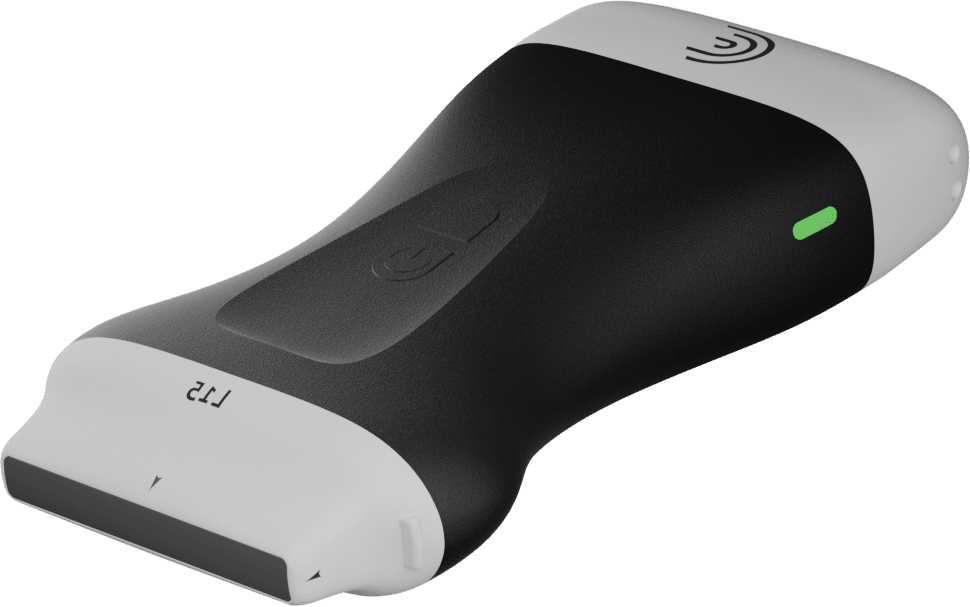
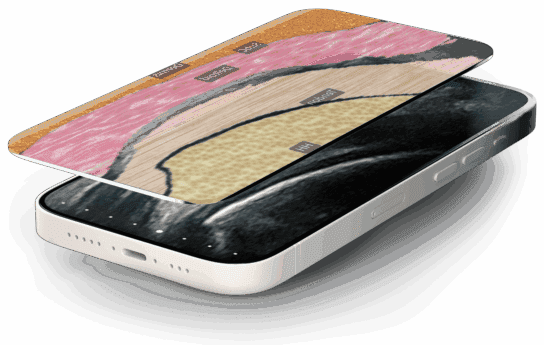
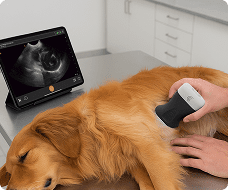
hello everyone and welcome back and I'm Serge and I'm sir hey wait a minute did we just ask the clarius to mirror the image because we are flipped we are flipped that is a nice feature on the new clarius you can give it voice commands and flip the image it wasn't intentional that we flipped but hey we're gonna go with it that's okay this is my better profile anyways okay so now like we said we're going to be talking about the different pathologies that we can find using plural space along ultrasound we've already talked about pneumothorax now let's talk about alveolar interstitial syndrome AIS what are the top two things you're going to be looking at when we're looking at the lung surface so we are looking essentially for two different things we're going to look for increased beelines vertical white artifacts that extend to the far field move back and forth from the long surface with respirations and we're going to look for lung consolidation and what do those represent alveolar interstitial syndrome like you mentioned any decrease in aerated lung at the periphery anything that decreases that aeration of lung at the peripheral lung will result in B-Line lines and consolidation that's right and just like a radiograph you're not going to look at just one spot on the radiograph you want to scan as much of the plural space and lung that you can using the ultrasound same thing photograph when you look at radiograph you're not going to look at just one spot absolutely and then you're going to tie that all together with your plus profiles put all the pieces of the puzzle together the lung surface and plural space pathologies that you see to interpret it in light of clinical findings so why don't we go ahead and scan Daisy's thorax here and look at the lung surface that's right so we're going to go border to border to border border it's not mysterious so again just to be thorough we're going to start right behind that cranial border halfway to two-thirds of the way up so that we are sure we overlung and then once we are sure we overlung we could see there there's our Glide sign down there and some bad signs we can decrease the depth a little bit there and let me see if I can get that image just a little bit better there there we go we could see there the Glide sign I'm going to decrease her gain a little bit there we go now we could see that we have a shimmer we have a Glide sign so I'm right at that cranial border so now I'm going to start sliding back until we see that curtain sign and there it is right there I'm going to increase our depth there so we'll make sure we're over it and increase our gain there and we go so I'm going to border caught a border and now I'm going to go all the way to her call the dorsal border boom I've lost that plural line in the hypaxia muscles our dorsal border we want to come back down and like we did with the pneumothorax we're going to see if we have a Glide sign here we can see the curtain sign there we have a Glide sign I'm at the highest point of the chest now I am ready to go border to a border to border so now I am called a dorsal so I'm going to start sliding the probe and looking at that lung surface for either B lines or consolidations and we do this pretty quickly Dr Boyson absolutely and we're going to scan that dorsal third until we hit that front limb right there this will stop us like surge is reach now we didn't see any b-lines or consolidations so at this point now surge is going to go to the mid thoracic region again looking for B lines and consolidations as you he goes more ventral that's right we didn't see any and then at that spot he's going to come back and this is where the chest gets even smaller so he's getting that curtain sign very quickly like to see here again that's right so scan the dorsal third first pathology we scan the middle third for surface pathology now we're going to scan the ventral region for surface pathology that's right so here we go I'm going to be at the curtain sign again and I'm going to find that curtain there it is and I'm going to follow it all the way down until we try to get the heart and the diaphragm in the same window and in cats that's not always obvious to do but there we go we can see the heart on the left and the diaphragm with the liver on the right and we have a small mediastinal triangle of fat in between them so that's how you know you're at the lowest point of the chest and then I can finish my scanning of the ventral areas looking for alveolar interstitial disease usually what we could do though at this point is rotate the probe parallel to the ribs so we're going to go ahead and do that so we're parallel the ribs it's important to know your Anatomy on here on the right we're going to have the sternal muscles on the left we have the lung and we can see the Glides on there absolutely as you know uh anechoic fluid separating the sternal muscles from the lungs ventrally which would suggest pleural effusion and I saw new beat no B lines or shred signs or consolidations to suggest that we have actual lung surface pathology here that's right and then what we do is we scan between the ribs moving cranially up and down up and down looking for that all the interstitial disease and there we go and that is how we scan the lung for alveolar interstitial disease looking for an increased number of beelines or lung consolidations absolutely so we got one more other thing we'll look at we covered it a bit here with that pleural effusion but we'll look more specifically at how we identify pleural effusion in our next session that's right till next time foreign