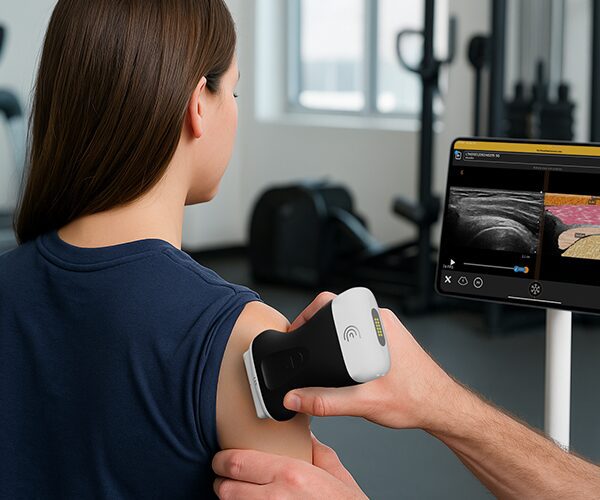
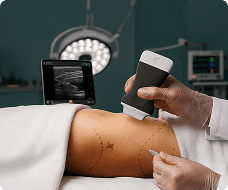
in the next video I will show you the ligaments of the coracoid process and also assessing the Supra and spinatus so when we scanned the subscapularis we ended near the coracoid process to search for impingement so this is also the starting point to scan the cocoa humeral ligament the cocoa human ligament connects the coracoid process with the greater tubercle so when looking at the subscopularis we're also looking at the coraco human ligament which can be seen right here underneath the gliding subscribers and attaching with a broad expansion to the coracoid process so look at this ligament for thickening and also stiffening after having a look at the coracohero ligaments we're going to search for the acromia ligament so connect the coracoid the transducer of the coracoid process but also with the acromion right here and now I'm going to show a lateral rotation external rotation and what we can see underneath the cocoa acromial ligament is the movement of the Sip raspinatus muscle and tendon and also the superchromial bursa uh to check for impingement you could also use other movements for example a abduction a deduction or even if you would assess over half athletes you could also look in this position a sort of a pitching movement what we want to check at this ligament is that the ligament stays flat during the movement this is good and that there is no convexity or bulging up which would mean that there is a pressure underneath then I'm going to turn the model a little bit and placing the arm in a modified cross position and we're going to check the supraspinatus and transverse and we're going to follow the fibers of the supraspinatus until their insertion to the greater tubercle and also back look at the tendon quality tendon thickness but also if you see any fluids in the Super chromial Sub deltoid burzum after having checked it in a transverse we're going to rotate the transducer to longitudinal plane and again we're going to sweep the transducer slightly transducer over the longitudinal supraspinatus back and forth so that we have a good overview over the whole tendon and overlying Bursar if you want to see the Bursar laterally to the greater tubercle so that is a wise thing as sometimes also Bursar fluids can be accumulated right there even if the birds are on top of the supraspinatus looks healthy so always also check laterally to the greater cubicle let's place the patients in with the arm next to the trunk and in this position and now what we're going to look at is the the supraspinatus gliding next to the acromion during a a b duction so a reduction and back to a deduction yes and to see whether there are signs of an impingement of this posterior supraspinatus tendon and the superchromial Bursa in relation to the acromion so you're looking for buckling of the tendon or a fusion in the Bursa and this all yeah well looks healthy in this in this patient so if we're going to slightly transducer more towards ventral then at one point you will lose the acromion right here and you will see a hypercoic transverse cocoa chromium ligament on top of the supraspinatus and now I'm going to move again to abduction and a deduction and you will see that the Bursa and the tendon is moving underneath the hyperchoic transverse ligament this is a very good spot to to look at I see more impingement signs at this level than I will do at the acromial level so this is definitely something which I do always in my protocol and last technique I want to show you is the supraspinatus muscle so if you have a large cuff tear you will expect also a fatty infiltration so if you want to check for fatty infiltration you can place the transducer and transverse plane over the supraspinatus muscle all right like this and now we can see the supraspinatus muscle in between the spine of the scapula and the clavicular and we can see the hypercowic supraspinatus upper neurosis and looking at the muscle I will compare the muscle with the overlaying trapezius muscle so the academicity of both muscles should fairly be the same last as a strength test so I'm going to place a pressure against the patient's arm asking for a abduction and then looking at how the muscle fibers behave during this contraction foreign