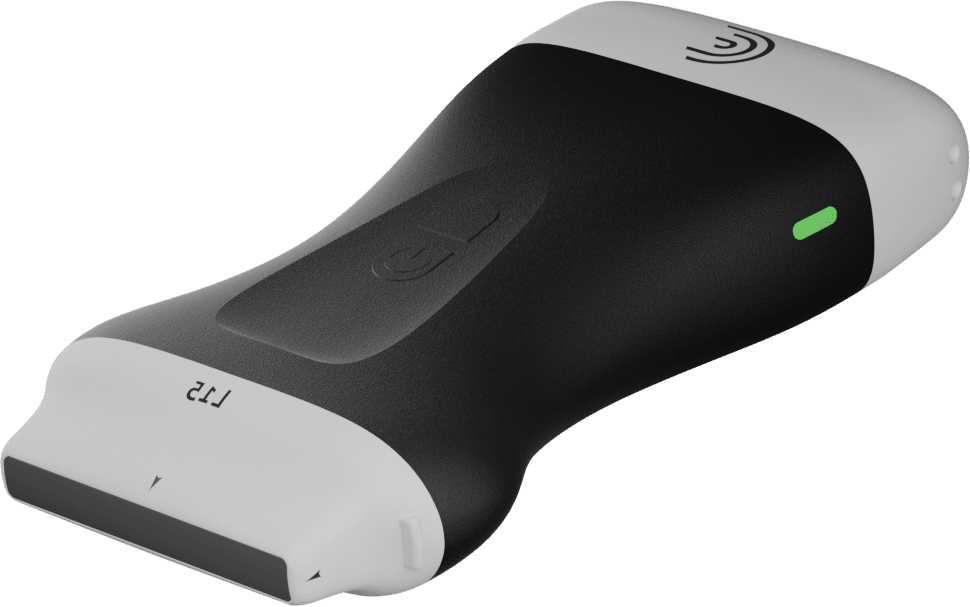
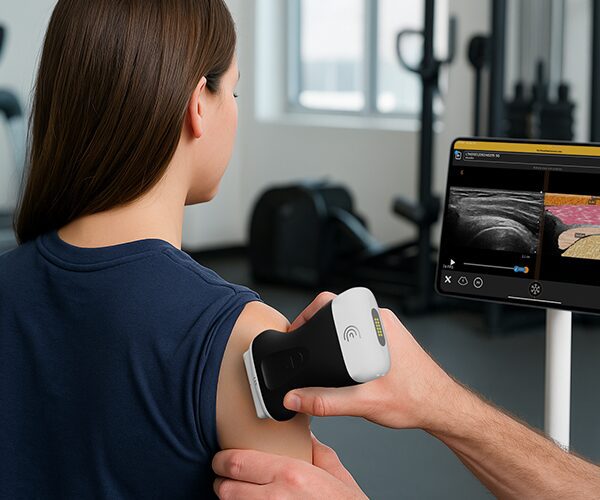
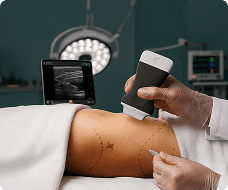
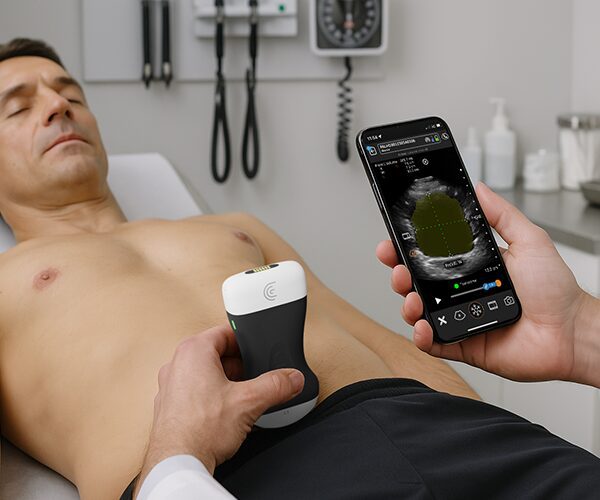
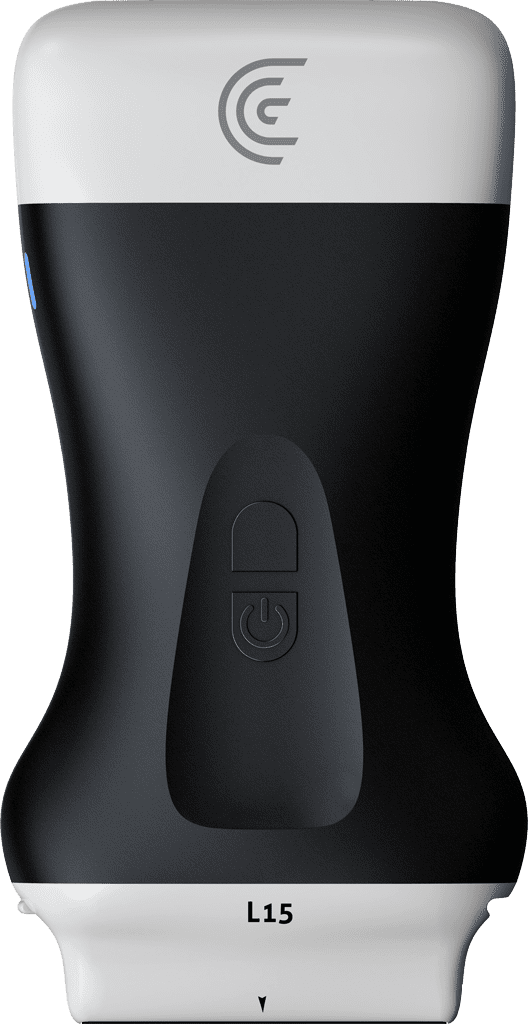
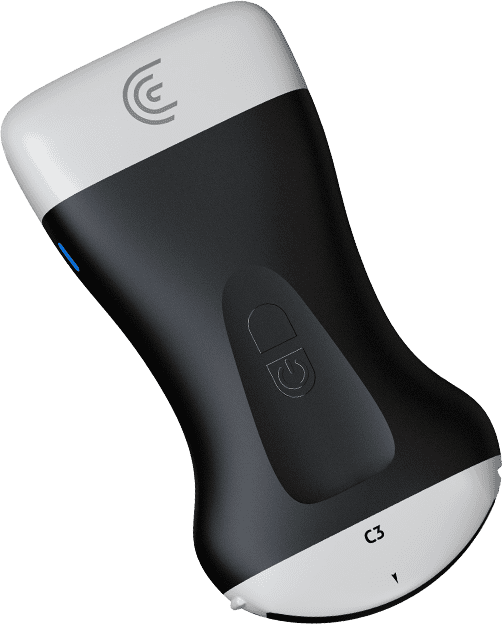
hi everyone I'm Dr Muhammad bardy I'm a practicing rheumatologist in Vancouver British Columbia today I'll be showing you a limited assessment of the knee for evaluation of inflammatory sinovitis or enthesitis I'm using the clarus l15 uh probe during this assessment so we'll start as you can see our patient they're laying down they're comfortable we put a bolster uh underneath the knee to flex the knee at approximately 30° this will allow assessment for any sort of joint fusion and when we do the assessment for enthesitis we'll actually remove that so the leg is completely straight so we're not creating any tension on the enthal points starting here when we place the prob here we want to be able to see the patella and coming off that we can see the quadricep tendon you can see the fibr laminer structure and if we stay here approximately the other structures we can see distal deep in the joint we can see the femur we can see the super patellar fat pad and we can see there's a sinovial recess which is connected to the super patellar pouch or sometimes referred to as super patellar Bersa but that is contiguous with the joint itself if you do find an Fusion or you want to investigate it further uh you would want to rotate your probe 90° as you make contact here you can see the femur this hyperic structure at the bottom as we move down dist you can see this hyperic region that's actually where the quadricep tendon is if you're not sure tilt your probe you can use the anos to help you identify where that is and in this case there's no joint of fusion to identify but if there was you would typically underneath the quadricep tendon see that a fusion there as well specifically if you were going to assess the quadricep tendon at the insertion if you rock your probe you can start to see the fibers of the quadricep tendon and I'm actually going to reduce my depth bring my focal point up and you can start to see uh the fibers inserting onto the Pella so you want to go from from the medial pole and sweep out laterally to the lateral pole here to evaluate for this and you'd be looking for calcification thickening loss of fibrillation you want to be looking specifically for an enthesitis any erosions onto the patella here and you would use your Doppler you could bring your Power Doppler up bring your box all the way to the top um being careful not to compress if you want to add more gel and float your transducer to really be extra certain that you're not compressing the structures look looking for any sort of Doppler signal near the actual enthesis where the tendon and Bone meet I wouldn't go too far proximal like in this too far proximal because there can be nutrient vessels in this area so you want to focus your assessment next it's important to look at this in transverse when you come down distally as you come all the way down you want to see the patella here we can see the Bony Contour is very clear very crisp this is really important to see and you want want to move following the course of the patella if there's any erosions you would put your Doppler on if you were saw erosions really helpful to look for if there's any active doler signal at the erosive SES and again you want to assess these these areas in good detail it is important when you're doing your anestis scanning especially when you get when we get down to the patella tendon that the leg is actually straight even when you do your quadricep tendon you can do that so I'm going to actually remove the bolster now so we're going to take this up and we'll have our still keep their leg totally straight they're going to come all the way down for us so same thing if we're looking at the quadricep tendon as I showed you it's just sometimes if it's totally straight here you see there's a lot of anosy tropy so you really have to rock your probe down to really get into that view so a little bit of flexion is okay but ideally if it's straight from here we're actually going to go down disly and we're going to go look at the patellar tendon sometimes refer to as the patellar ligament so getting into the patellar tendon as we come down here we can actually see here's the patella as we come down more distally we can see the patellar tendon here so then we're going to move distally and we're going to start looking at the patellar tendon sometimes referred to as the pellar ligament we have the leg completely straight to take out any tension out of this structure so we don't reduce our sensitivity of our Doppler signal and it is important to sweep laterally as well as medially to see the tendon in its whole View and what we want to do here is uh you want to maintain that lighter pressure as you look through there so you're trying to see is there any sort of erosion is there thickening calcification uh loss of fibrillation uh you do want to use your Doppler and again bringing your Doppler all the way to the surface and sweeping around here as you go medial to lateral keeping the pressure light floating the transducer as best as you can sometimes if a patient has a dry skin or thickened skin you may need to let the gel soak in for a while until so you get better echogenicity here as well um this is on the proximal portion also important you rotate probe 90° and that you assess on transverse fuse is there any erosions on the patella as you start to come distally looking for any sort of Doppler signal you can use the anosy tropy to show you the margins of the tendon as well and then from here we can follow the tendon and we can go uh distally uh to the tibial tuberosity and it's important you don't stop your Imaging here you want to go all the way down so you can see all the way to the distal fibers of the Patell tendon as it inserts here okay there is a deep infr patellar Bersa that is right in this corner here you can see a little bit of fluid in that space important to evaluate um that area as well there can be ptis this deeper structure here is actually Hoffa's fat pad but our interest is really on the enthesis here so you can see nice clear fibrillation pattern on the insertion here again sweeping medial to lateral very important and uh again if you rotate your probe 90° using an ayop to identify for you where the tendon is and looking at the Bony Contours As you move distally to ensure there's no erosions uh or cortical defects so that's important and then as previously highlighted you want to look at your power doppler or your Doppler settings here and again keeping light pressure and kind of assessing the whole in thesis moving through it sweeping medially and laterally and then if you look on if you find pathology definitely identify it in two planes sometimes there are nutrient vessels that are feeding the tendon again so it's important to to look at this carefully if you go too far approximately you may begin to find Doppler signal that's not related to enthesitis but otherwise nutrient vessels so that concludes assessing for enthesitis at the knee um through the quadricep patellar tendon as well