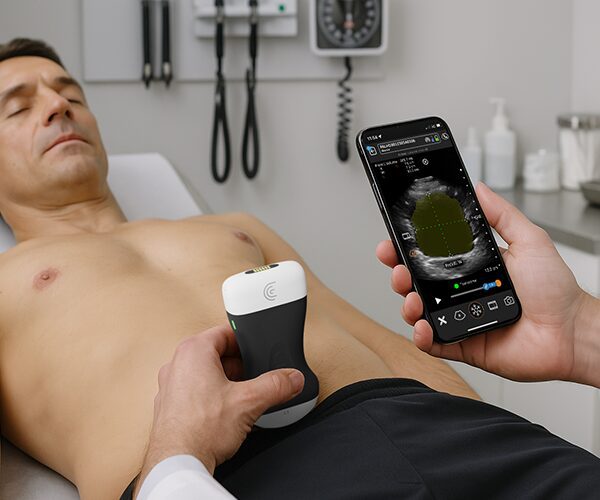
hi my name is tom cook i'm an emergency physician with prisma health and the university of south carolina and this is a short video on how to use epss to evaluate left ventricular function epss of course is an acronym which stands for e-point septal separation and to do this exam we'll start out in b mode and we'll get a view in the perishable long axis you can do this with the personal short axis but we'll use the long axis for this particular demonstration and we'd like to focus on the mitral valve the mitral valve is the largest valve in the heart it's also the only one with two leaflets and the anterior leaflet in particular is much larger than the posterior leaflet very very easy to see in this examination we like to focus on the tip of the anterior leaflet and see how it moves towards the interventricular septum and if the patient has normal function as blood comes from left atrium into the left ventricle we'd like to see that valve open completely and the tip of that leaflet touch the interventricular septum epss allows us to quantify that movement of the anterior leaflet to do that we'll go into m mode m mode stands for motion mode and what it does is it takes all the changes in echogenicity along this line and it maps it out over time so the y-axis is depth and the x-axis is time when we do that we can see that this area up here which is black and the right ventral corresponds to this area we can see that the interventricular septum corresponds to this area we can see that this bright area down here which is the pericardium is this area and we can also see the anterior leaflet of the mitral valve is represented by this waveform right here in the middle of all that black area which is the left ventricle we focus our attention on this particular waveform and when we get something that we think is good enough to measure we'll go ahead and freeze that image now as the heart goes through the cardiac cycle we can see that the tip of the anterior leaflet moves towards the interventricular septum this is the early part of diastole you have a large amount of blood coming out of the atrium and going into fill the left ventricle and so the valve opens to its greatest point and you can see that tip of that leaflet gets very very close to the interventricular septum as the chamber starts to fill the valve starts to shut and then the atria contracts and you get a second waveform which is typically not as big as the first waveform the larger of the two waves is referred to as the e wave as an early diastole and the second wave is called the a wave for atrial contraction e point septal separation asks us what is the distance between the e wave and the interventricular septum during diastole and the way we measure that is to go into our measurement menu right here we tap on epss and then we establish our first line near the interventricular septum and we establish our second line near the tip of the e wave we move those two so they are in precisely on the points that we want and then we look at the measurement and in this particular situation we can see that it's right around eight millimeters eight millimeters in left is a normal value for e point septal separation and in this particular system you can see with clarius that it actually estimates the ejection fraction at 55 so in summary epss is a very quick way to quantitatively assess left ventricular function and can be used in a number of different situations at the bedside