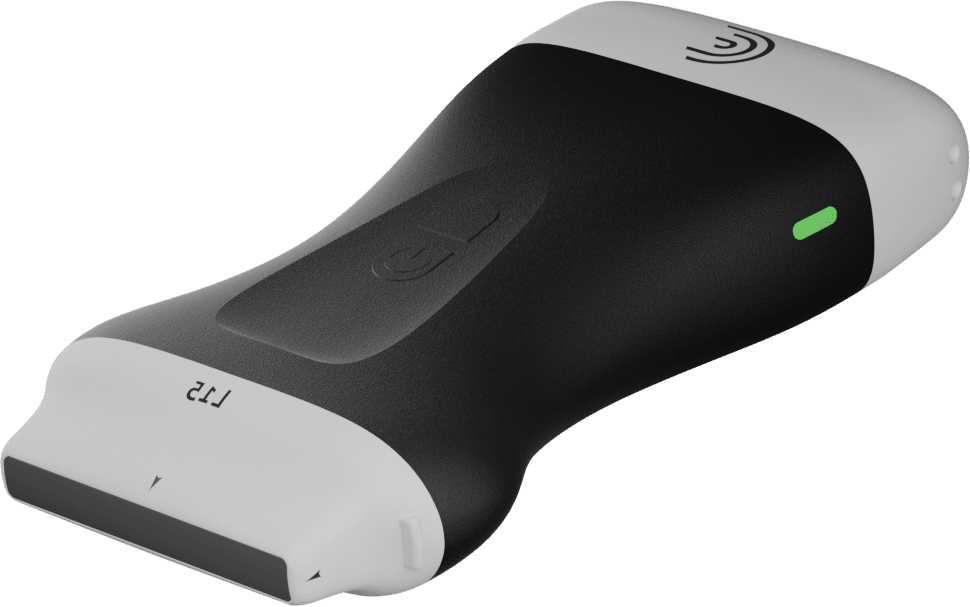
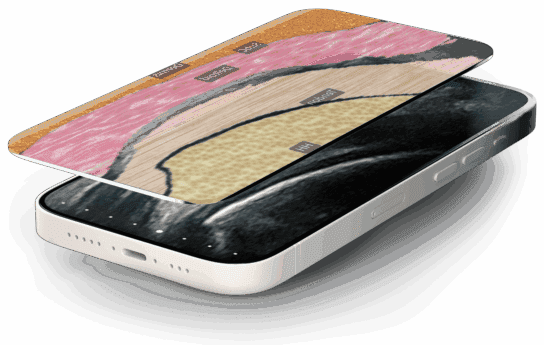
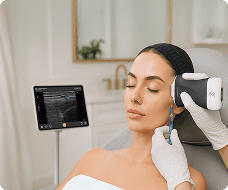
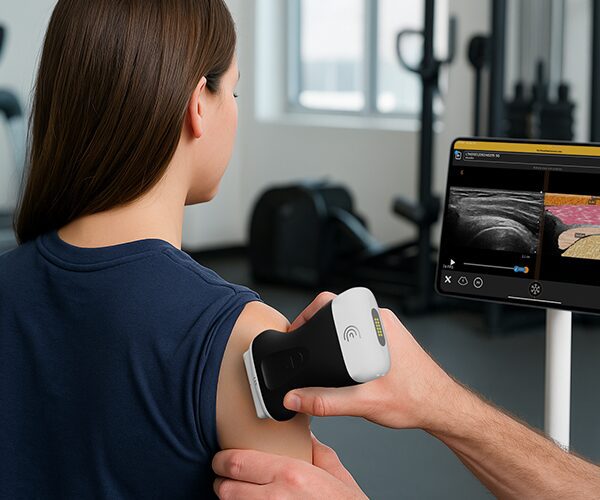
let's take a look at this case this lady had forehead filler by an unlicensed practitioner who had injected her over the central part of the forehead this picture was taken on the day of treatment she doesn't look like she's having a good time immediately after treatment she experienced severe headaches swelling redness and significant pain so much so she was out of work incapacitated for some time she didn't have any skin changes so her practitioner didn't take her seriously she eventually convinced the initial practitioner to see her who attempted dissolution once and told her that's all that could be done because she didn't see a problem this is her eight weeks after her filler treatment on the day she presented to me you can see that there is an area of swelling at the glabella this lumpy swelling extends all the way up into the forehead to the hairline to the right of the midline at this stage she was experiencing persistent headaches diffuse swelling and tenderness to touch the area she'd had the complication for two months and the psychological impact was obvious she was frustrated tearful and frightened and this is how many patients present with complications they're at the end of their tether and they need delicate management being able to use ultrasound to tell them exactly what's going on is crucial it helps rebuild them emotionally and their trust in aesthetic professionals many injectors don't treat the forehead with filler out of fear of the risks in their 2019 update on avoiding and treating blindness from fillers the lesnee and colleagues found that whilst the nose was the number one site for vision loss from filler at 56.3 percent the glabella at 27.1 percent and forehead at 18.8 percent with a second and third most risky areas for filler treatment the super orbital and Super Truck layer artery are terminal branches of the ophthalmic introduction of filler to either or even the superficial temporal artery which anastomosis with them can lead to filler reaching the eye and resulting in vision loss according to a study by ogojanitis in 2020 the average depth of the main forehead arteries is 1.5 millimeters with a diameter of one millimeter it is expected that the super chocolate artery causes one to two centimeters lateral to the midline and the supraorbital two to four centimeters however their course is highly variable and may have a plethora of branching patterns so the only way you can predictably reduce risk when treating these areas with filler is to use ultrasound to identify vessels when scanning the forehead we expect to see most of the layers including hyperechoic skin ISO echoic subcutaneous fat hypoechoic frontalis which can be seen as an indistinct band in the middle layer the frontalis isn't as easily identifiable as some muscles in other parts of the face then there's the hyperechoic subfrontalis fascia a layer of loose areola tissue and hypergoke periosteum and Bone you may have been a little confused about what is going on beneath the periosteum in the forehead the periosteum and Bone are the deepest surfaces and so sound waves don't pass through so there is nothing beneath this layer however on your image you might get some extra lines beneath a solid white line of the periosteum which can be confusing this is a mirror artifact this happens when the transmitted sound waves bounce off a highly reflective interface a so-called acoustic mirror in this case it's the frontal bone they return to the transducer and result in a signal and image that can be very similar in shape to the structure they've been bounced off in the forehead the mirror artifact is often weaker and can be seen as these lines beneath the level of the bone let's do some scanning first in B mode I've marked out in red pen on her skin the swollen and tender areas in reference to my scanning immediately we can see round anechoic deposits which I suspect to be filler it could be a vessel though they come up anechoic too but it's a bit big for that moving cranially in the central forehead you can see the extent of the filler there is a lot further up still there are more deposits of varying depths and they're sizable and spread over much of the central part of the forehead looking at the scale on the right some of these measure around two by five millimeters let's switch to Doppler and reconcile these findings with the vascular Anatomy there's no colored flashes here which means all of this is filler in the glabella so here it gets interesting we're in the glabella at the Super Truck layer agorjianitis described the Super Truck layer passing superficial to the corrugator and deep to the orbicularis and frontalis muscles with an extremely variable course with many branches advancing cranially we see the super chocolate come closer to the skin and again we have a large filler deposit very close by this is the area she described as painful there's a large filler deposit close to a branch of the super droplet artery as described by shell Kane that 2019 study I shared earlier filler can irritate vessels this can result in edema and pain because there's no room for expansion in the forehead a further consequence may be activation of chokinastomoses resulting in ischemia of the forehead this can be delayed due to irritation by filler so seeing filler this close to the vessel is really concerning now that I've identified the filler I can go ahead and get rid of it key to this is getting a good position so you can visualize the needle the forehead is only around four millimeters thick so you've not got much margin for error before you're on to Bone my positioning is in plane so the longitudinal axis of the clarius footplate is in line with the needle you can see my needle coming in on the left of the screen towards that Central filler deposit I deposit only a small amount of hyaluronidase and it is precisely targeted again no more than 0.1 mil this case is more tricky as there are multiple sites of filler which could be causing the problem this pulsating vessel is likely the supraorbital placing hyaluronidase here can cause vessel injury and she did end up with bruising we must make patients aware they may be bruised after dissolving more inferiorly towards the brow you can see a very large vessel that's extremely close to the filler whether super orbital or super trochlea both have direct connections to the ophthalmic artery so we can see that this filler placement was very much a near hit whilst I dissolve some more I want to share four tips for guided dissolving with you angle your color box when you scan an angled colorbox is more likely to pick up vascular flow so make sure you set yourself up correctly make sure you have plenty of gel so that this acts as a cushion to prevent tissue compression especially in delicate areas like the face applying pressure will skew your accuracy so the more gel you have the less you're likely to compress I use the ultrasound gel beneath a sterile probe cover on which I then apply sterile ultrasound gel you must make sure your procedure is clean so you should be covering your clarius with an appropriate cover for all guided procedures to prevent contamination stabilize yourself you can see here I've got my hand rested firmly on the patient's head and that's really important for stability don't be afraid of using parts of your patient's face as a rest it will improve your Precision immeasurably rather than attempting to hover awkwardly over your patient's face this scan was one hour after hyaluronidase treatment the reason I waited an hour for this patient is because she traveled over five hours to get to me and I wanted to make sure her fellow was all gone you can see that all those black deposits have now disappeared after around an hour this is what we expect that cotton wool appearance we saw in the tear trough in the other case has gone and the filler has pretty well broken up completely here we can once again see the normal layered anatomy of the forehead with skin subcutaneous fat frontalis subfrontalis fascia loose areola tissue and Bone I fixed her her complication is resolved so what impact do you think this will have on this patient this procedure is seriously impressive when you are properly trained and can use your Claris with ease this is revolutionary she will go home happy and I guarantee you she'll be a patient for life what's more she'll refer all of her friends