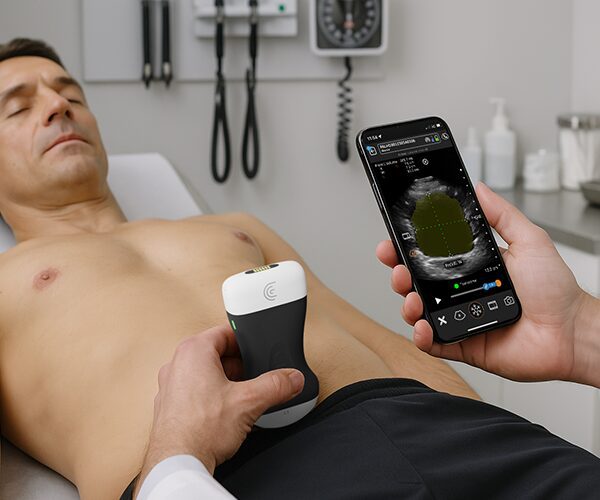
hi my name is Tom Cook and I'm an Emergency Physician I practice in South Carolina with Prisma health and the University of South Carolina and this is a video on the rush exam Rush is an acronym which stands for Rapid ultrasound and shock and hypertension and as with most emergency physicians I see a lot of patients who require resuscitation from a variety of different pathologies and by just doing a few examinations in sequence with ultrasound you can rapidly determine not only what the cause of the patient's shock is but also what the next steps in management are to start the exam I'm going to select the Auto Select application and what this does is it allows me to examine many different areas of the body without having to go back to my preset selection and choose a different option and it makes the exam much easier to perform and you can also accomplish it in a shorter period of time let's start off by looking at the heart so let's start with the cardiac exam we can see this is a parastern along axis and in this particular situation this is a normal exam the left ventricle has normal function and the right ventricle is not dilated as you might see in massive pulmonary embolism the second part of the exam is to examine the inferior vena cava in situations where patients have shock and hypertension understanding the relative volume status of the patient's graphical and by looking at the inferior vena cava we can get a good estimate of the patient's volume status there's two parameters that we want to look at when we're looking at the inferior vena cava and that's the size of this vessel as well as its flexibility now if you have a situation where there is an obstructive type of shock or hypotension such as massive pulmonary embolism or pericardial Fusion or attention with Borax we would expect the central Venus pressure to be very high and the inferior vena caval would be dilated and stiff conversely we had a patient who had a low volume status say from ectopic pregnancy or ruptured aortic aneurysm we would expect that the inferiorated cable would be flat after We examined the inferior vena cava we'll go ahead and move over to the right upper quadrant and much in the way that we did with the fast exam we'd like to look for evidence of free intraperitoneal fluid by looking at that area between the right kidney and the liver and also examining down here by the inferior margin of the liver for the evidence of intraperitoneal free fluid and the final part of the examination is to look at the law we're going to place our transducer at the mid-clavicular line between the first and second or second and third grid space and we're going to see if we can pick up evidence of plural sliding this tells us the patient does not have a pneumothorax at that particular area of the chest cavity in addition we're also going to look for evidence of pulmonary edema by looking for the presence of beelines in this examination we can obviously see plural sliding which is a normal finding and we don't see any evidence of beelines indicating pulmonary edema and of course we're going to do this examination on both the right and left sides of the chest and once again we see plural sliding and no evidence of pulmonary edema so to summarize the rush exam we look at the heart the inferior vena cava the right upper quadrant both lung fields and we can accomplish this examination within three to four minutes it gives us very very important information about not only the type of shock we're dealing with but also what our next management decision should be foreign