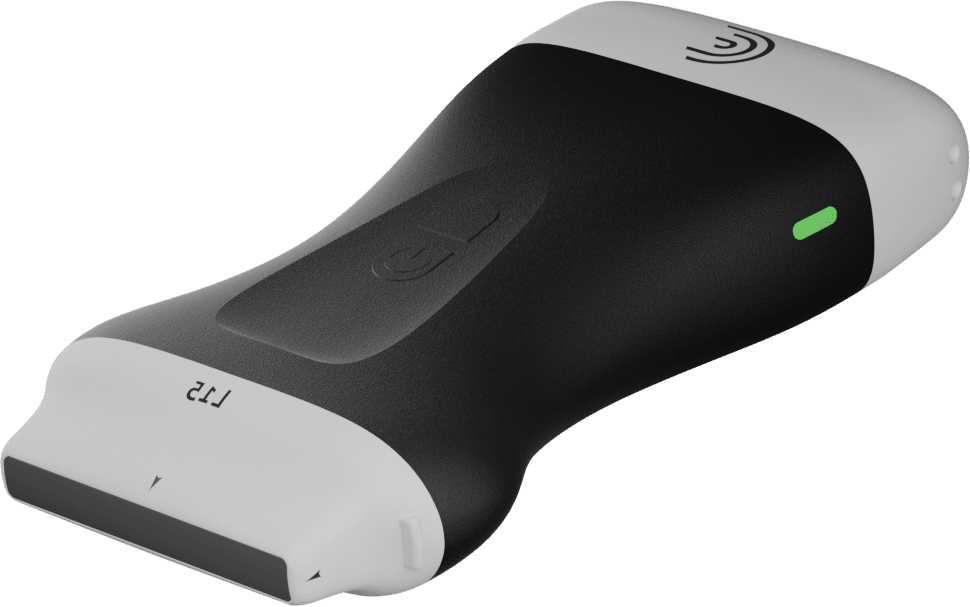
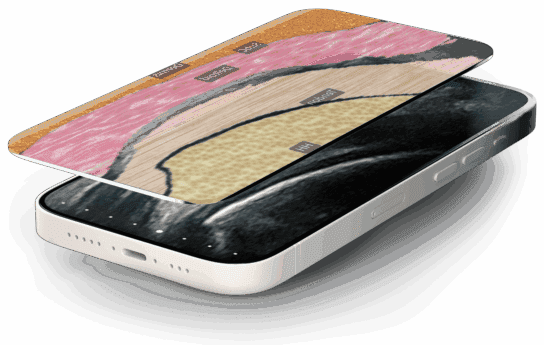
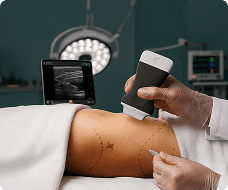
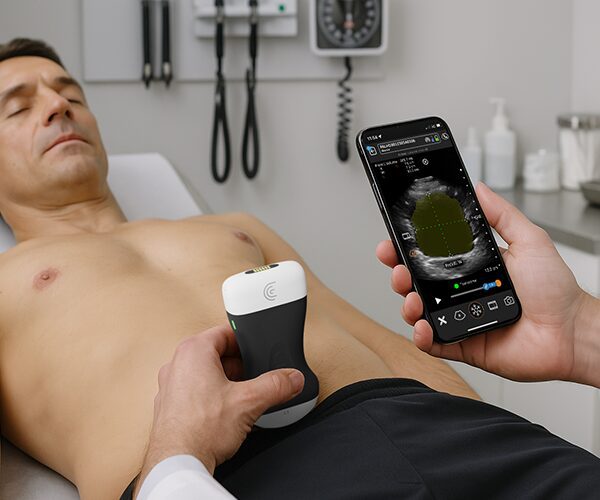
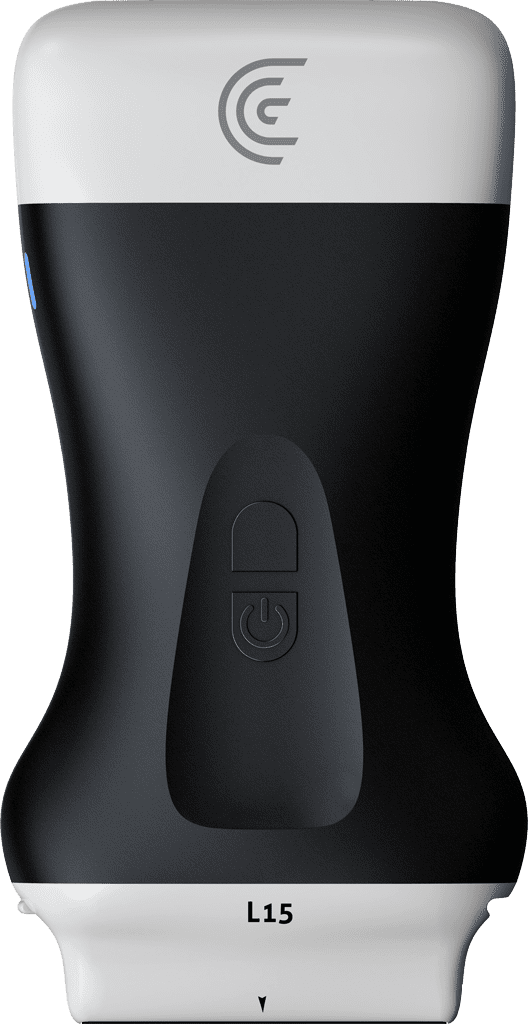
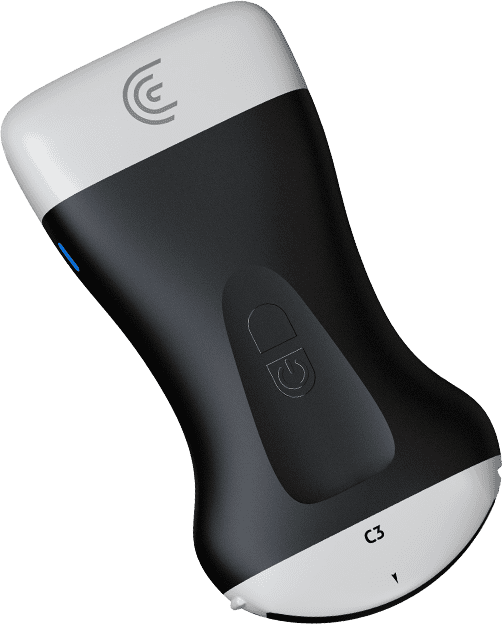
Hello everyone. My name is Dr. Kwin. I'm an aesthetic plastic surgeon and chief medical officer of AVA Plastic Surgery and Reconstructive Surgery Hospital here in Ho Chi Min City, Vietnam. My specialty is inbody contouring surgery. And I have this lovely patient here today to help me demonstrate to you how to use the L15 Clarius handheld ultrasound in the assessing of the abdominal wall in the context of body contouring surgery. So I put on a lot of gel and I tell the patient I warned the patient that the gel is a little bit cold and please bear with me. I expose the abdomen fully so I can see the pubic bones and I can see the waistline from the right anterior axillary line to the left anterior axillary line. I start with a scalp scan on the left of the abdomen. Usually the setting that I use for this abdominal scan is MSK setting because with these um with this setting I can see the skeletal muscle very clearly. I'm explaining to the patient that I'm seeing her rectus above the rectus is fat and then we can even see because she's very thin. We can see the intraabdominal organs. Okay. So just a quick scan to just scout for any abnormality up and below the middle of the abdomen. The linear alba above the umbilicus below the umbilicus and then the right side of the abdomen. Okay. Then I assess the linear semi lunar line and the oblique muscles group and her waist. Okay. Nothing abnormal so far. Scan the other side. The other right linear semoluna line. Oblique muscles group. and the waistline. So, the ClariS has this very friendly features where you can see a notch here. It's equivalent to the Clarius logo on the left side of your screen so we can always be oriented. Okay. Now, I going to go into a detail scan of the abdominal wall. And usually I start my detail scan with the left rectus which is on my right side. I go from top to bottom and at a level about 3 cm above the umbilicus I will make my measurement. So with the clarius you can turn on your voice control and you can use the voice control to aid you with your measuring. So I can so this is free cm above the level of the umbilicus on the left side of the patient. I will say freeze free and then I can start the measurement of the subcutaneous tissues of the thickness of a rectus muscle. So for the rectus muscle measurement, I try to include the anterior sheath as well as the posterior sheath. Okay? And you can see that this patient doesn't have a lot of fat at this level and a very thick rectus muscle. Good. So here's also a chance for me to engage the patient and show the patient what I and she are both seeing. I asked her to breathe with her belly and you can see the visceral moving. Okay. Okay. So, I'm telling her the part that is moving. Brea your belly. The the part that is moving is the internal organs and anything that's above the internal organs is your rectus muscle here. Immediately above the internal organs is a rectus muscle and above the rectus muscle is the subcutaneous tissues where the fat layers are. Okay. So I continue my scaring downward and I look at the left rectus muscle below the umbilicus again at the level of free cm below the umbilicus on the left side. I do a measuring I do my measurements again. Naturally you will have more fat deposit in this area. Freeze measure. Okay. So, her rectus is the thickness is is quite um is quite even from top to bottom. But then her she has more fat deposit in the lower abdomen than in the upper abdomen. It's slightly thicker at 1 cm. Okay. So, I complete my scan on the left side. Then I repeat this scan for the right side. Again at around the level of free cm above umbilicas on the right side I will freeze and do my measurement again about the same as the other side. Unfreeze. Then we go down below the umbilicus around 3 cm. Again on the right side I do the measurement freeze. So again very uniformly distributed fat and um rectus muscle thickness and I can capture this image capture and then I resume my scan. Now we turn our focus on the linear alba and this structure is very important. The linear is very important because the linear alba will be abnormal in patients who have uh who is obese or who are postpartum. What is a linear alba? The linear alba is a space is a fascia between your left rectus muscle and the right rectus muscle. And again at the level of free cm above the umbilicus I can do the measurement of the linear alba. So the linear alba is very obvious in thin individual and athletic indiv individual. This is a line that you see in the patient in the people with with six uh six-pack. This is a midline and you you can see a little bit of this this midline in her although it's not that obvious because freeze because she had a moderate amount of fat about 1 cm above this linear alba. So you don't see the line as well as a very thin individual. But this is also a good space for a good position for us to measure the width of the linear alba which is about 11 mm and also the thickness of a linear alba is about 3 mm. So in the upper abdomen the linear alba is thinner than the lower abdomen. The normal measurement for the linear alba, the the thickness of a linear alba in the upper abdomen is between 0.9 to 1.2 mm. Um, I'm explaining to her that her measurement in the upper abdomen is normal in term of the thickness. It's 3 mm and the width is abnormal when it is more than 20 mm. So the width of the linear alba in the upper abdomen if it's above 20 mm it is considered abnormal and that is a definition of diastasis recti which is a separation of a rectus muscle unfreeze. So we can go down into the lower abdomen and you can see in the lower abdomen the linear alba is even thicker for her and in in in normal patients the average thickness in the lower abdomen is between um 1.9 mm to about 2.4 mm but this patient is more than that freeze uh linear alba in the midline is very very thick. It's almost almost 4 mm even more than that almost 5 mm. When you scan all the way down here near her pubic bone, you can actually see a muscle called the perimealis. This is a very small muscle group at the very end of a linear alba. You can see this muscle in the midline here. Okay. So the patient doesn't have any diastasis recti. Has very good muscle tone, very little fat. Now another part to assess is a linear semi lunar line which is I start on the left side and freeze. The linear seminal line is where the oblique muscle group meets with the rectus abdominis and it's shown on the ultrasound. Here you can see the rectus abdominis on the left and the oblique muscle group on the right starting with the external oblique. The internal oblique is a ficus one and then the transversus abdominis and the transversus abdominis becoming the posterior sheath of the rectus abdominis. You can see it turning into that thicken sheath over here. It's a very beautiful anatomy. And we can also measure the thickness of the fat layer on top of a linear semoluna line because this will tell you whether the patient has any fat there for you to scope. You want to scope this area very well so that the patient can show off their linear semoluna line. Okay, unfreeze. And you can see as I go down on the abdomen the the subcutaneous tissues above the linear seminal line thicken crease. So just now it was 5 mm and now it's become almost double 11 mm and because of the linear similar line thickness in the lower abdomen you her line her linear similar line is not apparent in her lower abdomen. And I will ask a patient if she wants this to extend downward or she just want it to limit it in the upper abdomen. So this information is really useful in my surgical planning as well. So yeah, so that's that's why she's here because she wants her linear simul extend all the way downward. So we call this in a female a high definition um lipos suction because we need to create the line all the way downwards. In moderate definitions the line can stop around the umbilicus level which he's already has. So we can repeat the scan on the other side and you can immediately see that in the upper abdomen there are more subcutaneous tissues above the right linear similuna line. So her left line is clearer than the right line because on the left there's less subcutaneous tissues above the lines. And then as we go down so this subcutaneous tissues here has is is is hiding a linear seminal line. Okay. So it's our job to expose it later on. Okay. So I have completed the abdominal scan for this patients and it has given me and the patients a better understanding of her anatomy and I can also understand her expectations and her wishes better in term of how she want the definition of her abdominal wall to be.