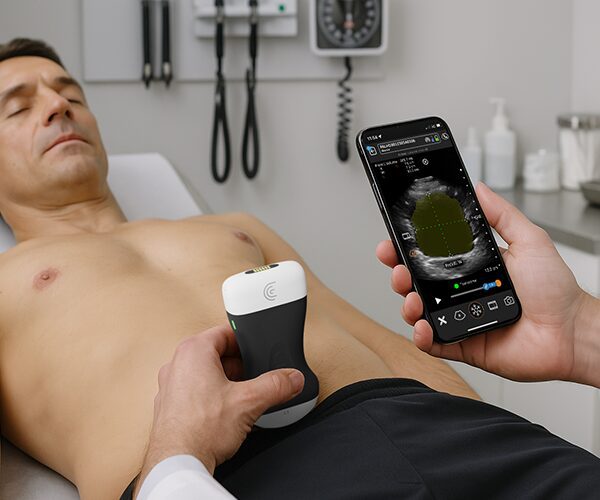
hi my name is Tom Cook I'm an Emergency Physician and I practice with Prisma health and the University of South Carolina and today we're going to talk a little bit about the quick assessment of left ventricular function this is a critical skill for all emergency physicians as you well know and this is just an example of how you can sit down at the bedside and quickly make an assessment of how well your patient's heart functions so just to get started we'll get a parasternal long axis view of our patient today and as you can see right away the anterior leaflet of the mitral valve moves and makes contact with the intraventricular septum in diastole and so we can see that is one indication that has great left ventricular function he also has excellent contraction in the axial plane as we can see in this part of of the image and we can also see that the annulus of the mitral valve moves quite a bit towards the apixel heart again another indicator of great left ventricular function in longitudinal plane and finally we can just look at the heart muscle itself the interventricular septum as well as this portion of the heart and we can see that every time the patient goes through Sicily the muscle gets shorter and it gets thicker so this is just a way that I very quickly go in and assess the heart of the patient I always make sure that I check off all four of those things and it's something that everybody can do within about 30 to 45 seconds and really get an accurate indication of how well the patient's heart functions