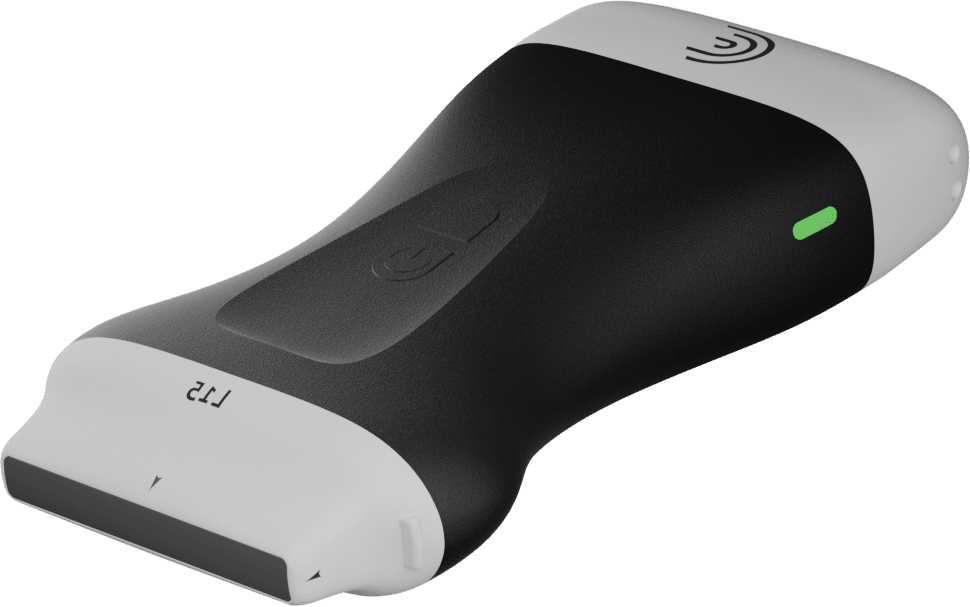
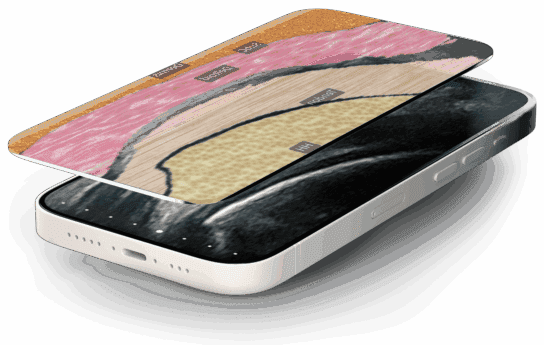
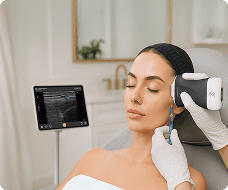
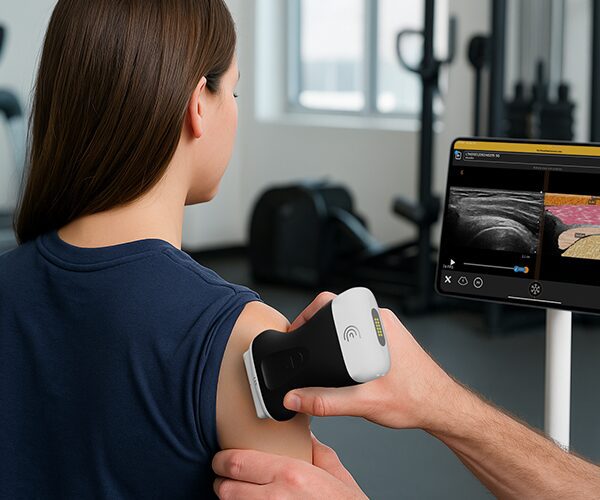
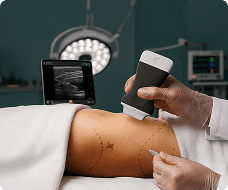
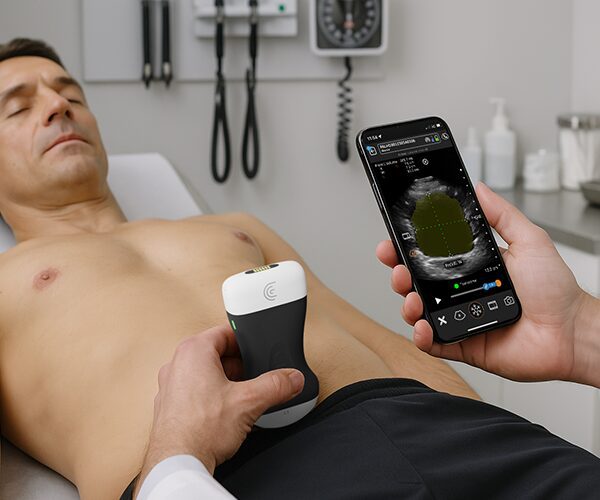
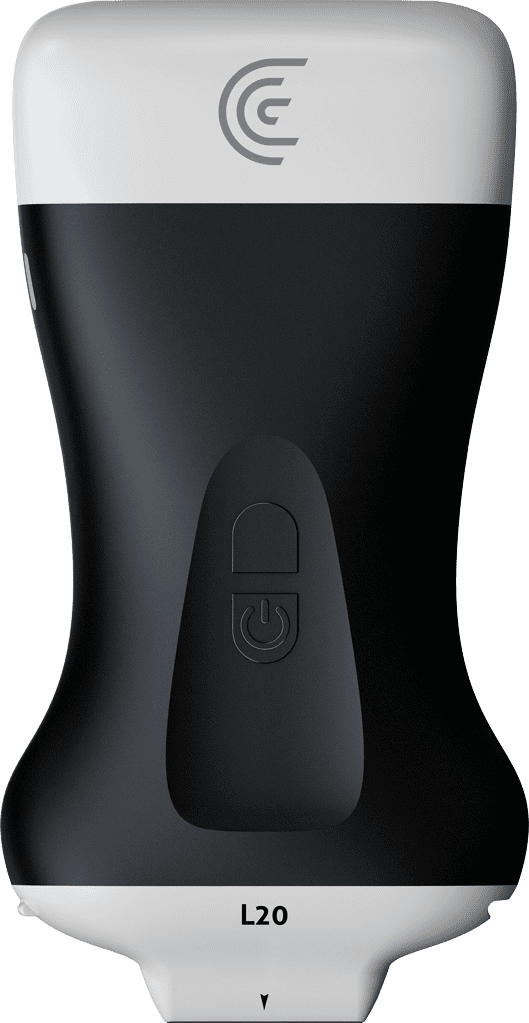
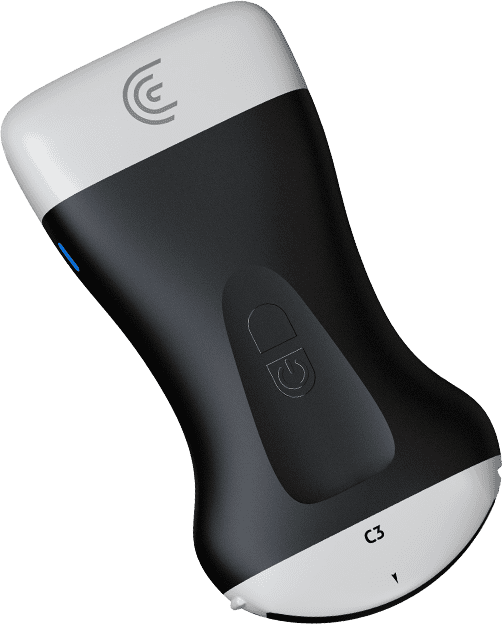
my preference is to start with a cheek and treat into the deep fat compartments to restore the cheek volume this will improve the og curve and lens support to give a more feminine contour this acts as an ideal precursor to treating the tear trough as the added cheek support allows subsequent filler underneath the eye to be placed sparingly and blend nicely to the mid face let's first familiarize ourselves with the layers we expect to see in the cheek and the tear trough before we start treatment here's a view taken of the cheek area in the direction my cannula is going to be traveling from lateral to medial i use the lateral access point because i find it allows me much better access to the deep fat where i want to volumize and i can use my ultrasound at the same time with ease from superficial to deep we can observe the skin followed by the subcutaneous fat underneath this lies a layer of facial musculature and smash followed by the deep fat compartment into which we're aiming with our filler and finally we've got bone now let's look a little further up at the area of the lateral orbit we see the skin and the subcutaneous fat here is much thinner under this is the orbicularis oculi muscle beneath which lies the lateral suff and finally bone as we move along to the medial aspect of the tear trough we can see the layers of skin orbicularis and bone placement of filler should be beneath the orbicularis but we also have the hazard of the angular vein which travels in the supraperiosteal plane within the tear trough here and we expect to find the angular artery medial to it we need to be mindful of the anatomy and this is why using ultrasound is essential check out the 2022 paper by calamani who made some very interesting findings about the position of vasculature in the tear trough using ultrasound so let's start treating i stand behind my patient for better visualization of the developing cheek contour and i find it gives me better control of my cannula and clarius and here i'm using a 22 gauge cannula through my entry point i advance medially whilst maintaining contact with bone and i can now go ahead and check where i'm at i gently move the l20 it's important to keep the cannula steady at this point so you've got a chance of finding it and there it is there's a little reverberation artifact here but you can clearly see my hyperechoic cannula within the tissue align the central point of the l20 up with the point on the skin where i want my correction which corresponds with the center of the screen so turning over to color doppler we are close to bone and the deep fat here and i check my cannula position with respect to vessels and i am happy with what i see so i can go ahead and inject and watch for the correction in the cheek contour from above the patient so i can compare the two sides i want to place a little bit more medially into the deep cheek fat so i go ahead and advance the cannula and then find it with my clarius there's the bone and there's my cannula nice and deep just going to adjust my position slightly and then turn on my color box with gentle movements i'm being careful not to exert too much pressure on the tissue here's the cannula and again i can see there's no flashing vessels close by so i go ahead and place a little bit more product generally i place no more than 0.1 mil increments and i find i use much less product with ultrasound because i am predictably in the right position