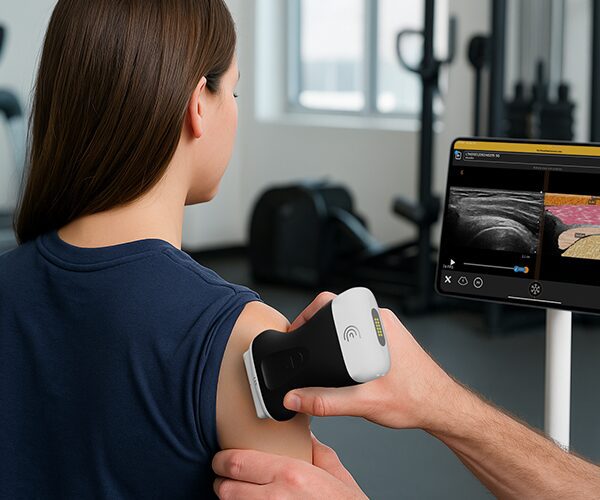
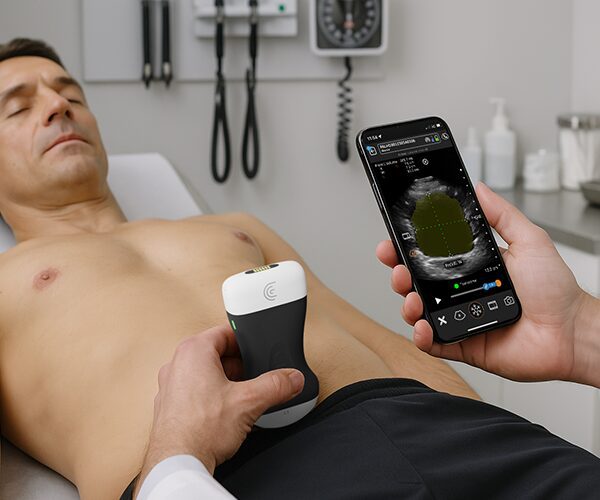
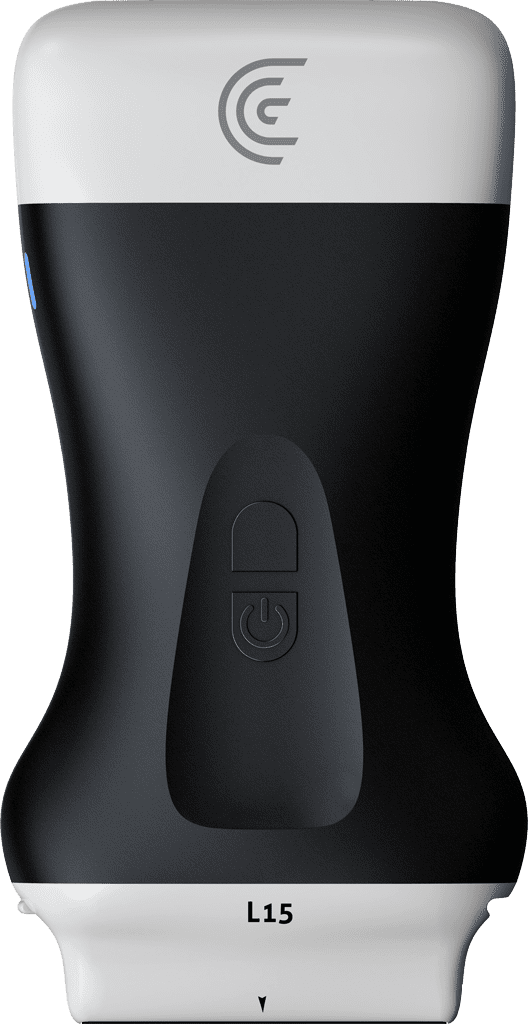
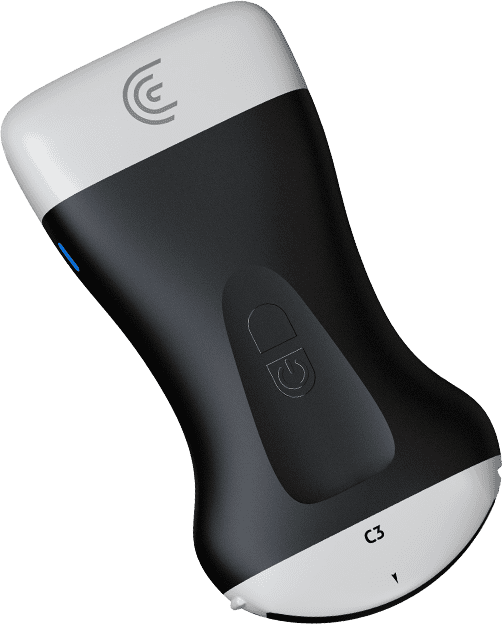
hi I'm Matt Harkey I'm a PhD researcher at Michigan State University and my research focuses on using ultrasound imaging to look at structural changes in the needs of patients following knee injury and surgery as a way to detect changes related to arthritis within the knee today we're going to be talking about a super patellar knee scan that can be used to detect a fusion synovitis in the knee after patients following knee injury and knee surgery the reason we're using this type of scan is because inflammation seems to be an important reason why patients are developing arthritis in their knee following knee surgery so we can use this as a way of monitoring kind of those inflammatory changes within the joint and as you can see Corey here has our clarius probe positioned superior to the patella kind of above the knee and you can see on the left side of the ultrasound image you can see the dark patella and then the quadriceps tendon running off of that Superior pole of the patella and kind of running up superiorly and then under that we have this super patellar recess where we have two of our fat pads and then this this black dark hypoechoic space in between those two fat pads is the effusion synovitis that we're trying to look at so after you position this probe kind of in line with the knee at the the superior pole of the patella Corey is then going to kind of move the probe kind of meatally and laterally across that quadriceps tendon and patella to try to find the location where this effusion synovitis is largest within this area we can then use these images to grade the suffusion synovitis on a semi-quantitative scale to quantify how large this effusion synovitis is oh