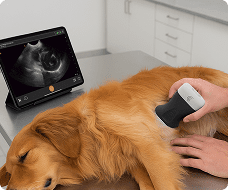
hello everyone welcome back I'm Serge and I'm CERN all right and now we're going to look at the right paralumbar region what do we be looking at here so at the right paralumber region and we want to look for free fluid we can also look for free air and then we want to move into more specific questions of the kidney we want to check that kidney for symmetry make sure that we don't have any irregularities that are obvious or cysts that are there and then more specifically we're going to go into renal pelvis assessment on whether we have renal pelvic dilation yes or no that's right really important question to ask at that right parallel number and then if we can find it we're also going to look for the duodenum at that right parallel site and assess that for motility so surge here is going to say how we find that paralymber site and then we'll go through each of those questions at this specific site and go through those one at a time in our binary fashion that's right so the right kidney is probably the hardest organ to find in the abdomen because it is tucked usually under those ribs so easiest way to find it is to palpate that 13th rib once you find that 13th rib also visualize that the kidneys are usually much more dorsal than you can imagine usually roughly around the 9th and tenth rib is often where I'm going to start scanning and if I don't see the organ just like any other site we don't see the organ that we want to we're going to sweep and slide sweep and slide so I'm going to go ahead and start right there and you'll notice that we're scanning Daisy here in sternal because that's the position that Daisy's most comfortable so we're definitely going to scan Daisy and sternal here to allow you to see how we're going to do this yeah and Cat kidneys tend to be quite superficial so we have our depth already set to about six or seven centimeters and there we go I'm going to start in Long axis and there we go I can't see the kidney so what I'm going to do is I'm going to sweep up and look at that there it is and then I'm going to slide and there's the kidney right there so we can see the kidney right there and unfortunately we do have rip shadowing here because we are under that rib cage so that is something you have to take notes absolutely and once we see that long axis a nice view here we're going to make sure we fan all the way off all planes in Long axis like Dr schloop did right here and then we're going to rotate that probe from long axis into short access and we're just checking to make sure we don't have any obvious cysts or asymmetry to that kidney make sure it's nice and smooth and it looks normal and then in short access where again we're going to Fan all the way out all planes in short axis both poles so we see that we don't see any obviously fluid free air obvious cysts and that the Symmetry looks good and then more specifically we're going to challenge Dr shloob to find that renal pelvis in short axis so he's got a kidney here in short axis and you can see that we're just Fanning slowly trying to find the sound of that kidney in short axis and transverse we're going to look for that renal pelvis as we see it's starting to come in a little bit here yep so the right kidney unfortunately is not exactly perpendicular parallel in the body so it's always got a bit of a slant which is problematic because that means that sometimes just by rotating the probe you don't see it so I'm going to try again here's the kidney and long axis again and this time I'm going to rotate with the marker the other way just see if that there we go there comes the renal pelvis so we got the crest coming in there and we can see the renal sinus right there is a nice image of it and in this cat we don't see any anechoic separation at the crest of the kidney there which indicates that this is a normal renal pelvis we'd be looking for an anechoic v-shaped or as it gets bigger C shape to rounded pelvis as we get problems so you just got to find that Crest on that renal sinus as you see here in short axis make sure we don't have any renal pelvic dilation so that's very nicely done here that's right so we usually rotate the probe to the right this time I did rotate the probe to the left and it gave us a better image but again just some subtleties to realize it doesn't matter which way you rotate the probe as long as you're comfortable yeah as Dr slew would alluded to you can see that he's in on an angle at about actually 35 degrees as opposed to perfectly perpendicular because again the kidneys can sometimes be slanted in that lumbar space so make sure you do take the time to get it in full long Axis or get that in its shortest transverse axis and you're not oblique that's right all right so then the next thing we can ask ourselves is there duodenal generalized Alias looking at per generalized Alias one of the sites we can look at beyond the stomach is the duodenum so what you can do is sometimes find it by starting at the right kidney and what you're going to do is start sweep towards midline so start at the right kidney start sweeping towards midline and you try to find the largest of the small intestine so let me try more cranial oh there it is down there it's hit yep so we got a little bit of motion down here uh so we can just saw a little bit of luminal contraction there and there we can see the uh layers of the intestine uh we can outline that we're seeing a little bit of motion to the right with the luminal contents Contracting that's assuming right in there there it is right we've got the gas in the center of our image there and that's going to be the thickest wall of our small intestine that's correct so a bit challenging in this case as you see sometimes when the Colon's there but that's the reality of scanning you sometimes got to displace that colon or as surge did you may have to drive around a little bit uh cranial or coddle to that right kidney just make sure you pick up that widest of the small and there's a nice GI motility there sweep and slide sweep and slide nice luminal contractility there so you can see we had to adjust a little bit to find it but we did get that uh duodenum all right and that is it for the right paralumber region and we'll do the left paralumber site next and till then all right