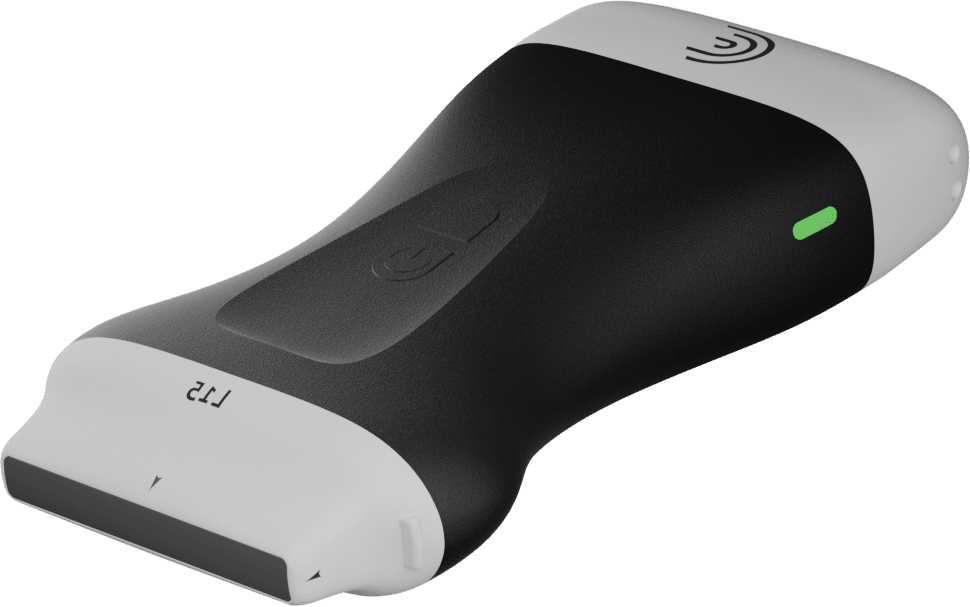
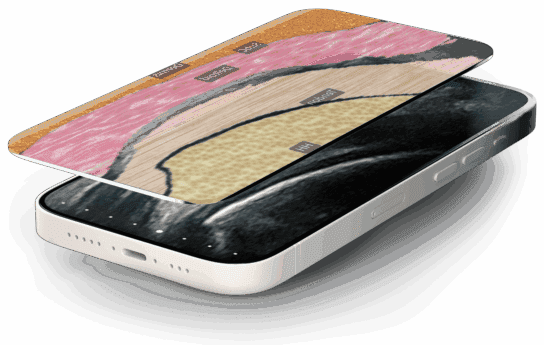
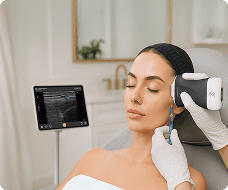
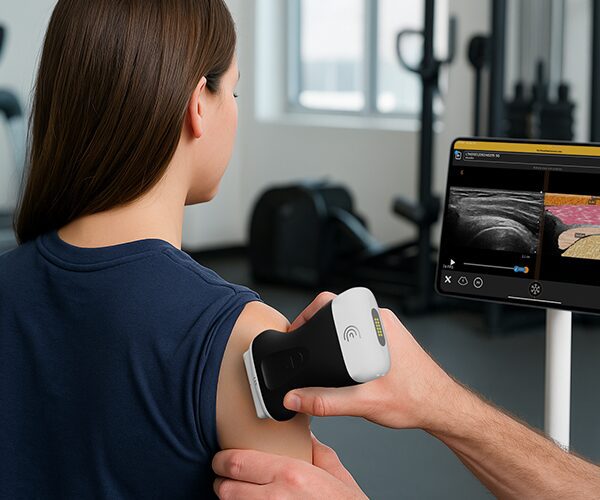
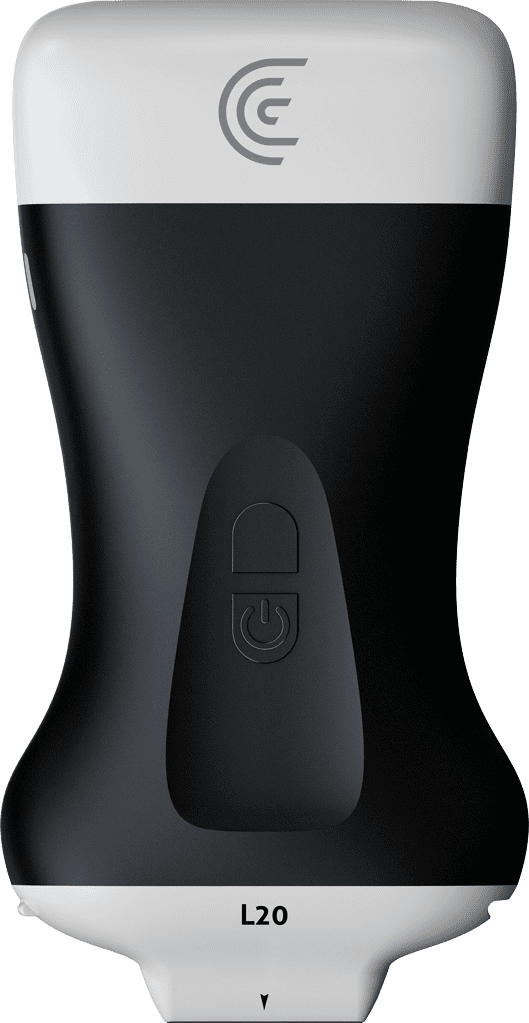
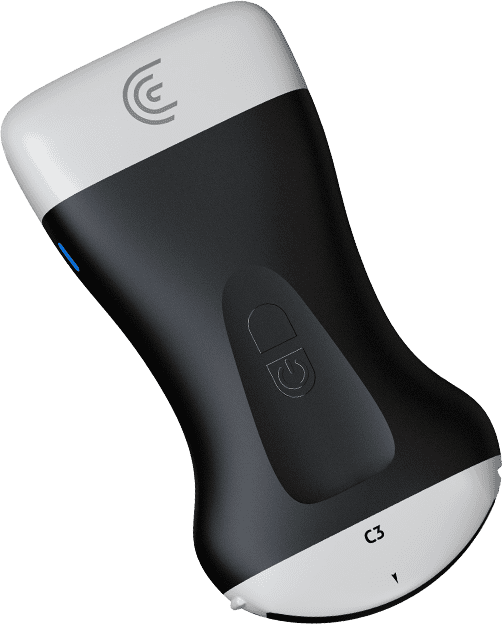
Hi there, my name is Shelley and I'd like to tell you about athalmic applications using the L20 ultra highfrequency ultrasound scanner. Now, for safety reasons, maximum levels for mechanical and thermal indices, which are determined by the US FDA are lower for scanning the eye due to the way that the eye experiences ultrasounds thermal effects. Our ultrasound scanners have these limits um built right into the ocular preset which I'm going to use now. So to scan the eye, I've placed a large blob of gel over the patient's closed eyelid. And I'm just going to place the scanner lightly anchoring my hand over the eyelid. And right away we get excellent visualization of the anterior chamber, the iris and pupil, the lens of the eye. And if I increase my depth where we can see more of the globe, we can see the vitrius body as well as the retina. And at this point, I can even see the optic nerve. Now, if the patient was to move his eye from side to side, any echogenic debris such as blood or loose bodies would be easily identifiable within the vitrius body. Now if I decrease my depth and look at the eyelid which is at the very top of the image, we can easily identify the orbicularis oculi muscle. And if I scan up a little bit higher, we can easily identify the lacrimal glands. So, as you can see, the L20 scanner is an excellent choice for athalmic imaging.