




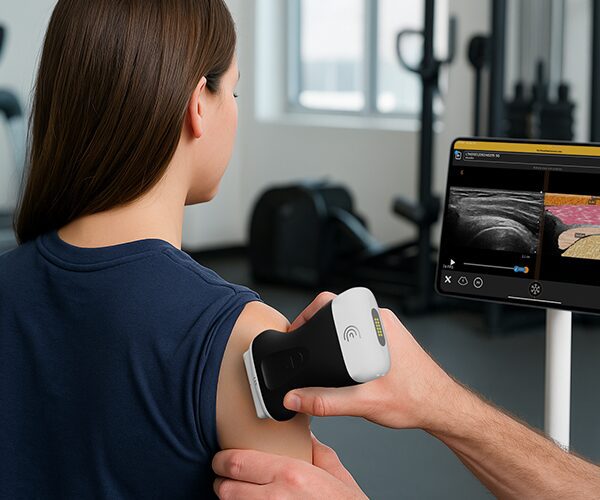
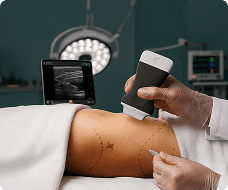
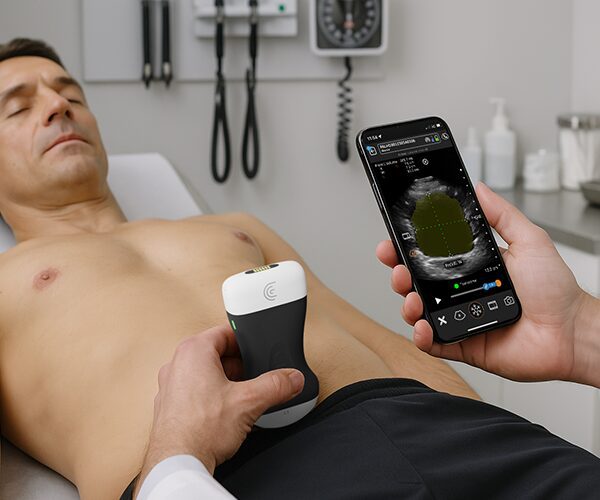


Learn how to scan the patellar tendon to identify injuries to the knee.
the patella tendon originates from the patellar bone goes to the tibial tuberosity and can be scanned in long axis and short axis view so first we will scan the long axis view placing the transducer on the patellar bone and we can assess the the origin of the patellar ligament make sure because this is a very famous spot renowned spot for changes to the patella pathological changes due to overloading due to overuse injuries and make sure that you scan really from medial to laterally in order to obtain the most optimal view so what we want to see is a nice hyperechoic tendon the fibril pattern should be seen very well with parallel lines and in this case we can see that there is a little injury there we can see a hypo slash anechoic zone in the middle of the tendon so this seems to be a partial tear a longitudinal tear of the the origin of the patellar tendon so let's uh follow the patellar tendon to a distal and then at this point we can see that there is in the insertion of the patellar tendon to the bone underneath the patella we can see the deep infrapatellar bursa which is always there with a little bit of physiological fluid but in case of hepatitis you will see an enlargement of this fluid and here you can see the typical insertion to a smooth bone well we check the tendon for the shape has it thickened is it thin echogenicity changes is there a tear if yes is it a full tear or a partial tear well in this case it seems to be a partial tear and we can also check with a doppler measurement to see whether there is any sign of neovascularization the same assessment we can do in transverse view so let's do that we start on the patella bone and then now we can see the um the width of the of the patellar tendon and we can see actually that the um let me zoom in a little bit like that we can see that the partial tear is actually very small it's in the middle of the tendon it's not very wide it's it's long but not very not very wide it's like a pinhole in the tendon and we can follow the tendon to distal here the partial tear is already gone and we can follow the tendon to the um tibial bone this is the tibia and underneath the patellar tendon we see again some physiological fluid of the um the the deep infra patella bursa and now we can see the insertion flowing into the bone to the tibial tuberosity