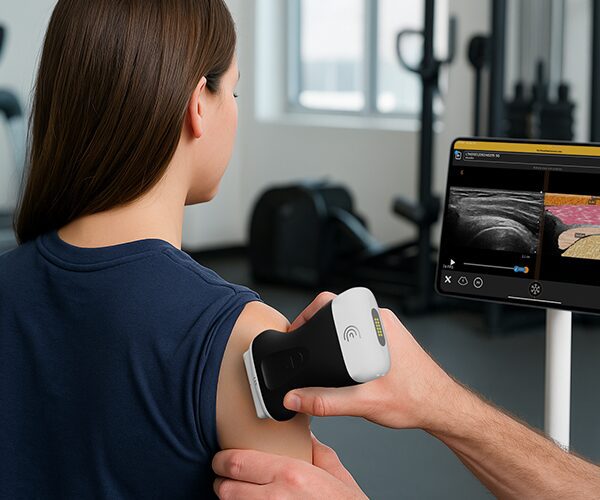
in this video we see the linear scanner on a musculoskeletal preset placed in the transverse plane um the posterior aspect of a shoulder in a patient who presented with trauma and shoulder pain and what's immediately obvious here is the humeral head compared to the glenoid and the scapular spine which we'll see out here as the scanner moves more immediately is that that humeral head is closer to the transducer than the scapular spine this is highly suggestive of an unusual posterior dislocation of the shoulder which can be diagnosed at the bedside and is even improved upon sometimes where radiography can be confusing this patient underwent a reduction and it's their post-reduction scan now shows the humeral head much more in line and articulating here with the glenoid and this is the normal glenohumeral joint that can be appreciated where they line up and here's the rest of the scapular spine when in doubt the humerus can also be rotated in and out where you can watch the movement of that humeral head go to confirm that a shoulder whether anterior or posteriorly dislocated has been appropriately relocated into its socket with appropriate articulation here with the glenoid