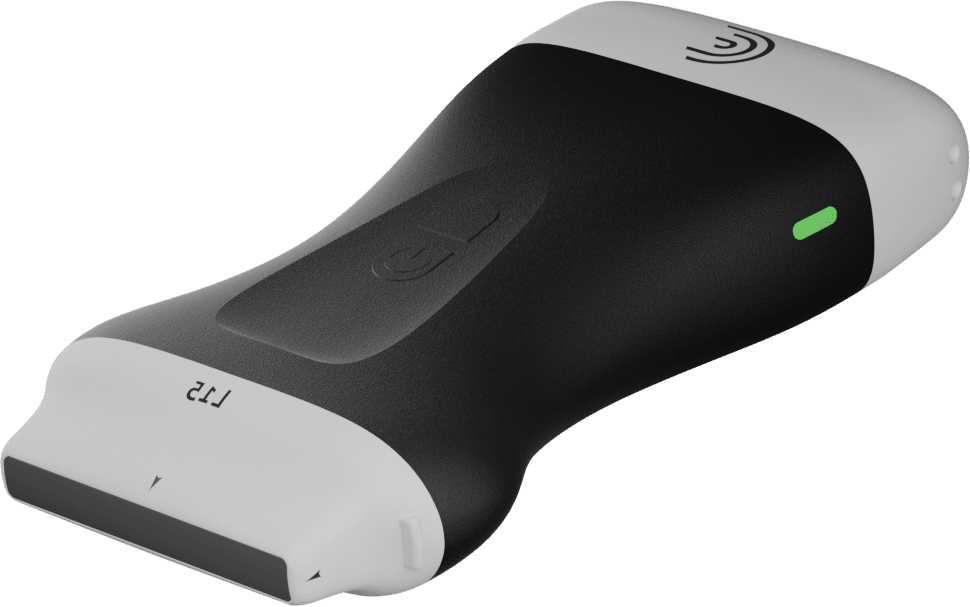
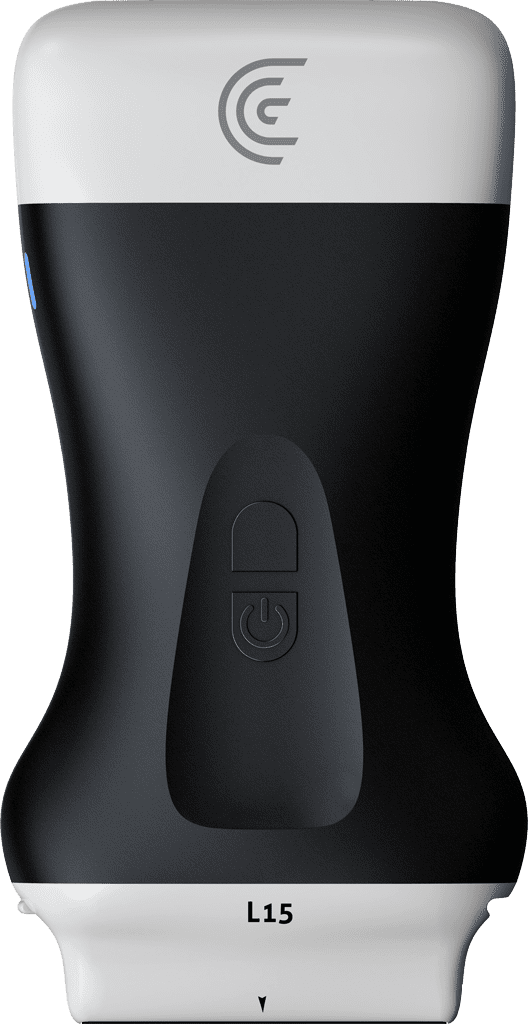
hi everyone I'm Dr Muhammad bardi I'm a practicing rheumatologist in Vancouver British Columbia today we'll be using the l-15 clarus probe to do a elbow assessment specifically in Rheumatology this is a more focused limited assessment of the elbow looking at regions of enthesitis at the lateral Epicon and we'll look at the tricep insertion as well for enthesitis there and I'll show you how you would assess for sinovitis in the joint as well so starting here first on the lateral views you can have your patient position with a B underneath your elbow so you can get around the posterior aspect but if you don't have access to that you can also have your patient position like this as well when you do the tricep assessment and they could put their hand down like that so there's different ways to go through the positioning starting with the lateral elbow in Rheumatology when we do our scanning we want to maintain a gel layer at the top this ensures that we're not compressing the structures to block any signal from our Doppler assessment when we're looking for citis or enthesitis or ositis we can see the lateral epicondyle and the radial head there is a joint space there you can see in the center and you can also look for sinovitis if there's any sort of sinovial proliferation hypoc coic changes distension or Doppler signal when we assess for that when you're actually looking through the common sensor tendon you can see this at the top here it's important to sweep through this so as I'm moving around I'm looking at the fibers you can see a nice fibr structure here as you look through this you'd be looking for pathological changes for any sort of loss of fibrillation thickening any tears you could see anaco changes or a gap in the tendon and if there's any sort of enthesophytes or bony growth where the epicondilite sweep through this area of the extensor carire radialis brevis is the most commonly associated with tennis elbow you could assess for that kind of pathology here as well so we've been looking at this both in longitudinal views we want to get transverse views so we rotate our probe 90 degrees we start here we can see a nice clear bony cortex and as we start to move down you can see this hyper aoic band of where the tendon is we can use anosy tropy to bring that tendon in and out of view and you'll see I'm on the lateral epicondilite here but as I go distally I'm now in the joint space and now the radial head comes into view that same Dynamic testing I showed you you can do in these views as well and when we wanted to assess for Doppler changes here we want to interrogate the enthesis at the lateral epicondilite between the capitulum and the radial head and again you look at this both in your longitudinal views and you want to assess this in your transverse view as well so if we were looking at the sinovial space or the joint space we want to see in that space is there any sort of Doppler signal