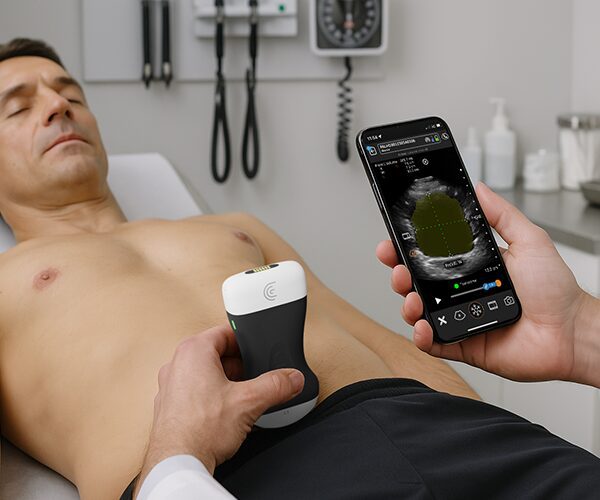
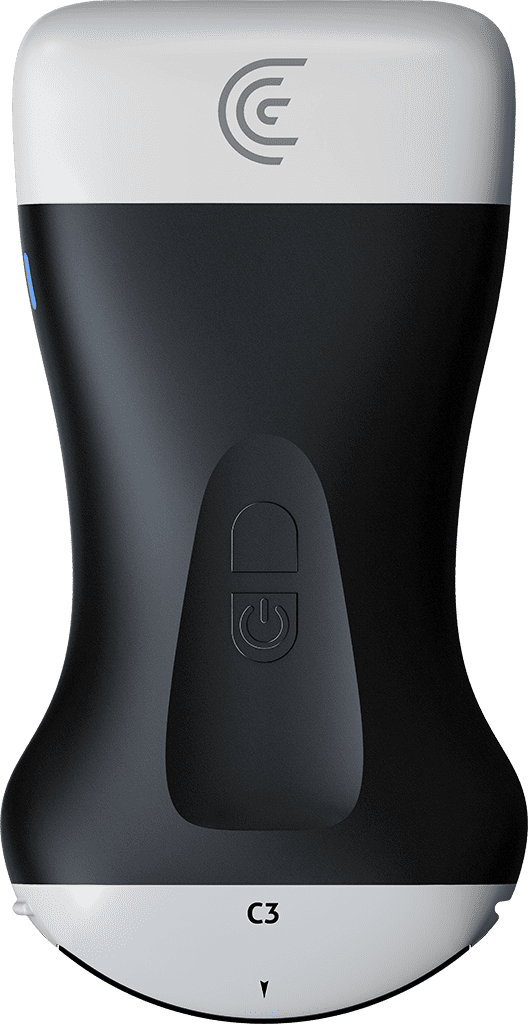
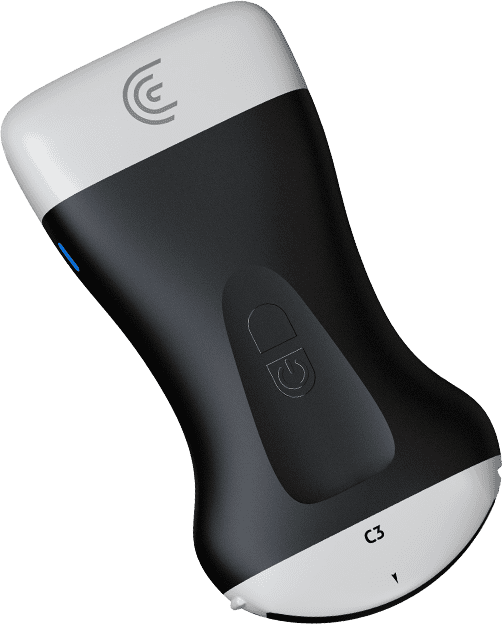
hi my name is Shelly and today I'm going to explain a rush exam now Rush stands for Rapid ultrasound for shock and hypotension and it's used in patients that are presenting with undifferentiated hypotension so we're going to look at a couple of different areas on the body and I'm going to start with the heart and what we're going to do here I've selected the auto preset I'm using the C3 scanner and it's going to take us directly to the cardiac preset using the AI what I'm looking for here is to make sure that the heart is Contracting normally and in this situation we're seeing nice contractility of the left ventricle nice movement to the mitral valve the other thing we're going to look for in this spot is pericardial effusion I could just decrease my depth a little bit just to make sure that I'm getting the entire pericardium in there we can have a good look by sweeping back and forth and I'm satisfied that there's no pericardial effusion so next I wanted to head down to the IVC and from here we can kind of assess the right sided heart pressures and as well we can tell if the patient's hyper or hypovoleumic so I'm going to locate the IVC just in the midline and it's this nice dark tubular structure that's just a little bit to the right of the midline so what we're going to look for is number one the size of the IVC we can estimate the size by using the depth markers at the side of the device and we want this to be under two centimeters and it's well within those limits the other thing we want to look for is to make sure that there's respiratory variation when the patient's breathing we should see the IVC collapse if it doesn't that's an indication of increased right-sided heart pressure and if it's flat that means that the patient needs fluids so from here I'm going to head over to the right lower quadrant we're going to have a look for free fluid and I'm going to find the area of Morrison's pouch indicated by the right kidney next to the liver while I'm here I'm going to move up a rib spacer two and image the right hemidiaphragm and here we're going to see if there's any pleural effusion on the right side and I'll just do a quick little fan from top to bottom just to make sure we're not seeing any fluid in the dependent portion of the pleural cavity from here we can move over to the left side and do the same thing I'm going to look for free fluid in the region of the left kidney and the spleen and same thing I'm going to move up a little bit higher to the left heavy diaphragm which is that nice bright white line curved line and we're going to look for any fluid in the dependent portion of that pleural cavity as well so just a quick sweep back and forth there now the next thing I want to do is to rule out an abdominal aortic aneurysm so a quick way to do that is to place the scanner in transverse in the upper abdomen midline and just look for a pulsatile structure in the middle of the abdomen and we're seeing the aorta right there I'm going to slowly with a little bit of pressure scan down the aorta all the while looking for any dilatation and again normal diameter of the aorta is under two centimeters so I'm just continuing to scan down toward the umbilicus where we'll see it bifurcate into the right and left iliac arteries and that has satisfied uh the investigation for an abdominal aortic aneurysm now the last thing I'm going to do is have a quick look up at the lungs looking for pneumothorax so I'm just going to place the scanner in A sagittal plane on the lungs I'm going to look between the rib spaces which are casting those black Shadows and we're going to look for lung sliding if we see lung sliding we could be confident that there's no pneumothorax in this patient I'm just going to look from a couple of different areas and then I'll do the same thing over on the right side of the chest so we've completed the rush exam and we've found no obvious cause for our patient to have undifferentiated hypotension