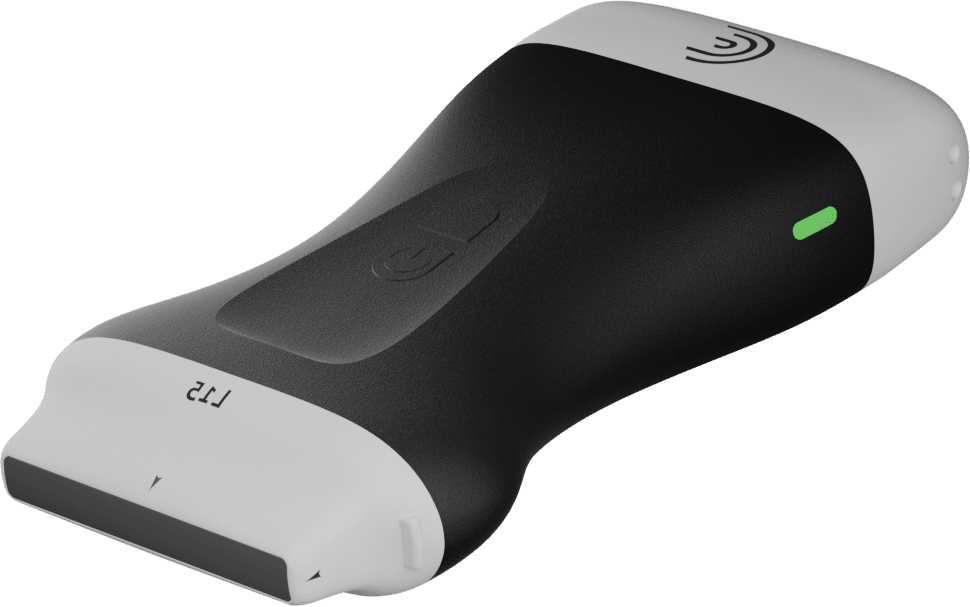
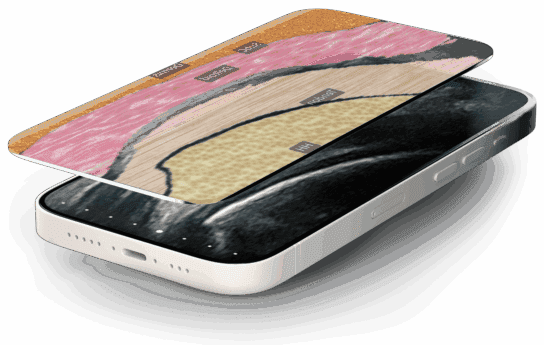
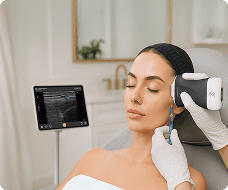
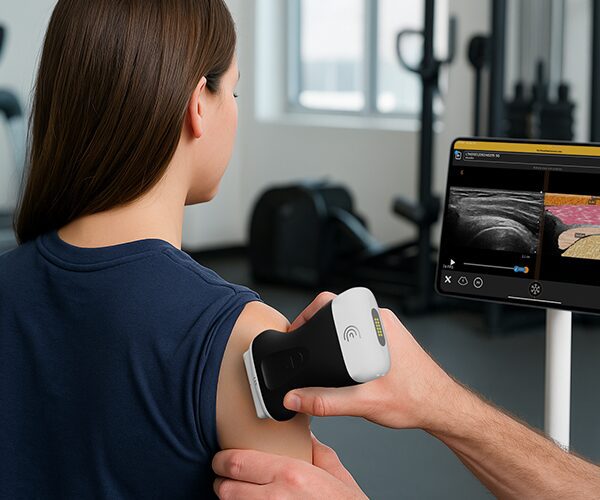
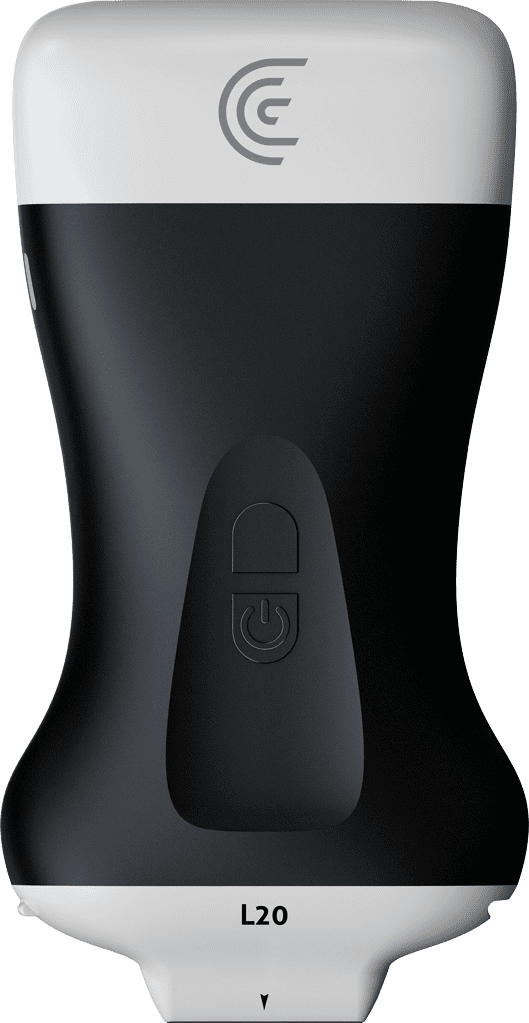
hello I'm Shelly clinical marketing here at claras it's no secret that learning how to interpret ultrasound images takes time and experience well at clarus we have your back our AI powered t- mode helps to identify anatomical structures while you're scanning and in this case we'll be scanning the face so in this case I'm going to scan the temple so I'm going to select the forehead Temple preset with my l20 scanner and once I set my probe down I'm going to go into the modes menu and we'll select t- mode t- mode creates an adjacent image with anatomical layers and Graphics displaying the different tissue types this is all happening in real time now once we freeze the image we get even more information with text labels over the anatomy which is super helpful the other thing you can do is on your grayscale image you can adjust an opacity map that may or may not be helpful for you but that's up to you now this also works in different parts of the face and I'll demonstrate the lips to you so again we'll place the scanner over the lips and here we can see the upper and lower lip when I enter into t- mode on the right hand side of the screen we get these nice Graphics that identify the muscle and the subcutaneous tissue and again if we're not sure we just freeze the image and we get la as well that tell us exactly what we're seeing so it's kind of like having an anatomy book right before your eyes there's no need to be intimidated by ultrasound imaging have fun and use t- mode to help you learn ultrasound imaging