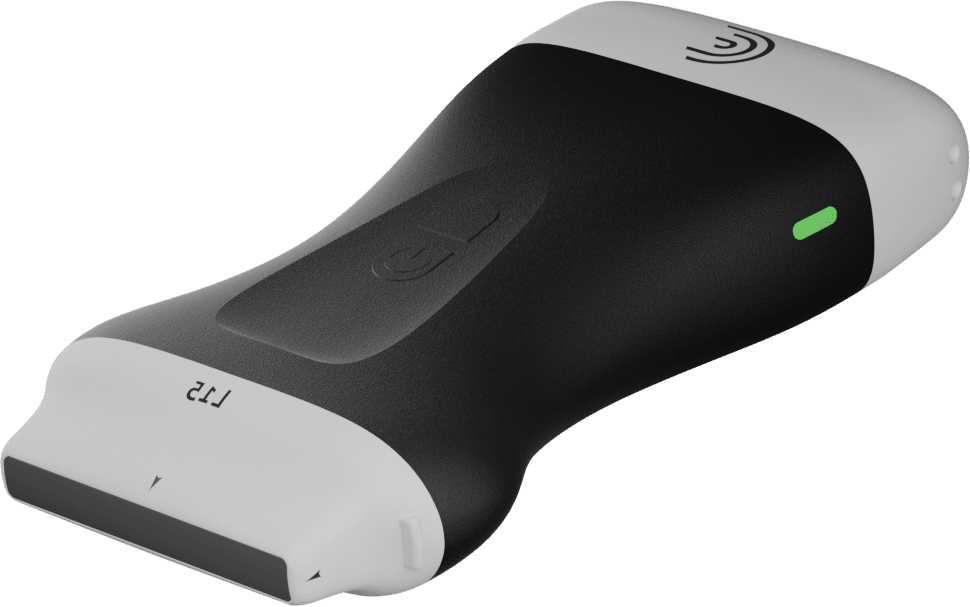
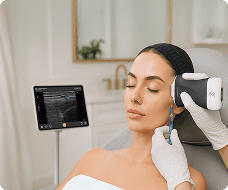
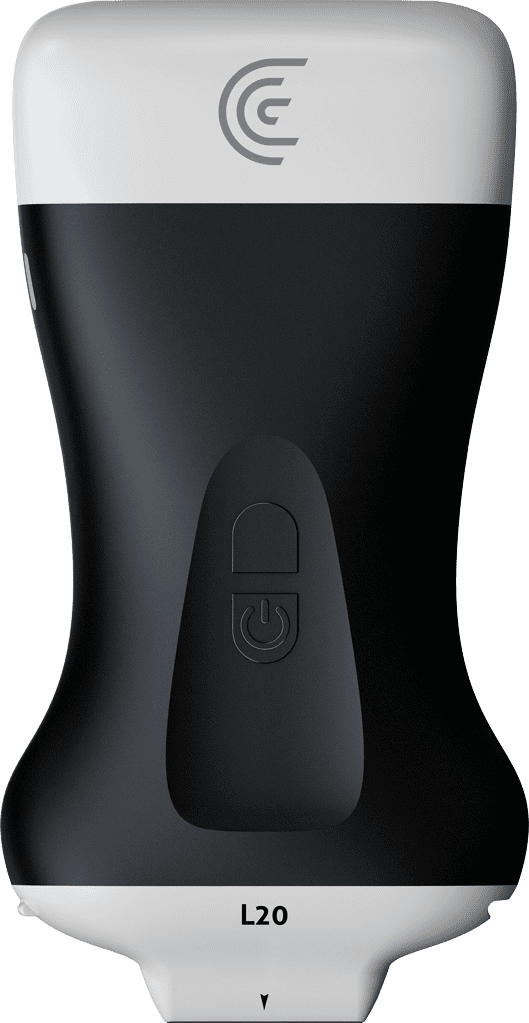
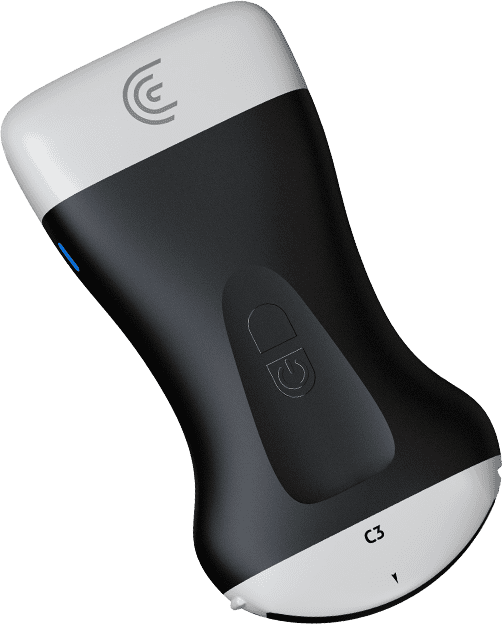
let's move on to the tear trough i place my entry point laterally and advance through the lateral suff with my cannula in contact with bone to reach the teardrop i prefer this access point rather than placement in line with the nasojuga groove because i don't want to risk injury to the facial vein i'm using a 25 gauge cannula here which we know can very easily end up in side vessels so for me checking the location of my cannula once i've advanced it is crucial now i use the l-20 to find my cannula i keep my cannula still and move the machine to find it there it is it's close to bone okay let's switch to doppler mode angle and move my color box to the right position that pulsating vessel there is likely to be the infraorbital archery and i can see at the end of my cannula there's no vascular structures so i can go ahead and place some product here and i'm placing just a little product 0.1 0.2 ml by retrograde injection i'm pleased with that correction and i can now move more to the lateral part the legit junction i advance my cannula in contact with the bone and i place my finger inside the orbit to protect it i go ahead and i check my position and i can see i'm under the muscle in contact with the bone and not close to any vessels there's a great paper by bernadini published in 2021 which outlines this exact technique using ultrasound so check that out because of the direction of my cannula i protect the orbit and place a little product here and now we're done i've finished both sides now and i can go ahead and take a look at the filler in the tissue with the clarius here we can see an anechoic round deposit with a posterior acoustic enhancement that's my filler and it's where i intended it to go right next to the bone and it's great to be able to show this to my patient after treatment here's the completed treatment of both sides there's a significant improvement of the cheek contour which gives that nice feminine shape and the tear trough is less concave and blends well with the cheek below you