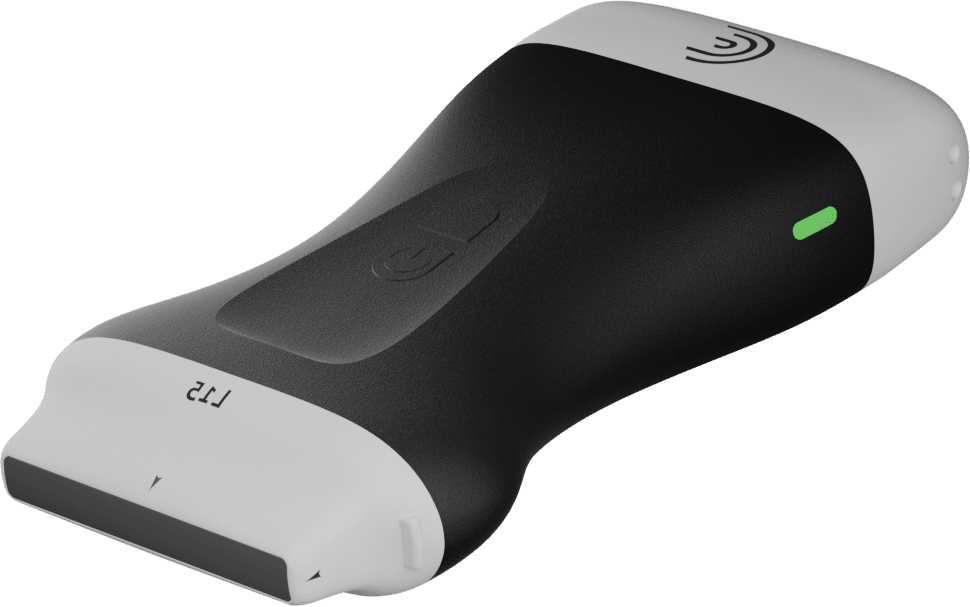
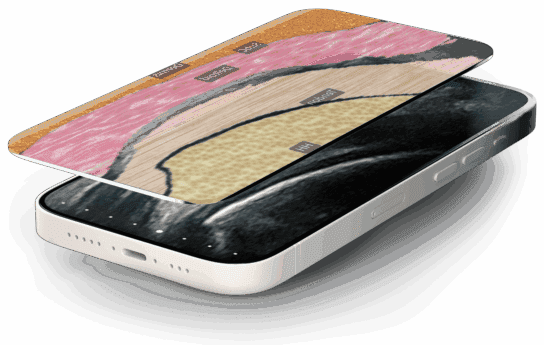
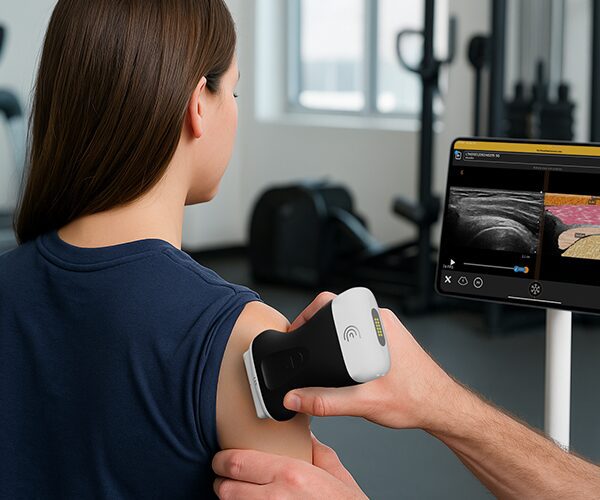
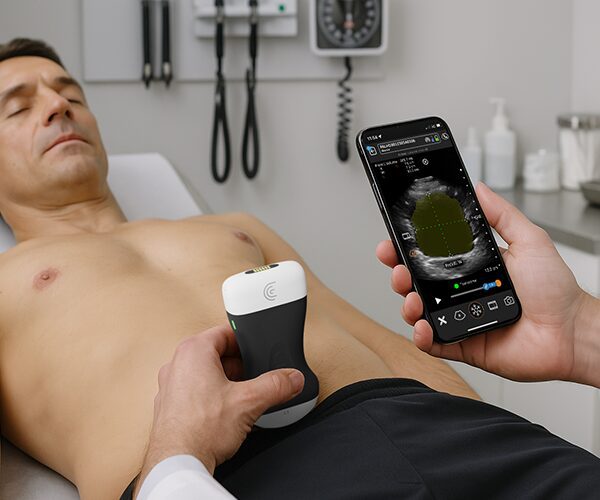
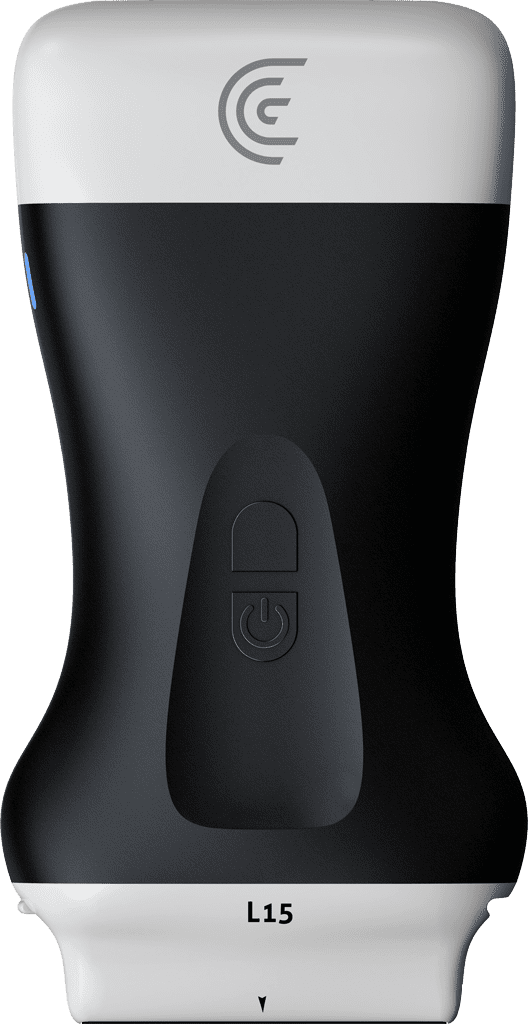
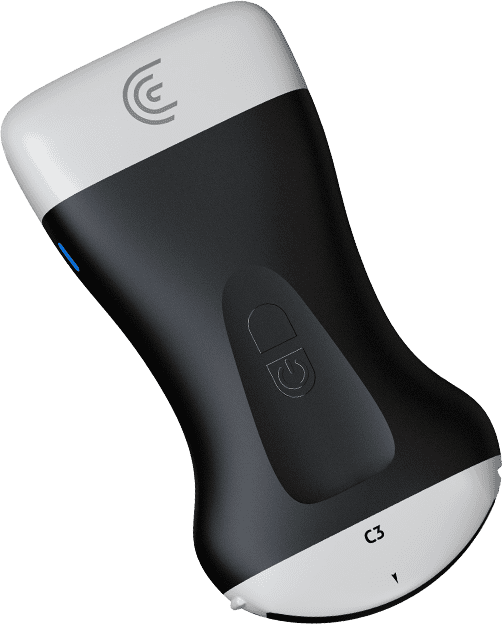
hi i'm greg fritz a doctor of physical therapy and a specialist in musculoskeletal ultrasound today we're here with david uh david is dealing with an ankle problem dave was starting to develop some prolonged achiness and the characteristics seemed in my mind to be quite a bit more like osteoarthritis and so one of the beautiful things of ultrasound was that we can go in and take a look and see is the capsule generating too much fluid and do we have that darkness that anechoic appearance of of excess fluid in the capsule and are there areas where the articular cartilage has worn down making a diagnosis of osteoarthritis very easy to to make so our scan is going to be taking a look at integrity of ligaments um the thickness of articular cartilage and fluid or effusion within the capsule to identify how much of this is osteoarthritis and how much of it is a mechanical compromise this is a cross-sectional area what i'm what i'm starting with right now is looking at the top or the the the plateau of the bone that is moving when your ankle goes forward and backwards and it's called the talus this black line right here is what represents the amount of cartilage that is between the upper bone and where it connects with your ankle so i'm just looking for fluid in the in the in the capsule this is the upper bone which is the tibia white is that these are tendons that move your toes and lift your foot up and these are muscles and now we're to that area where i was concerned about the thickness so i'm going to now take that view and we can see that there's a little bit of surface issues on that and again what we're looking at here is a younger ankle would have a very a very thick dark area we're going to now take this probe i'm going to turn it 90 degrees we're going to now be looking at the same platform this is called the talus here and i'm going to be going down to the bottom of the talus the capsule itself would show me fluid in through here if i was able to blame arthritis only for the problem and at the end of that we're going to take a look at the joint where it connects to the foot bones i'm going to go down a little further i'm going to be interrogating a ligament that runs right across here is intact very stable if you can make out a little bit of hair like fibers little strands you can see that a ligament goes from this bone up and over to this one this is about three to four times the density of an mri wow so in the hands of somebody assessing this it really has value what i'm looking for is evidence of like stalactites and stalagmites between these joints that's that's what would be showing me that i could blame osteoarthritis or degenerative arthritis and and as of yet you do not show a lot of bone spurs looking at a high tendon or ligament that goes between one part of the bone and the other if you've ever heard in football when somebody has had a high ankle sprain this ligament would be compromised and broken this tells us immediately that that you have a very strong one it's intact from there i'm gonna just pivot this device down taking a look right across here and another important ligament or where it should be i am able to document that the anterior talofibular ligament or the atfl is is subpar we should expect to see a very broad ligament from this point here up to the the part of the fibula and so far what i can tell you is that what must have happened back a number of years is that the majority of the stabilizing ligament was torn but there's evidence here that that when that ligament was compromised it even pulled up some bone like a peeling of an orange it lifted that bone up and so i can tell you you know there's this long after this has happened it there's not a lot of good fiber to go in there and try and right where you are is where that's where i get the pain you get most of the pain and the swelling too so what i'm going to do next for my own sake is i'm going to be coming around and looking at some tendons that are going to come right around back these are the perineal tendons these are the muscle support behind the ankle that we can tap into to say all right what do we have available to to to use as tools to uh to strengthen um the ankle all right so we're cross section slicing the perineal tendons we're also taking a look below those tendons at a final ligament that i want to take a look at is the calcaneofibular ligament and that is looking intact i'm going to follow these two tendons down i just want to make sure i mean they're all looking strong and healthy we are seeing again some residual issues of what had to have been a compromised ligament the fact that ex x-rays did not show this is not that shocking because these bones are pulled up and x-rays are going through the ankle and it doesn't have the ability to topographically identify little spurs that we can even see here so this dark area that we're looking at that is showing that there is evidence where the tissue is rubbing past a little almost like bony tooth and as your ligaments and tendons go back and forth across those it will create irritation and most likely swelling but the one thing i can tell you is that inside the joint so far we've not been able to uncover excess fluid and that's good from a standpoint of arthritis but but what we are seeing is i use the term teeth but these spurs have um fluid domes around them that indicate that they are they're aggravating the structures that strum over them while we're here i'd like to take a quick look at the bottom of your foot to see what your plantar fascia looks like and we will come here and so this is the bottom of your heel this is what we refer to as the fat pad it's a mattress that you're walking lands on with each footfall and this this component right here this structure this is your plantar fascia and it it looks very good we would expect it to be quite a bit wider if that were the case we can follow it up i look at this and i am just wowed because the only thing we did before was palpate these things but now i can see all the way you can see the fat move around like you're walking yeah it's just it's phenomenal so to summarize for physical therapy um there is clearly a compromised atfl and there is evidence that part of that overuse and instability has developed um bone spurs or osteophytes to compensate for that instability and what i was able to see that those bone spurs probably is creating some friction irritation from repetitive use on the treadmill um functionally we're going to put him in an orthotic we're going to kind of turn the angle of the way his ankle is so that we're getting less irritation on those outside ligaments and hopefully less irritation along those osteophytes but i'd like to have him increase his treadmill time trying to get tougher uh using about a five or six on a pain scale to to to limit his uh pushing into it and then i'm going to take a look at how much fluid is part of this into the future