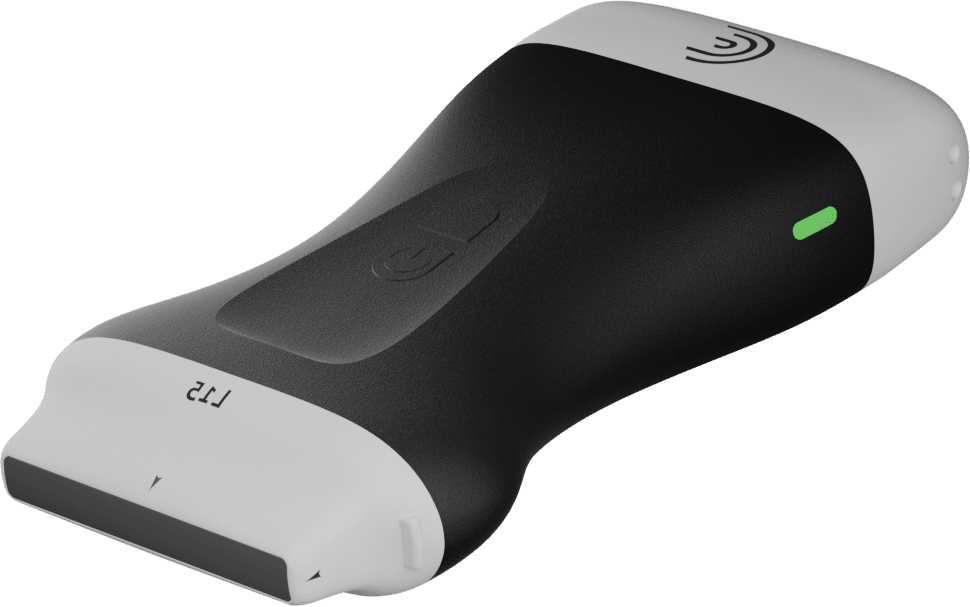
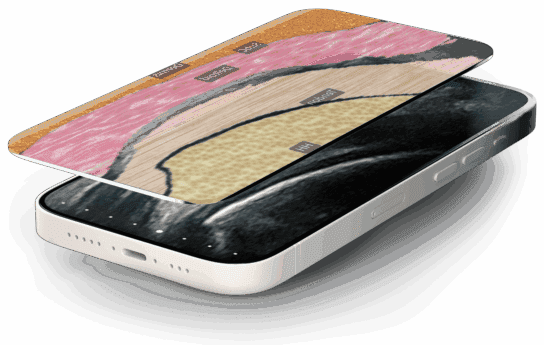
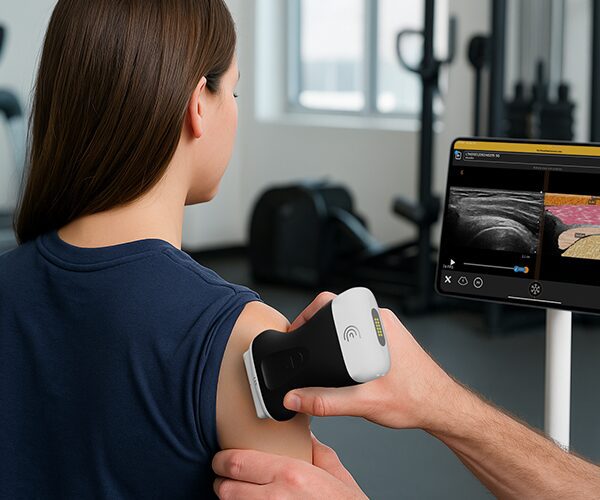
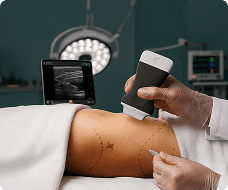
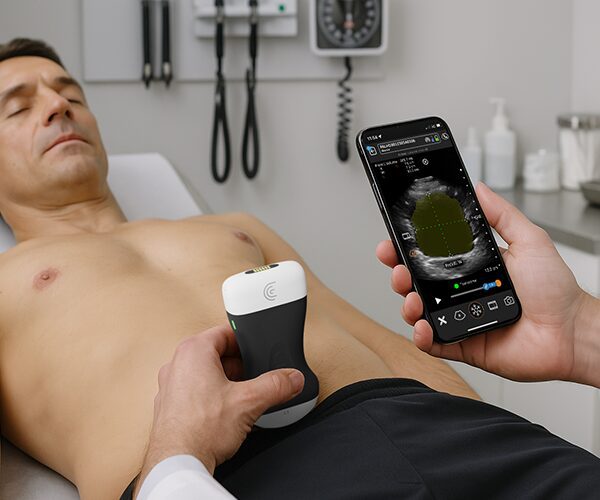
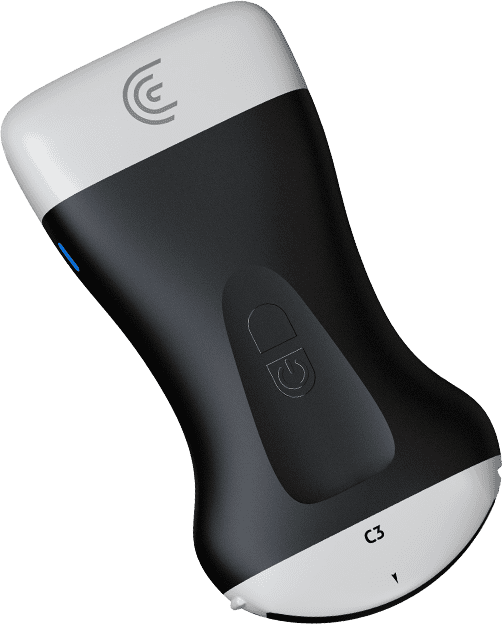
my name is greg fritz i'm a doctor of physical therapy and a specialist in musculoskeletal sonography um i have with me today uh orlando orlando has had a history of knee pain so today um orlando i'm going to be using a tool that will look inside we'll take a look at bone and we'll take a look and see what what is actually happening inside there okay first thing i'm going to do in imaging is to place the probe just in long axis over the top of the the knee and i'm looking for the base of the femur and as i'm doing that above that you will see the quad quadricep tendon and coming into view here is the patella and so what i'm looking at is the little white spurs the little traction and thisophytes that we're seeing there but there's not a lot of darkening we're not seeing a lot of reactive effusion around that site and in addition the super patellar space is not filled with a lot of fluid i'm now going to go to short axis i'm going to come up here a ways and i'm going to be looking at the cross-sectional fibers of this quadriceps this is the vastus medialis we're now looking at the rectus femoris that's going from the muscle state to where it's the tendon state here and the rectus femoris the vastus medialis i'm going out to see the vastus lateralis and the one below which is the vastus intermedius all of those show me that he has been active i don't see any focal area of fatty infiltration so we're going to go from here to the medial joint line this medial joint line is going to show me a couple things i'm seeing the tibia down here at the bottom i'm i'm seeing the medial collateral ligament and as it goes down to where the the the the quadriceps i'm sorry the hamstring muscles insert there's no uh pes and serene bursitis but what we do have is is evidence of near bone on bone compression we see on the right the tibia with the the knobby periosteum where the bulges are the spurs and up here into the femur we also see evidence of osteoarthritis but so far what i am seeing is evidence of significantly degenerated medial meniscus and evidence of osteoarthritis on the medial profile i'm going to now go to the outside and we'll come around here we're going to go down and look at the joint line here lateral collateral ligament i am seeing meniscal tissue here more than i was on the medial component but i am also seeing spurring so this confirms osteoarthritis but he does have a lateral meniscus that's far more viable than the medial one was i'm going to have you just relax this leg a little bit more let it just get heavy now and i want to look at the tendon you can see the fibers of the tendon there the bone is down here this is the tendon that they strike with the reflex to check your your reflexes of the doctor's office and that all looks great i'm going to go short access on that little evidence on the inferior uh component of the patellar tendon that there could have been a compromise or a retraction intra fiber interfibular compromise i'm going to verify that on on long axis and again we're down on the tibial component and there does show to have been a partial tear to his patellar tendon at some time but there's no evidence of reactive effusion here i'm going to now go one more time to the back and i'm looking right now at cartilage thickness on the back of the medial condyle i'm looking at the tibia for any type of bony formation this is the cartilage thickness on the lateral condyle i just can't blame that for osteoarthritis we're going to bend that knee back a little bit further we're going to hold it just like that is the cartilage in the trochlear groove i am seeing a unique elevation along the medial slope a little bit of a periosteal spurring there but if i come back and take a look at the actual structure i am not seeing evidence that i would be thinking this guy needs a new knee so in summary after the scan with orlando i'm confident we don't need to have him schedule for a knee replacement though in the back of my mind the medial complex of this knee is significantly broken down there's enough articular cartilage evidence in the trochlear groove and on the femoral condyles that do make me feel confident in in the opinion that he doesn't need a knee replacement the back of my mind though is my is my concern that he has the instability that the knee locks on him the only thing i can right now feel that that's responsible or what's responsible for that is his medial meniscus which might have some components inside on that side that may be giving him some bucket handle limitation and and might benefit from arthroscopic debridement in there