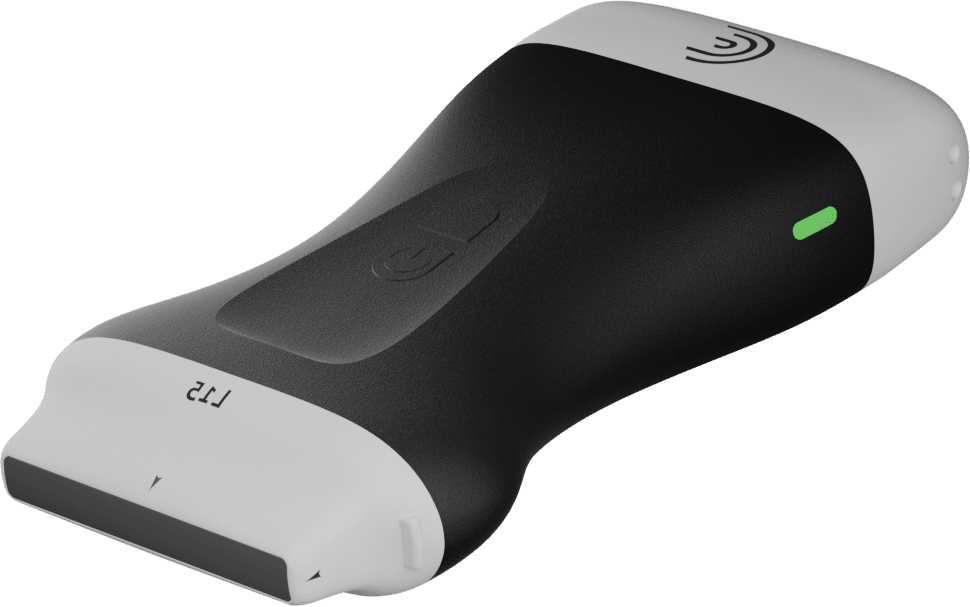
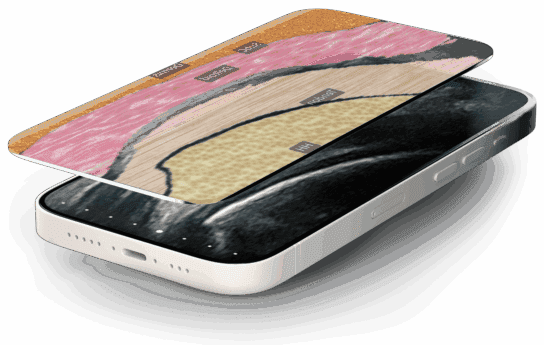
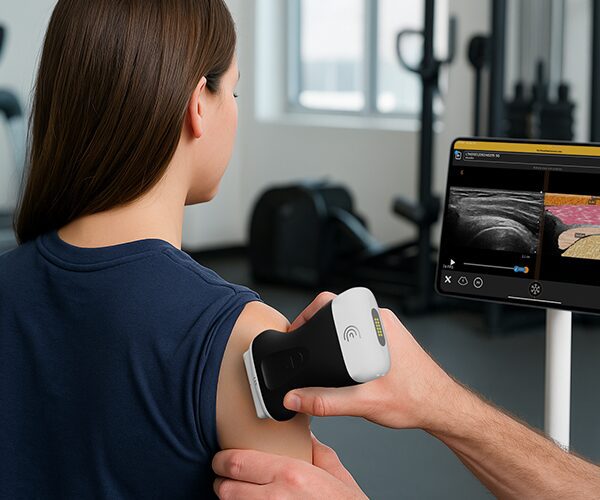
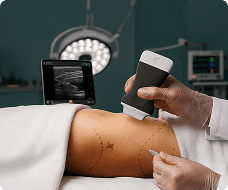
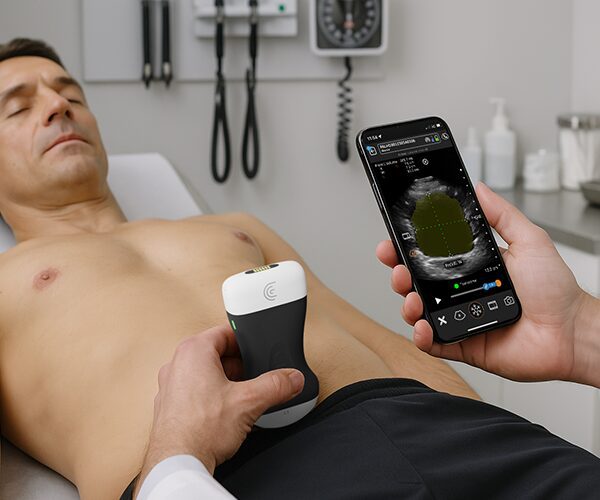
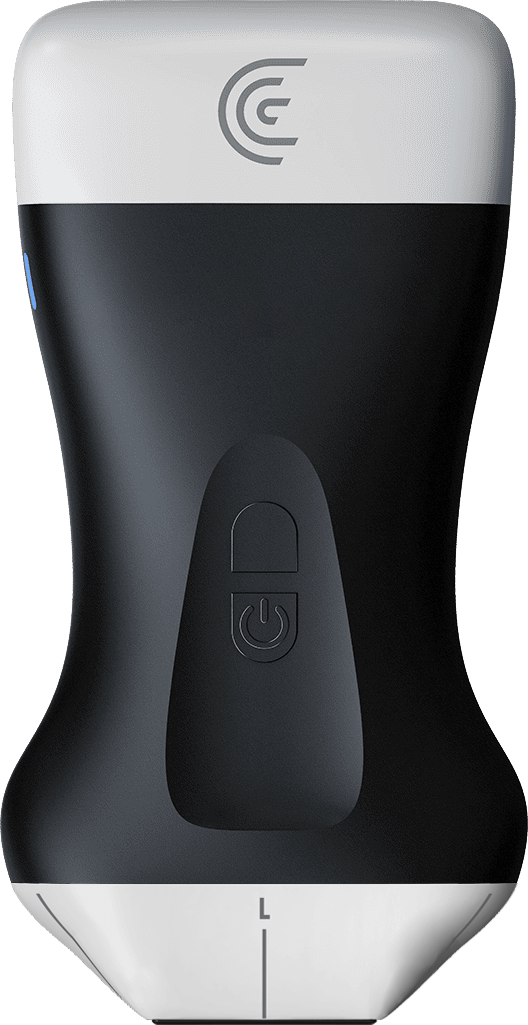
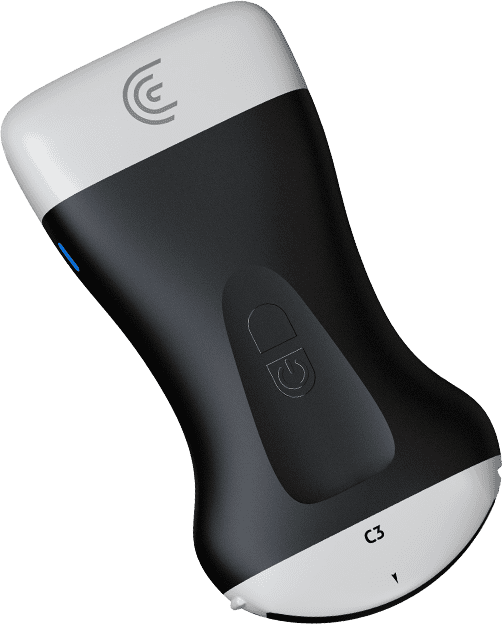
an ultrasound guided radial nerve block can provide very effective anesthesia either combined with another forearm block or sometimes even just by itself depending on what the ultimate outcome is to perform the block here I'm using the pal scanner on a nerve preset and I like to go at the super cond approach so I'm going to have the arm bent here at 90° and I'm coming in transverse just above the elbow I'm going to find the humeral shaft and usually just anterior to the humal shaft once I scan I'm going to find that bright comb structure of the radial nerve I'll follow it proximal until I'm confident at the structure and I get good access up and over the humoris to facilitate my block where I'm going to come in in plain this way from the posterior aspect and slide right in and be able to anesthetize the nerve by putting a donut of anesthesia around it it's important to note that this is proximal to the bifurcation of the radial nerve so it's going to include the Deep inner osus branch and it will lead to some motor paralysis at the thumb for the duration of the block but it's highly effective anesthesia for any procedures requiring especially the radial aspect of the distal forearm