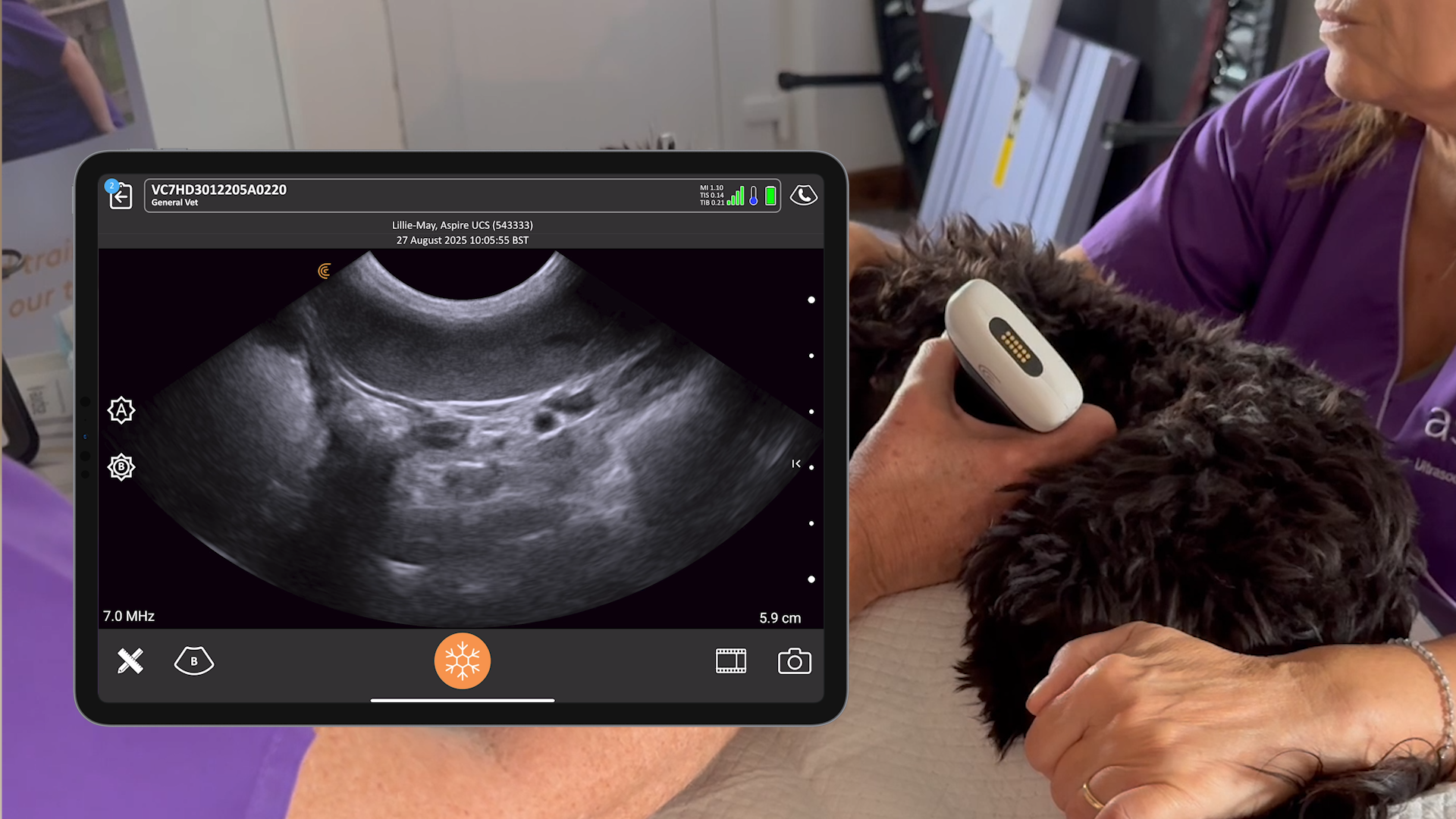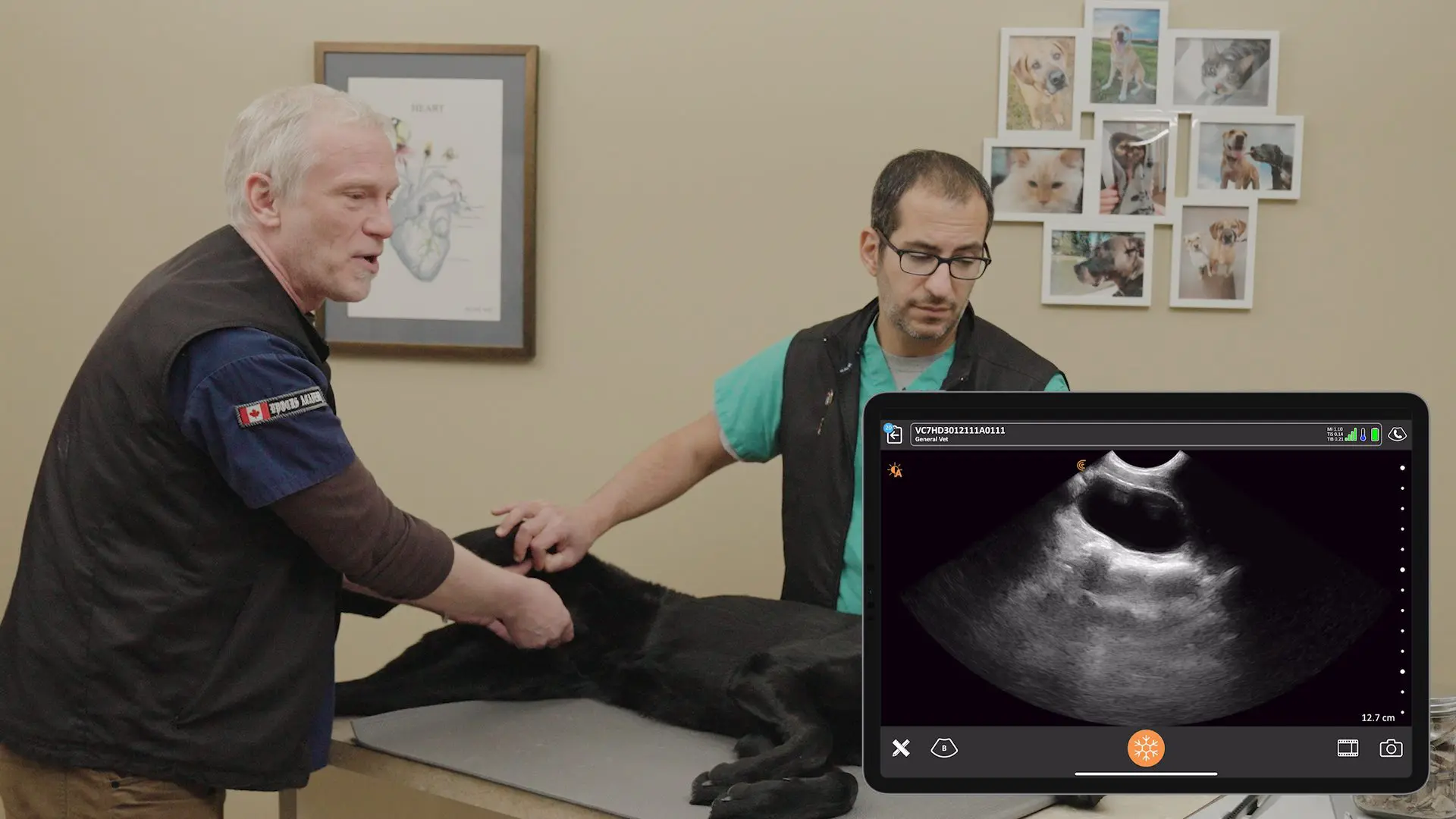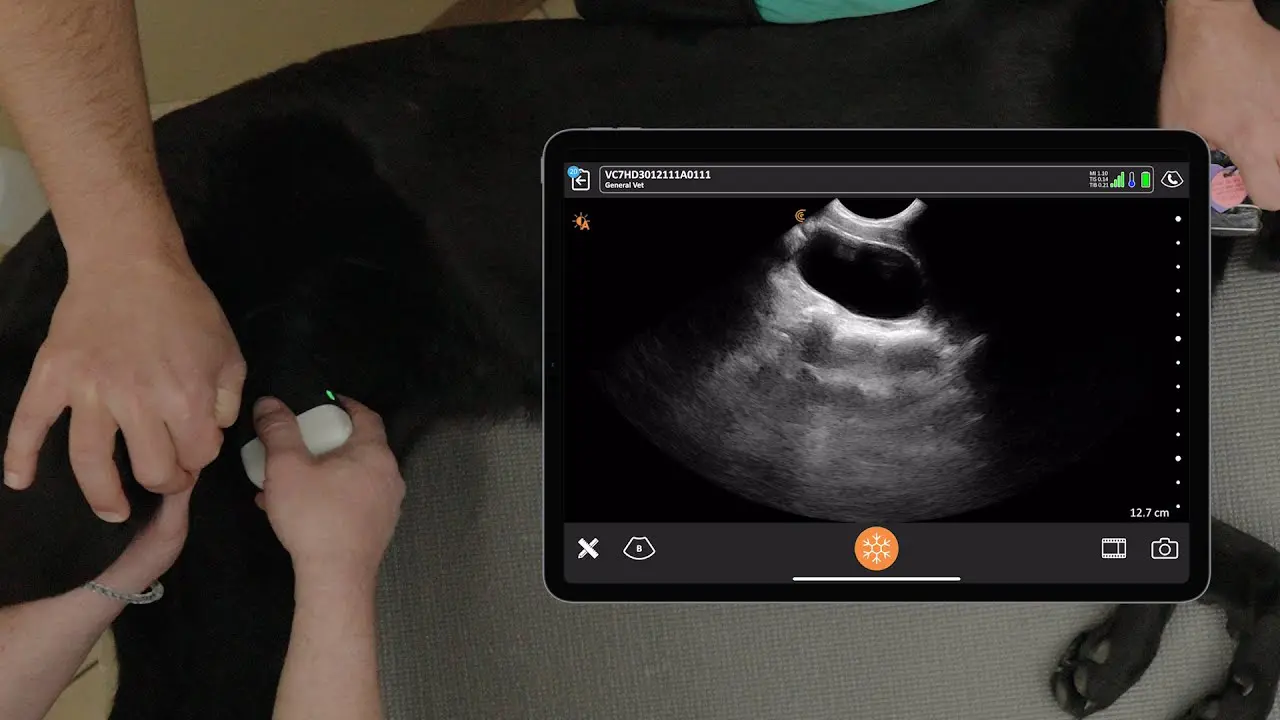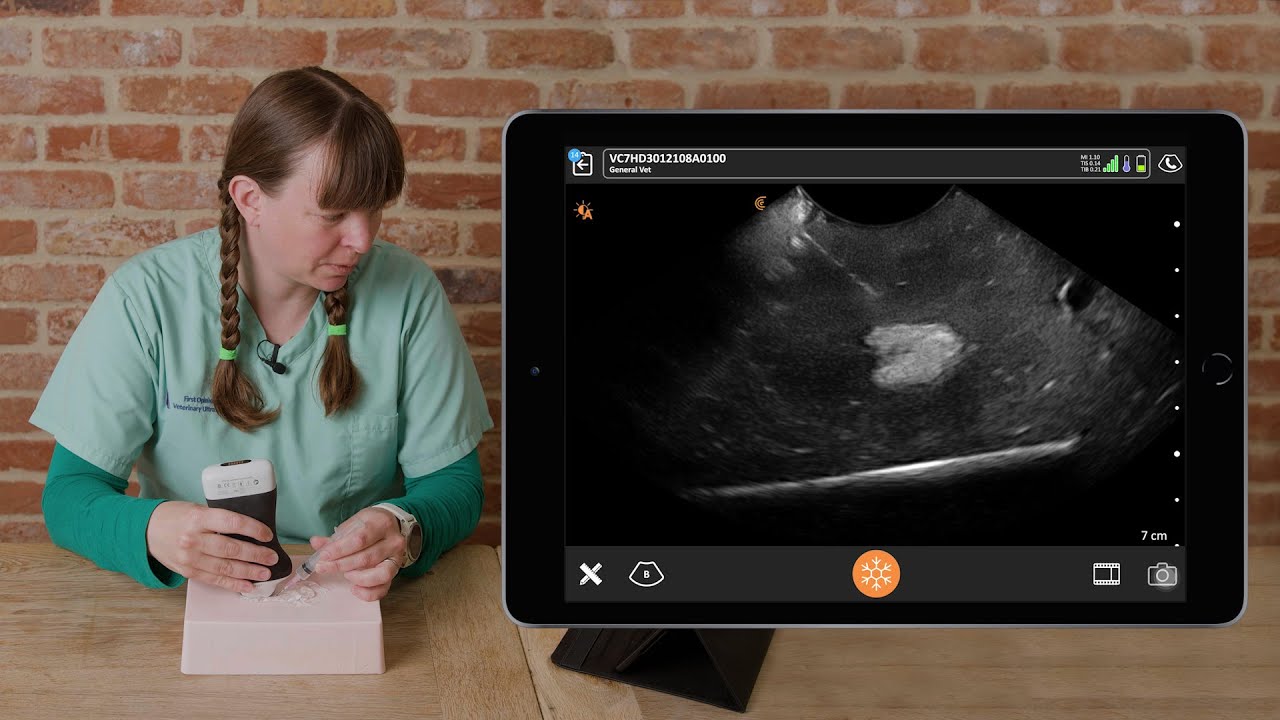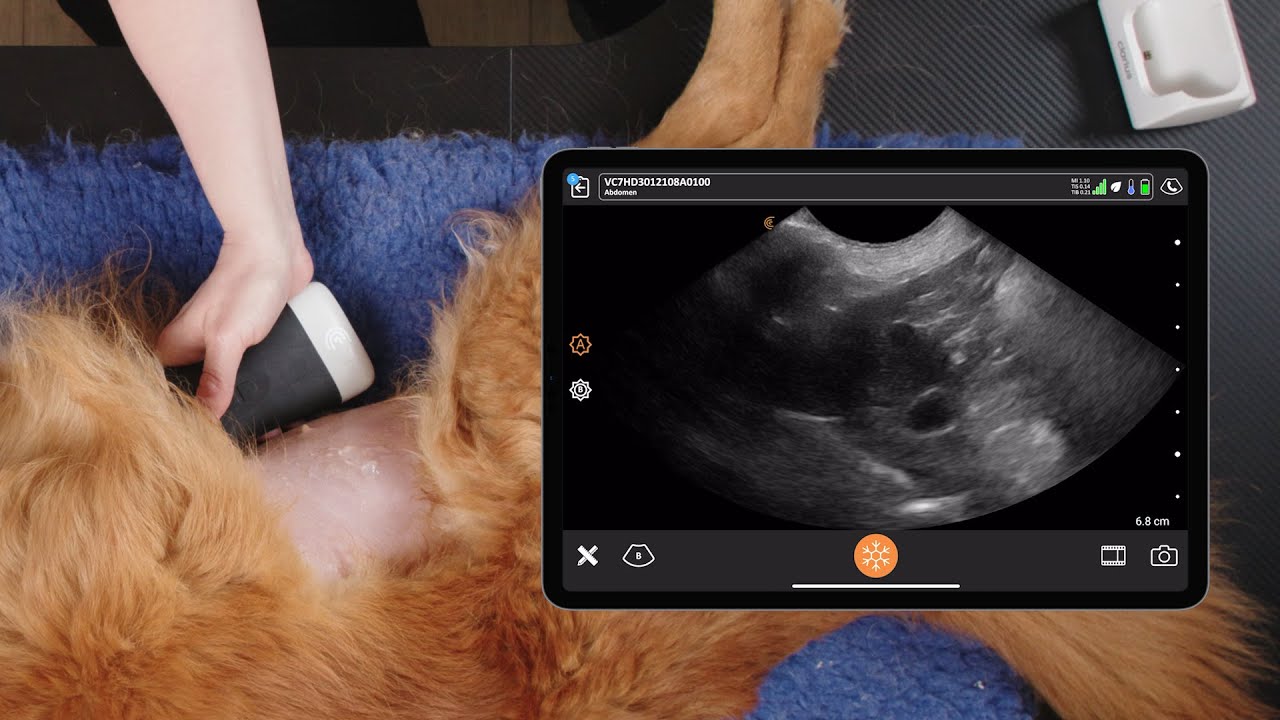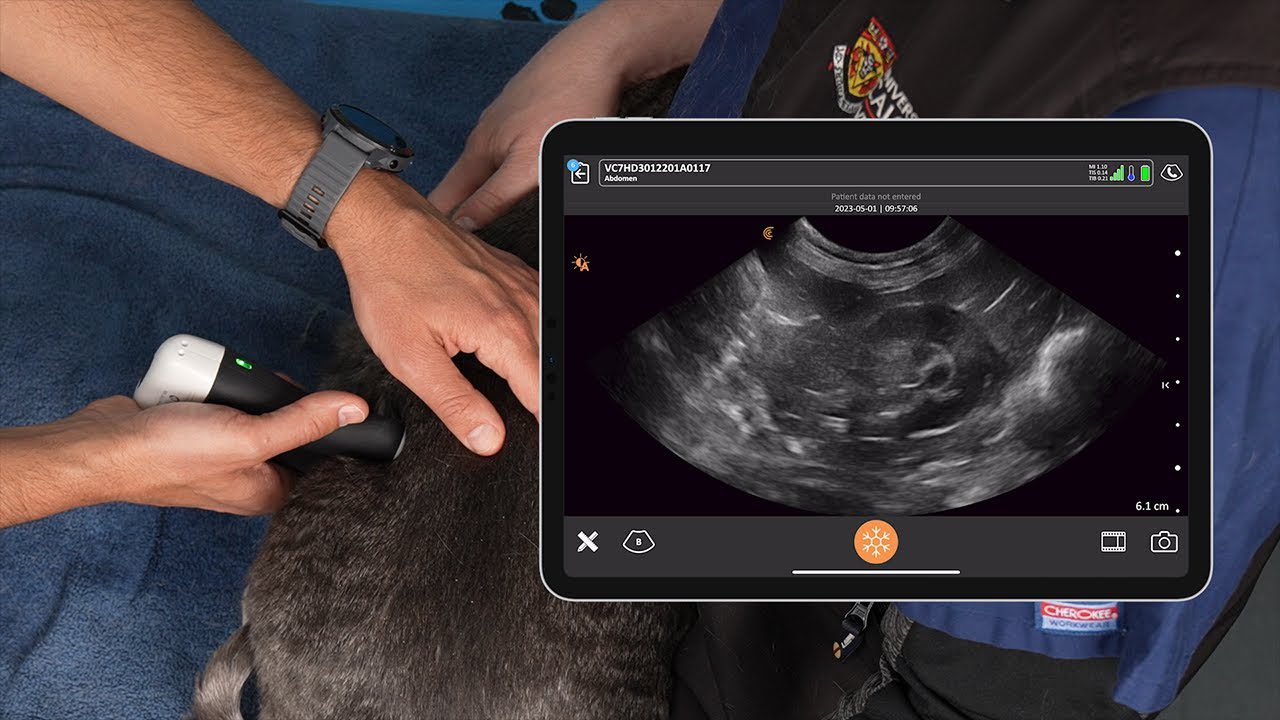




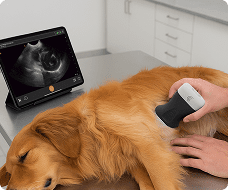


During a recent interview, Julie Burnage, chief operating officer for Aspire Ultrasound, revealed that her company decided to add Clarius to their training “almost by accident” after seeing firsthand how Clarius performed when scanning their dense Lilly Phantom.
When we saw the images, we were quite impressed actually, because they managed to get to the back of Lilly’s diaphragm, when we would have least expected it. And that’s how it began,” Julie explains.
Watch this 3-minute video to hear Julie’s insights on using ultrasound to boost confidence and diagnostic capabilities in veterinary practices. Read on for some highlights.
Aspire UCS’s Mission and Training Approach
Aspire Ultrasound Consultancy Services (UCS) aims to „share the knowledge that we have gleaned over decades and decades of experience of scanning“ to help veterinarians avoid common mistakes. The company offers a wide array of ultrasound training programs tailored to individual needs, often working with small groups to provide personalized attention. Their programs are entirely ultrasound-based because they believe it is an „important and versatile tool“ that veterinarians need to use well.
The Role of Ultrasound in Patient Care
Julie stresses that ultrasound is „a vital tool“ in veterinary settings and that it’s crucial for it to be „used well“. When used properly, ultrasound can speed up the diagnostic process, leading to quicker treatment for patients. She recalls a specific case where a final sweep of the abdomen with ultrasound revealed a splenic mass that was initially missed, highlighting how the tool can „made a massive difference“ in a patient’s journey. She also notes that proper ultrasound training leads to a „huge increase in confidence, competence and therefore diagnostic capability“. For those considering bringing ultrasound into their practice for the first time, she asks, „why haven’t you done it already?“ citing improved patient care and job satisfaction as key benefits.
Small Animal Webinar: Mastering the Aspire UCS 8-Step Abdominal Ultrasound Survey Technique™
Join veterinary ultrasound educators Angie Lloyd-Jones and Julie Burnage for a free one-hour webinar to learn their proven wireless ultrasound techniques to simplify canine and feline abdominal imaging, making it more consistent, teachable, and diagnostically powerful.
Tune in for detailed instruction and live scanning demonstrations.
The Aspire UCS 8 Step Abdominal Survey Step 2: Stomach, Pylorus, Duodenum, and Pancreatic Limb
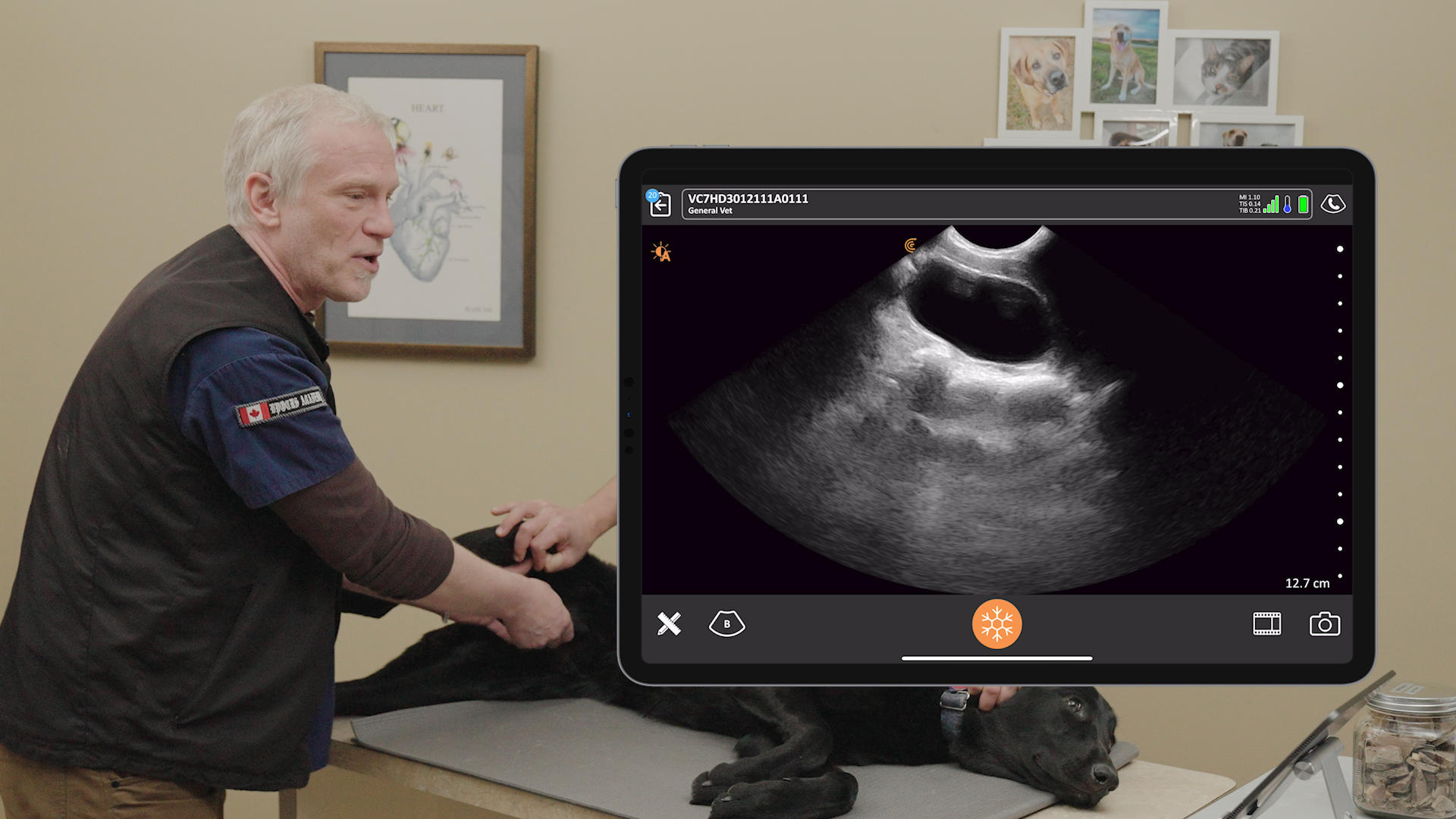
In this video, Julie and Angie from Aspire UCS demonstrate helpful ultrasound techniques to evaluate the stomach, duodenum, the pylorus, and the left limb of the pancreas.
Incorporating Clarius into the Training Toolkit
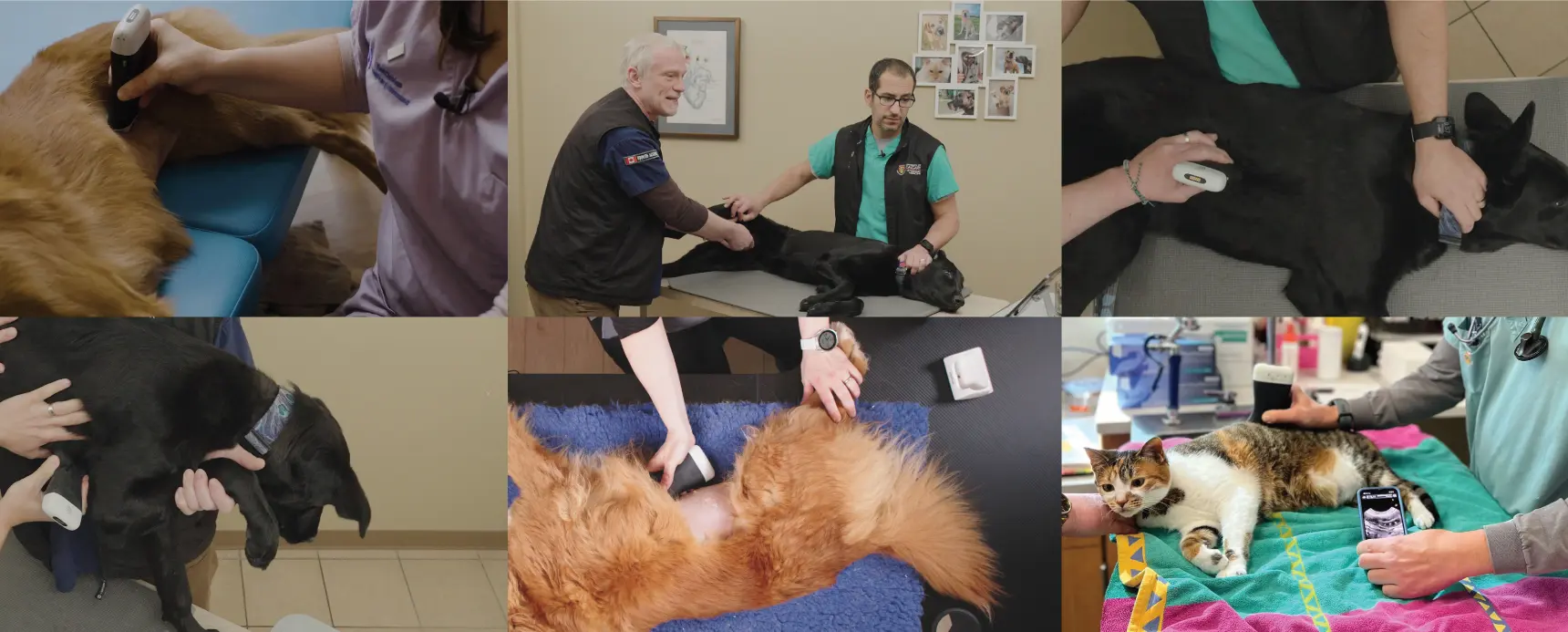
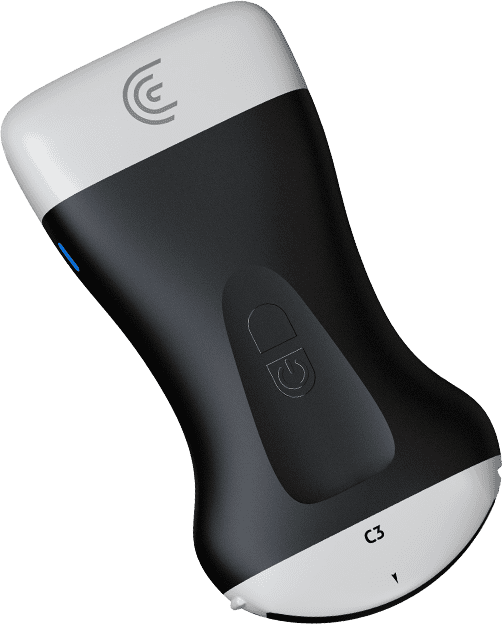
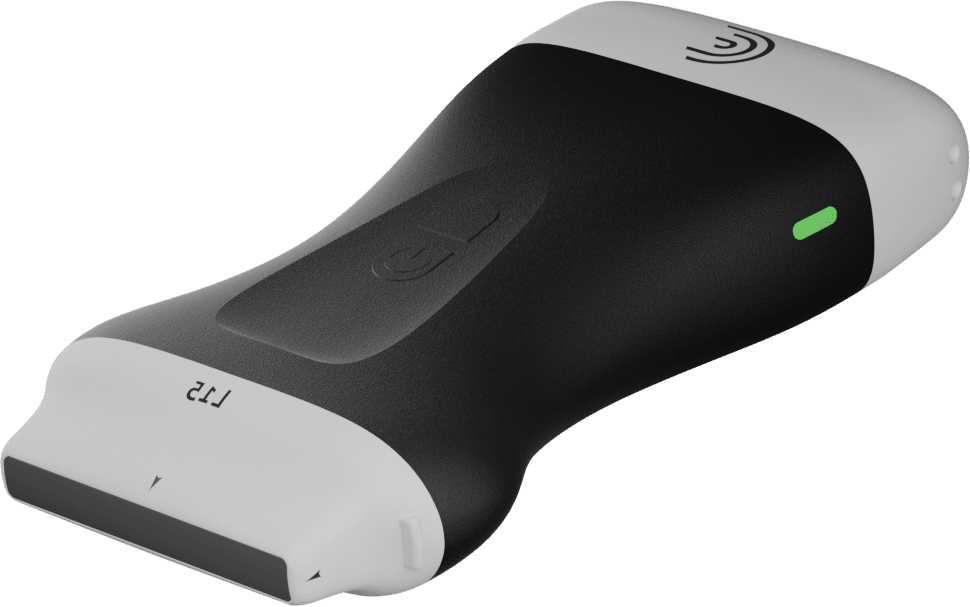
Veterinarians at Aspire’s clinics have the opportunity to try different machines during training sessions. Clarius often challenges „preconceived ideas about hand-held machines“ says Julie. She highlights several features of Clarius scanners that are beneficial for veterinary professionals, especially those in primary care:
- Portability and Wireless Functionality: The wireless and portable nature of the scanner makes it easy to use „to cage side“ and helps with point-of-care scanning.
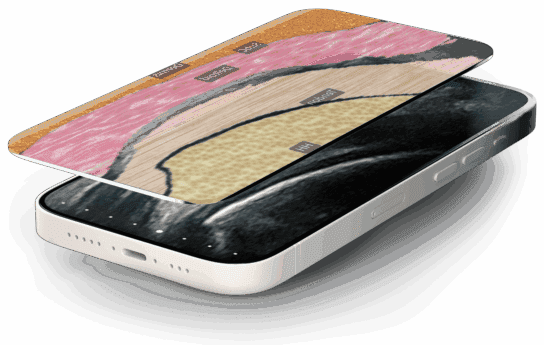
- Image Quality: Vets are „surprised at the quality of the image“ produced by the scanner.
- Ease of Use: The straightforward nature of the Clarius scanner helps to ease the steep learning curve for new users, making the initial transition to ultrasound „a little bit of a more gentle approach“.
Julie’s advice for a veterinarian considering Clarius is to assess their specific needs and case mix. If a vet is looking for „portability and good image quality at an unaffordable price,“ she believes „Clarius seems to tick all the boxes“.
The Aspire UCS 8 Step Abdominal Survey Step 3: Diaphragm, Liver, and Gallbladder
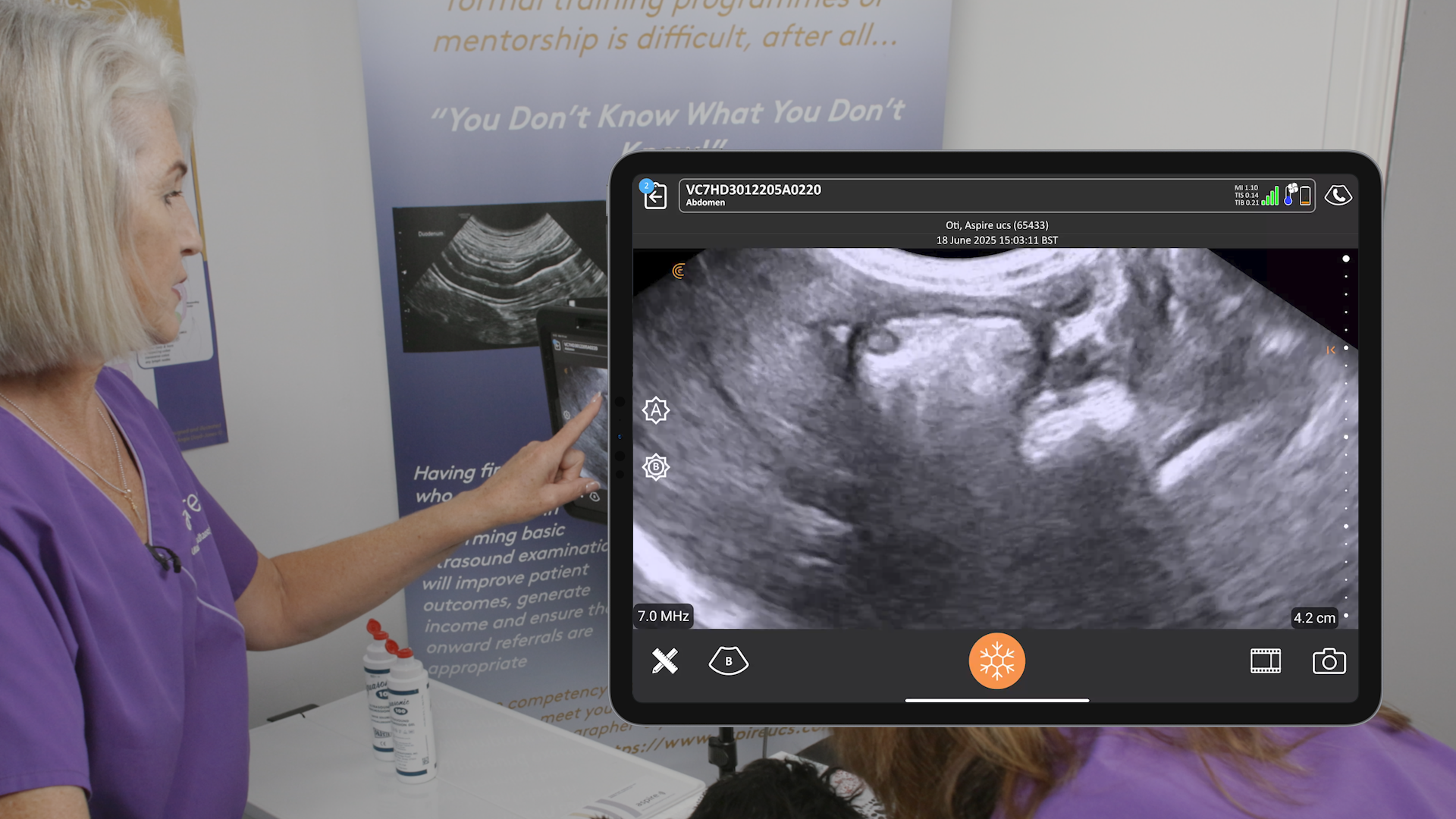
In this video, Julie and Angie from Aspire UCS demonstrate techniques for scanning the left hemidiaphragm and the spleen, with tips on what to look for during the ultrasound evaluation.
Clarius Wireless Ultrasound for Veterinary Practice
To learn more about how you can add wireless ultrasound to your practice, visit our Veterinary Specialty Page. There you’ll have access to additional webinars and classroom videos.
To find out which scanner is best for your practice, contact us today or request a personalized virtual ultrasound demo.