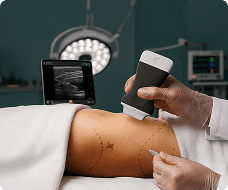
so this was a case of a 19 year old female neutered domestic shorthaired cat with a history of being off food and some weight loss so let's have a look at what we found on ultrasound so here we've got um this very very skinny cat we're looking at in Loops of intestine here so we've got gerjunal Loops here and what we can see on these Loops are if we look at the wall layering we've got the lumen in the middle and then we've got wall layering either side we've got a normal mucosal layer which is a bit thicker um that's normal for small intestine then we've got submucosa which is quite light and then muscularis which is usually a thin dark layer but in this cat the muscularis layer is quite prominent so we can see the muscularis layer a little bit more prominently than we usually could and that appears to be diffusely throughout the small intestines here what we can also see in this image is this large Journal lymph node here we've got blood vessel going through in the middle so just wait for that to come around again we've got spleen tail coming in there and here is this chair Journal lymph node here so quite prominent quite easy to see um we wouldn't normally expect to see it's quite so obviously here we've got the splenic tail again popping into view Loops of intestine and we can see there's just slight thickening in that new coat muscularis layer in the intestines here again we just had the bladder quarterly and we can see these Loops of small intestine um with that extra muscularis thickening there and the jejunal lymph nodes coming into view here so here we've got more um image of that jejunal lymph node and the jejunum with muscularis layer as well that is thickened so here's a stationary image so I can um show you a bit more clearly so this is a transverse Loop of small intestine I've got the lumen in the center we've got mucosa which is dark here on this side and mucosa on this side then the next layer is light which is submucosa up here and up here and then we've got a thin dark muscularis layer on this side as well followed by the serosal layer which is bright white on each side um and just the muscularis layer the dark layer before the serosa is is just a bit thickened a bit thicker than I would normally expect so to get a better understanding of what we're seeing here we want to take fine needle aspirate so we first of all measure from um the the side of the probe that has a light on it and that top Corner down to our lesion so in this case we want to take a sample from the jail lymph nodes and we measure that distance that tells us um the length of needle that we require so in this case um we're looking at 1.25 centimeters so an inch needle should give us plenty of room to play around with so here we're taking a fine needle aspirate we can see the needle going in here and the needle tip we're using the Woodpecker technique to just move the needle backwards and forwards um to take that fine needle aspirate sample and watching the withdrawal of the needle too we repeat so again we've got this hypercoic line which is the needle um if we can't see the needle we move the probe rather than the needle and once we've got the tip of the needle in image again we can perform the Woodpecker technique before withdrawing the needle after we've taken the fine needle aspirates we want to scan in the area to assess whether we've caused any minor bleeding and if so to monitor it here we can interestingly also see the ilium and where it enters the the colon here so we've got the iliac cocolic Junction in view here so we had a thick and muscularis layer throughout the jejunum and we had an enlarged or hypoechoic judging or lymph node so we were worried about a possible differential was lymphoma quite high up on our list really with the weight loss and lack of eating but also inflammatory bowel disease was high up as well on our list so the fine needle aspirate of the lymph node was useful because it's not terribly invasive only requires a mild sedation and given that the cat was 19 years old the owners were reluctant to put the cat through anything too invasive the fine needle aspirate of this lymph node came back as a mild reactive lymphoid hyperplasia and no cells suggestive of neoplasia were found so we could treat this as a inflammatory bowel disease moving forward rather than worrying about possible neoplasia obviously it would be nice to get some cells from the intestinal wall too but in this case it was deemed the intestinal wall was not quite thick enough to guarantee that we wouldn't puncture into the Lumen and and potentially cause a peritonitis so the lymph node was sampled in isolation in this case