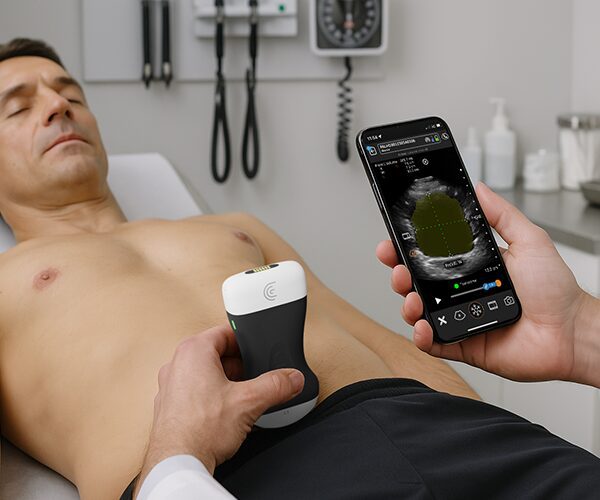
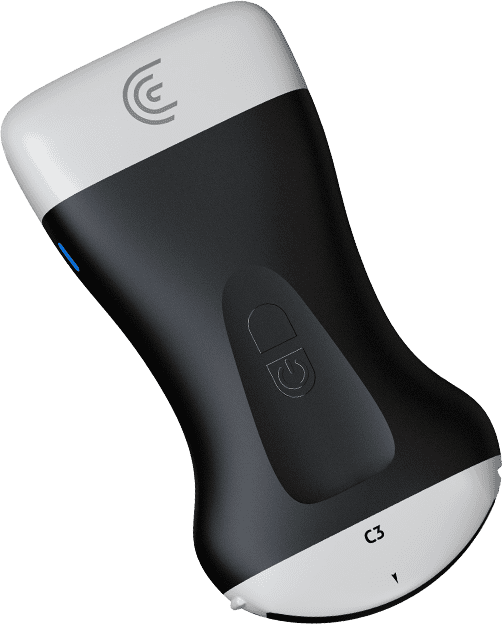
hi my name is Shelly and today I'm going to show you how to perform a fate ultrasound exam and the Fate stands for Focus assessed thoracic Echo now the Fate exam is used to assess cardiac function including contractility left ventricular hypertrophy right and left ventricular function we can also assess valvular function or dysfunction we can look for pericardial and pleural fusion and also obviously tamponade so I'm going to start the exam in the parasternal window there's a number of views that we're going to do with this exam so from the parastern along axis I'm going to look at the left ventricle and from here I'm going to be able to assess that the septal and posterior left ventricular walls are Contracting well the mitral valve is opening well I can rotate the scanner 90 degrees in order to assess the left ventricle in short axis and what this does is it gives me a really good idea of all of the left ventricular walls and how they're functioning concentrically Contracting and we can slide all the way down to the Apex and then all the way back to the mitral valve and then we have a really good idea of left ventricular function from this view I can also see the right ventricle at the top of the image the left atrium below so we can do a rough assessment of ventricular and atrial size from here as well now I'm going to go to the apex of the heart and we'll have a look at the apical four chamber View this gives me a really good idea of ventricular size we can compare the right and left ventricles here and they should be fairly similar the right side a little bit smaller than the left we can also see the septal and lateral walls of the left ventricle and as well we can see both the mitral and tricuspid valves so we can see how well they're moving and get a good idea of the heart size from here and now I'm going to move down to the subzipoid window and this is another great view for looking at the right side of the heart because it's closest to the scanner right now and this is a fantastic view for looking for pericardial effusion even a little tiny Trace Amounts and I'm just going to sweep back and forth anterior and posterior just to make sure that we've kind of gone through the whole um area of the pericardium this exam also includes looking for a pleural fluid I'm just going to look at the left hemidiaphragm which is the bright white line that we're seeing Pleural fluid will be in the dependent portion here so I'm just going to kind of fan the scanner posteriorly and we'll do the same thing over on the right just looking for pleural fluid on the right side so a little bit higher than our Morrison's pouch View and we'll look at the right hemidiaphragm and fan posteriorly and a little more anteriorly just to look for any fluid in this in this area so the Fate exam gives us a really good look at how the heart is functioning and as well we can rule out pericardial and Pleural fluid foreign