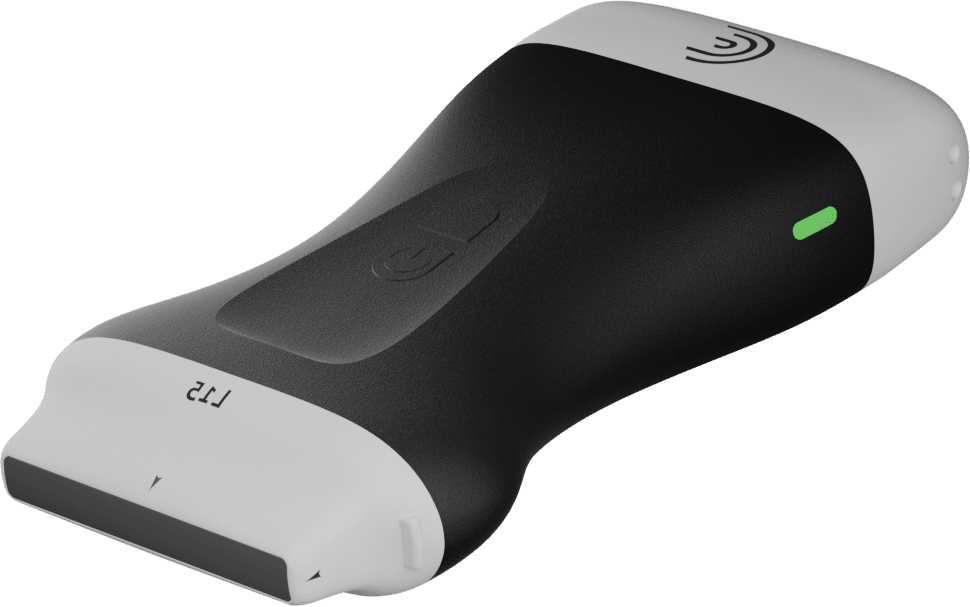
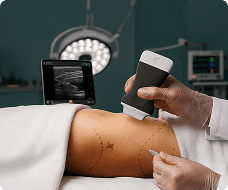
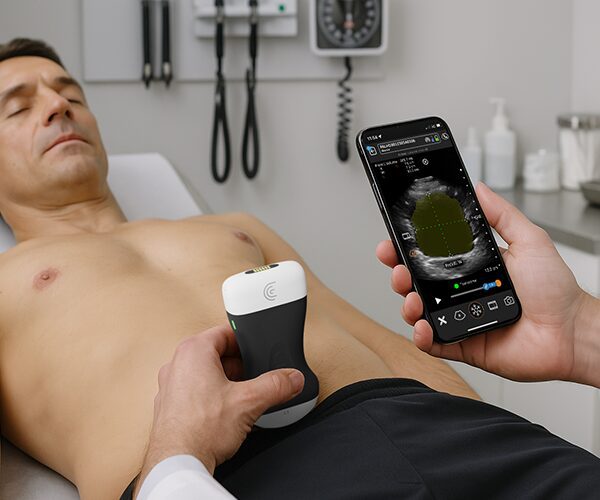
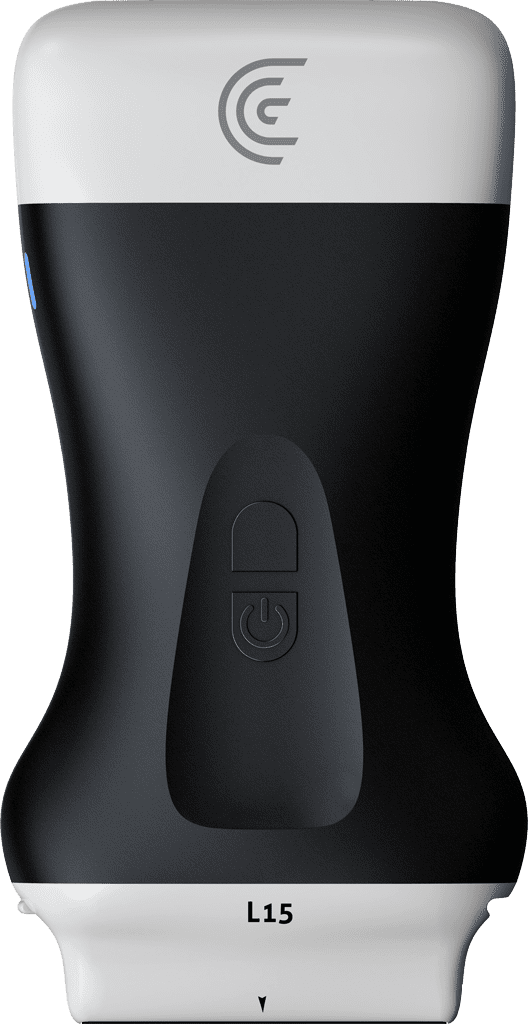
hi everyone I'm Dr Muhammad bardy and I'm a practicing rumatologist in Vancouver today we'll be looking at enthesitis scanning at the Achilles tendon insertion and then at the plantra fascia so as you see as I have my patient position here they're laying down they're comfortable foot's hanging over the edge of the bed with the Achilles uh posterior aspect of the ankle well exposed as you scan your patient you may need to push them a little bit into dors plant reflexion they can start with your foot relaxed the sub of the skin is really dry here putting on lots of gel in the beginning if you know the scener you're going to be scanning will help get some moisture to the skin and you'll get better echogenicity while you're scanning starting with the Achilles so we're using the l15 clarus probe here I have a nice gel layer and we can start to see here as we make contact we can see the fibers of the Achilles tendon okay and assessing for enthesitis or enthesopathy we want to go down distally far enough that we can you can actually see the distal fibers of the tendon as it inserts here and specifically we want to see nice clear bone Contours to look for any erosions if there's any enthesophytes and um we want to look at the tendon structures to see is there any tears thickening loss of fibrillation uh and we'll be using Doppler to look for any sort of hypervascularity for inflammatory anestis it is important that once you have your image in view you sweep medial to lateral so you can see the whole region of the tendon you want to scan around and be clear on the regions you're seeing so as you go through uh it's not just about getting one image it's really about building a picture of this tendon um and the insertion here as you look here deep to the Achilles tendon there's the retal calcal Bursa there's some fluid here we can see the retr calcal fossa here there is a fat pad called Ker's fat pad back here as well and when you get to the distal insertion here this is where it can be helpful if you are able to adjust your patients footing just so you can kind of go through and see the fibers here well if the patient is too far dorsy fluxed it will actually compress the capillaries and if there was enthesitis on your Doppler moding you'd lose that so you want the foot just a little bit relaxed when you want to look at this area um in transverse you'll need lots of gel if you're doing your transverse scan and you can put lots of gel on the patient that way you'll get a nice field of view here you can see the calanus you can see where the kiles is you can use anosy tropy to show you the margins and boundaries you want to keep a light pressure and you can follow the tendon you can see the tendonous region here and if you were to keep following it you could follow it back and then you'll see the myotendinous junction here now now if somebody has Achilles tendonopathy it's usually about 6 cm proximal to where it inserts it's a region where the tendon is a bit hypovascular and it's more prone to tendonopathy there um that's also worth uh Imaging as well and if you were to put your Doppler on so for your Doppler assessment you want to bring your box to the field of interest you want to ensure that your prf values are around a thousand and and you want to keep the pressure light so using the gel you have you want to ensure you're floating the transducer and then you want to look at this area and see is there any sort of signal that you are able to pick up you don't want to go too far proximal you want to see within at least a couple of centimeters of where the enthesis is and you do want to ensure that you go distally far enough all the way down and as you sweep around to look for any signal okay okay you may need to rock uh heel toe your probe a bit to look at the Achilles insertion and then transversely same thing so as we're scanning in transverse you want to come up make sure you're seeing the Bony cortex play with the anosy tropy so you can bring the tendon in and out of view and you can tilt your probe to evaluate that keeping the pressure light and that would conclude assessing the Achilles uh insertion for enthesitis