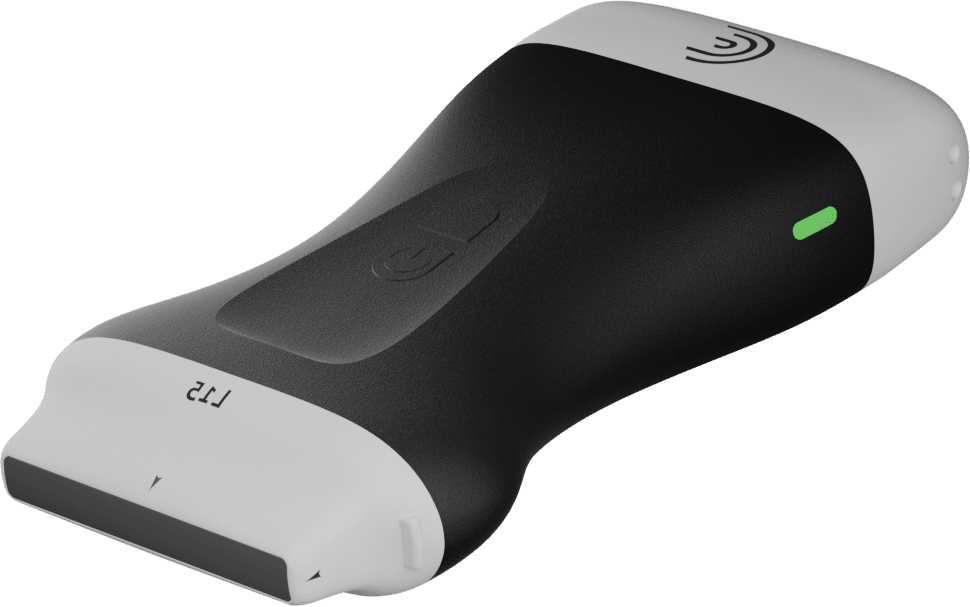
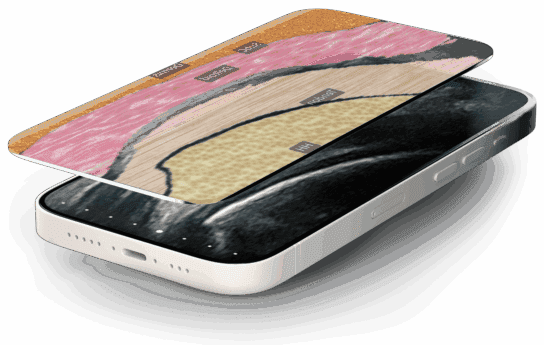
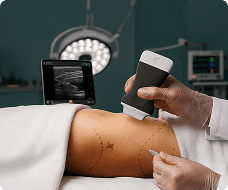
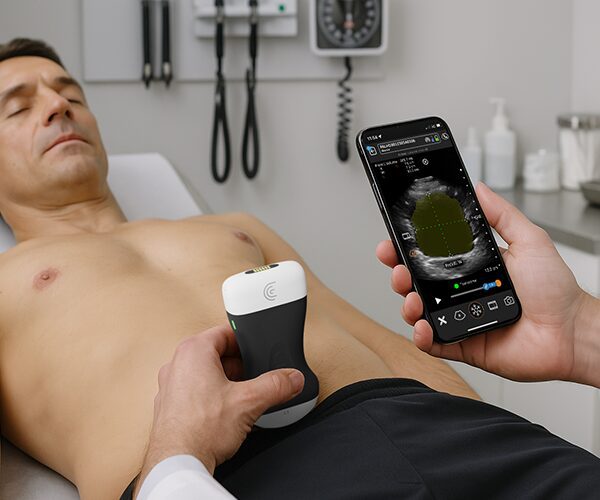
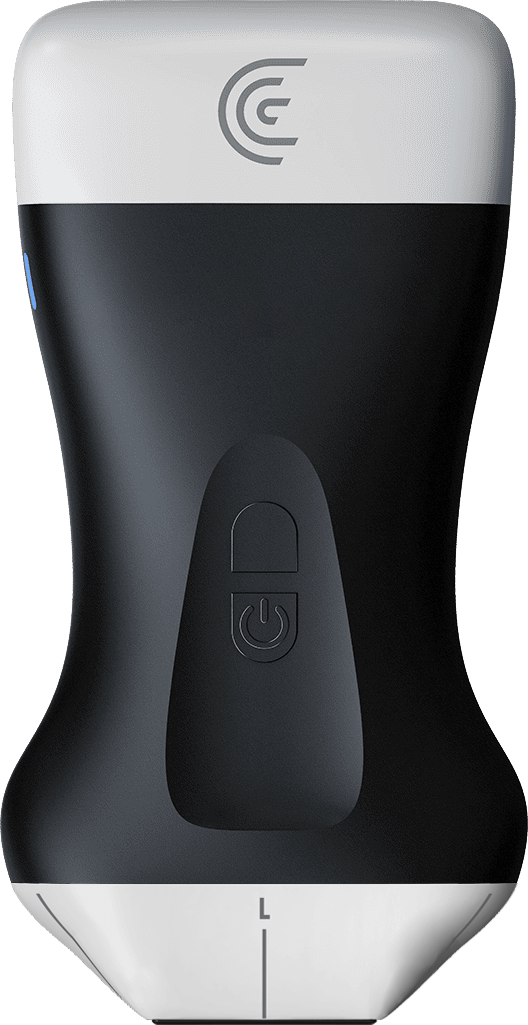
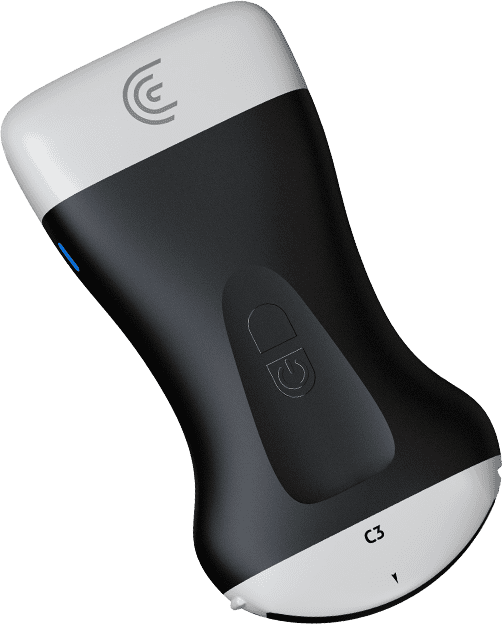
my name is rud I'm from stutgart in Germany and we're here in the bord sport clinic at Fred half at Lake hon and uh that is an orthopedic clinic and we're doing shoulder surgery and every patient gets a regional anesthesia in this case an inter skyine catheter and uh we're doing it ultrasound guarded and we've got a little nice fancy probe Wi-Fi connected to a tablet and this probe is very special because it has got like two probes in one so there's one linear probe and side by side there is also a phed array and depending on the preset um it kind of automatically switches between both uh Footprints in order to demonstrate this I will quickly assess the diaphragmatic function uh before the block and then we also will do it after the block because as we know that there are quite a few Hemi diaphragmatic um paralysis up the inter scaling block okay so the app on the iPad is quite easy to use so what we do is I just activated the voice commands so I can either um run the settings and the image optimization on the touch screen I can run it through buttons on the um the scanner which I can customize and I also can run it by voice control I will quickly demonstrate this so I put the Probe on in an intercostal window and find a more upper window for the diaphragmatic function here we have the diaphragm and now I can a voice command the thing increase depth I also can use my fingers and this is how it works and now I will have the diaphragm on okay just a like this capture video now the video is running okay the dirty curtain is coming in so this is a totally normal dimatic function um here we have it and uh capture video will stop the video M mode will start the M mode capture video okay so we've got a totally normal diaphragmatic function yeah okay this is a sniff test everything is normal capture video will stop the recording B mod will go back into the normal B mode okay so we have a totally normal diaphragmatic function and with the same probe what we can do is we can change the preset and demonstrate that using the linear probe in this case in a nerve preset I could use lung preset I can quickly look on the plural window so my here okay so we've got a standard window here increase depth now we we have the plur lighting wonderful with a little common tail artifact here capture video the video is running and I also can demonstrate that the chest wall every black and white dot really stays as as it is whereas below the plal line we've got a very very unset image if I zoom it in you've got this here and especially if you compare between the lines like the white plal line you can see what the difference is that comes about because of the um the moving mirror plane of the perial plura in this case okay and I also can uh put the OTE in mote it starts here we've got a wonderful capture video and we've got a wonderful Seashore sign here with also in some parts some lung PS B mode capture video so the recording stops and everything is set for preparations for the block and for this I will do a quick pre-scan I will change the position of the table and the position of the table is Beach share already with my here in order to facilitate all the processes here in the operating theater now I put the prob on marker points to my own left eye in order to have the right image orientation I just quickly um adjust the image also on the touch screen it is possible and of course on the touch screen I also can start the video which is running now we've got the plura the rip the subcl artery now I follow the plexes into the inter scaling Groove and there are some arteries here as you can see in the middle of the image color mode here it is B mode and we're focusing on the superior trunk and which is in here already so we see uh the vertebral um capture video we can see the vertebral arteries and veins right here and we've got the the C7 here we've got C6 here and C5 spinal nerve C5 here and even C4 uh I can see the Bony Shadow and now I follow um the nerves that comes out of C4 and goes into the cervical nerves pathway and now end up at the posterior edge of the sternal tiate muscle and this is where I actually put the local anesthetic again because I want to anesthetize the supraclavicular nerves too and they are in the center of the image not really uh seen very very well here however even if they are not seen we can still inject into the um a lateral cervical nerve passway to n these nerves so here of course I keep my distance between the needle and the probe now because it's not uh with the steer I cover at the moment let's get to Incline Peaks Little Skin injection capture video I go in and here I am and you see that the needle is dancing just a little little bit in order to separate all these horizontal fcia layers now I take the prob off and I do like a subc canas tunneling with the local anesthetic in the direction where I will insert the catheter that's it and now we will do all the preparations for like the S condition