



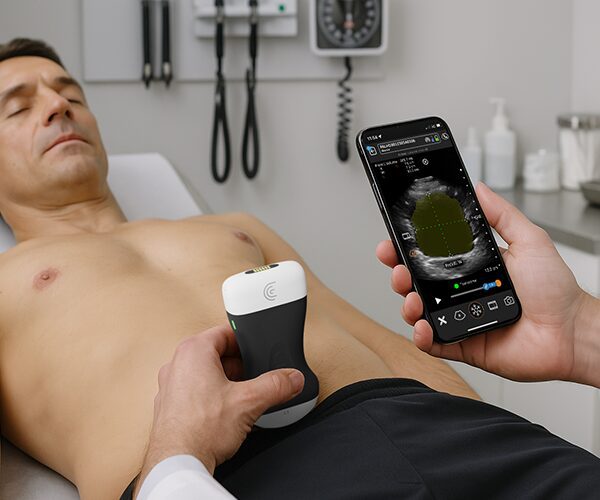
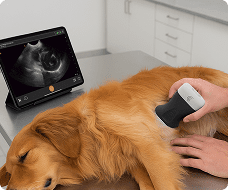


As of July 2024, the ACGME officially requires POCUS experience in family medicine residency. While 95% of family physicians agree that POCUS is vital to the field, as of 2021, only 32% of programs had a formal curriculum in place.1,2 For program directors, this mandate creates a significant challenge: how do you deliver comprehensive training when expert instructors are already stretched thin?
The Problem: The Traditional Training Bottleneck
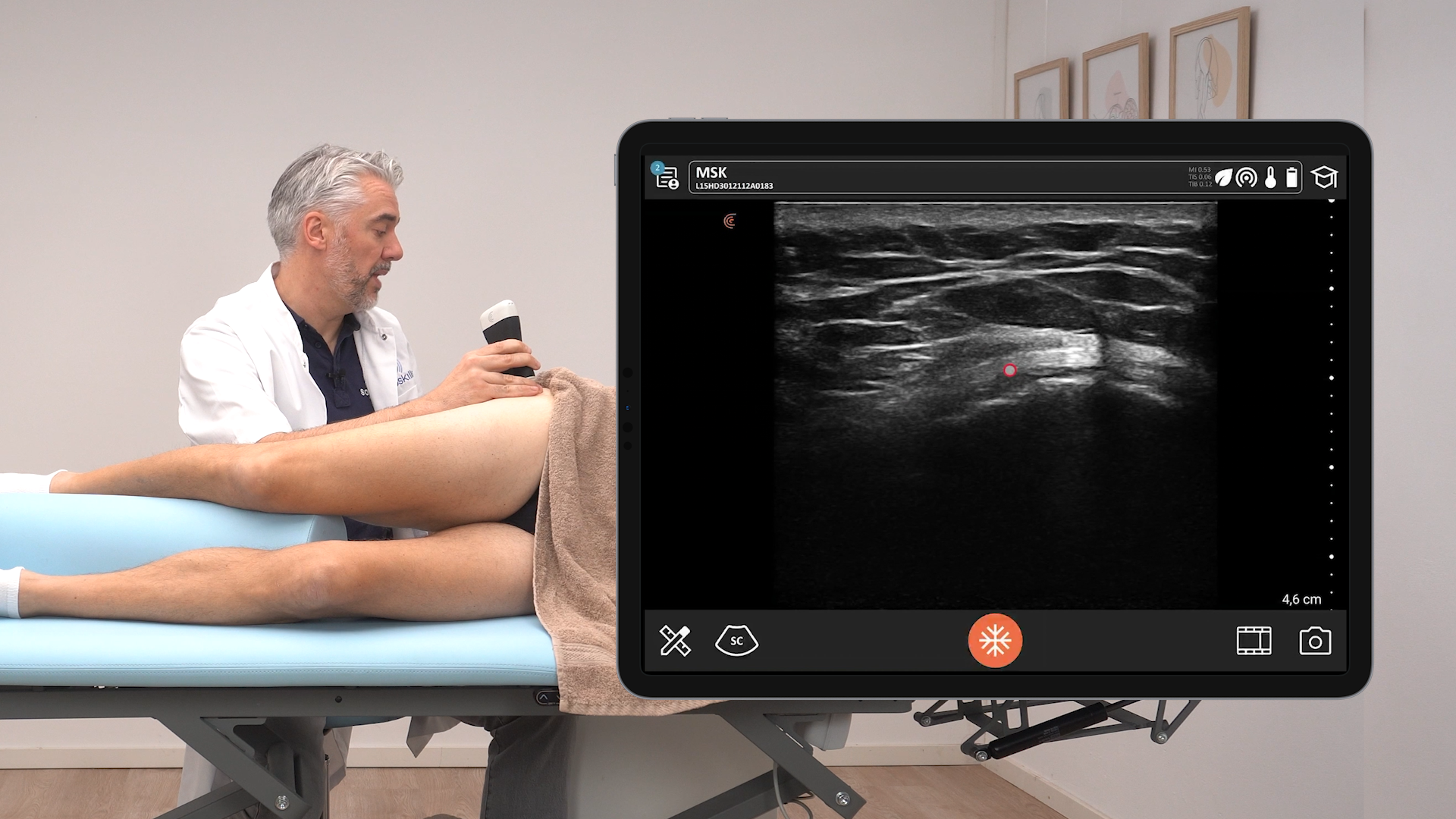
Quality POCUS education has always depended on three resource-intensive elements: image acquisition, interpretation, and clinical integration. Traditionally, mastering these skills requires months of one-on-one supervised practice. When a program has a single experienced instructor and ten or more learners, this high-touch model breaks down, creating a bottleneck that prevents residents from getting the hands-on time they need to reach competency.
Also, the hardware itself has historically been a barrier. Traditional cart-based systems are often intimidating, featuring complex consoles and „knobology“ that require a steep learning curve.
Our Solution: Multiplying Faculty Impact with Clarius Intelligence
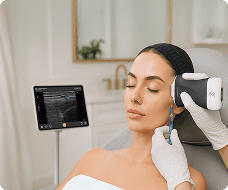
To break this bottleneck, program directors need a solution that extends their expert faculty’s reach without compromising quality. Clarius Intelligence serves as that dedicated training partner, multiplying the impact of instructors by providing real-time guidance during independent practice.
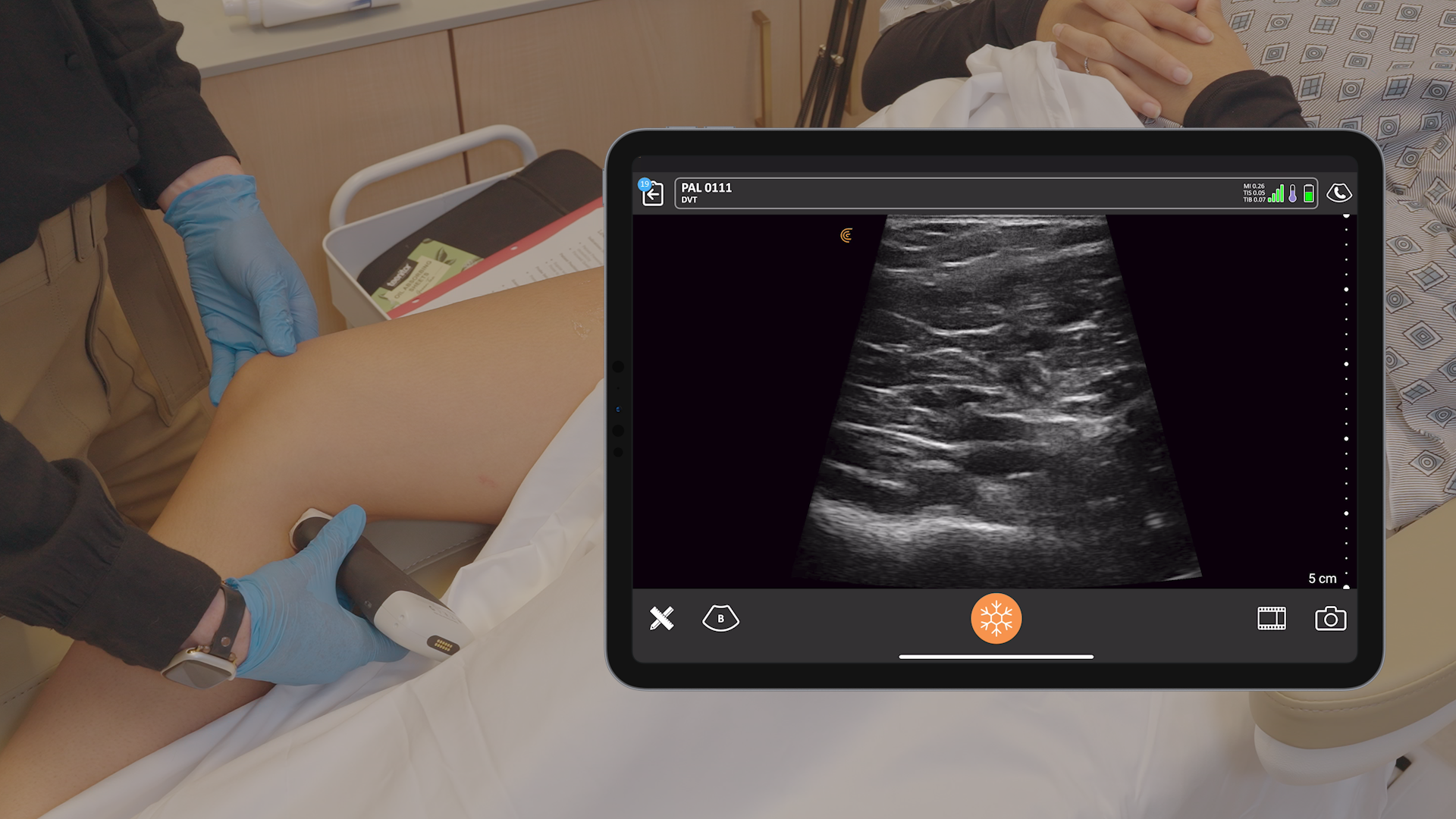
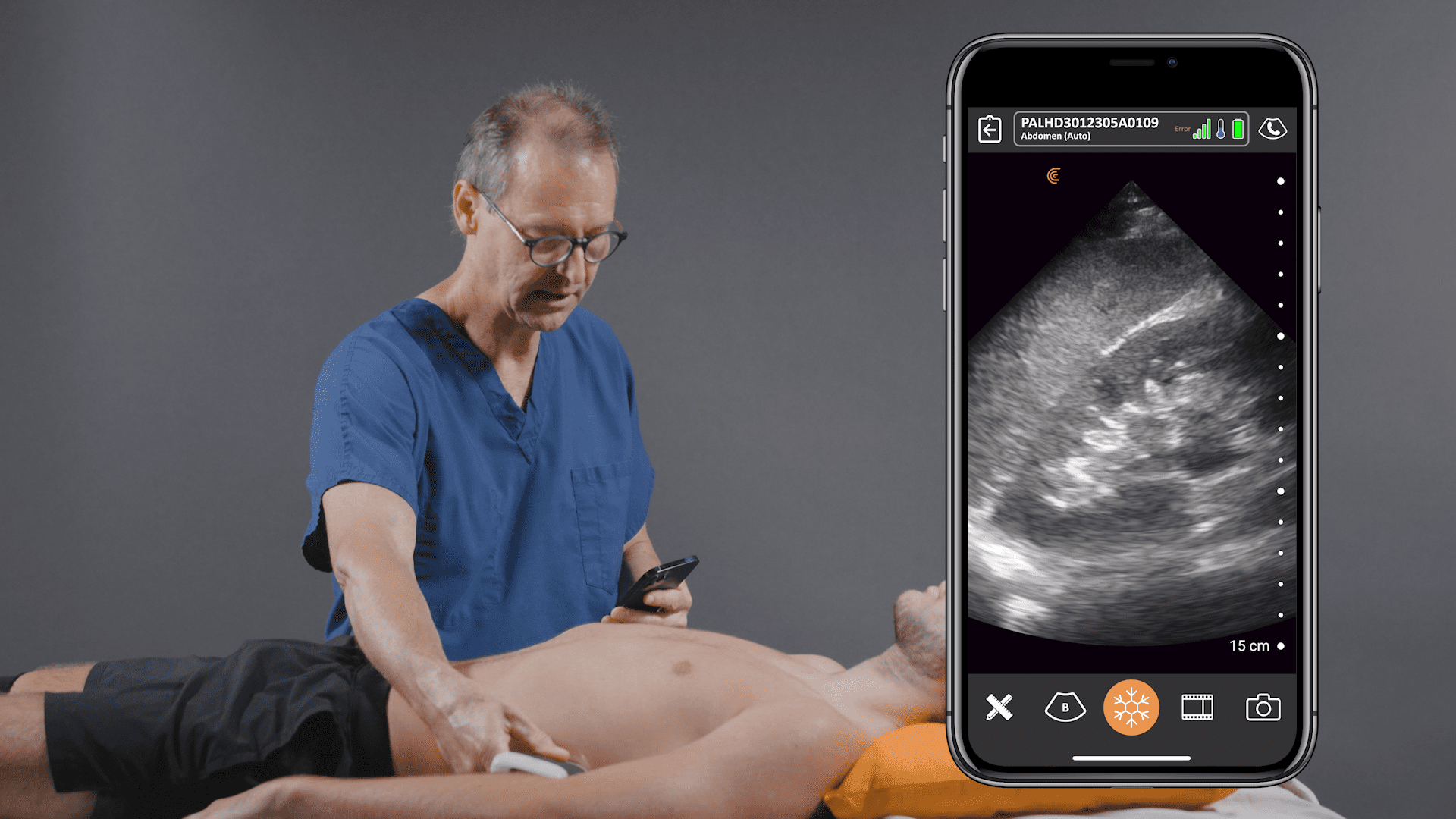
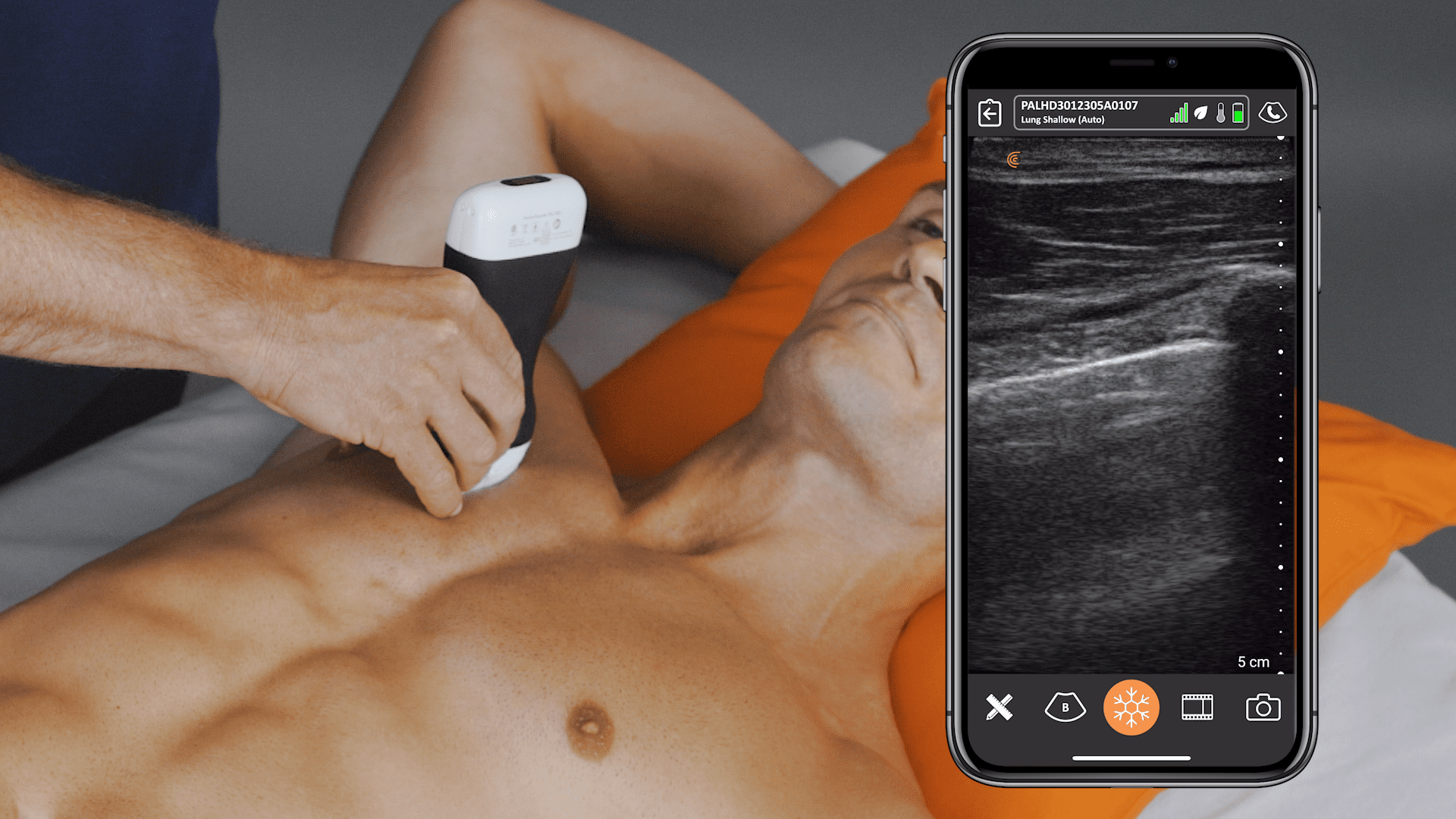
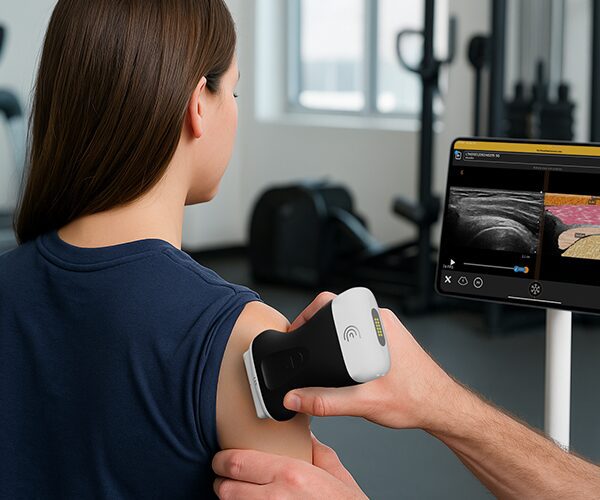
Instead of memorizing complex buttons, residents use an intuitive app that operates like a smartphone—using familiar gestures like pinching to zoom or swiping to adjust gain. This allows them to focus on the patient while the AI provides a „safety net“ during the hours between faculty-led sessions.
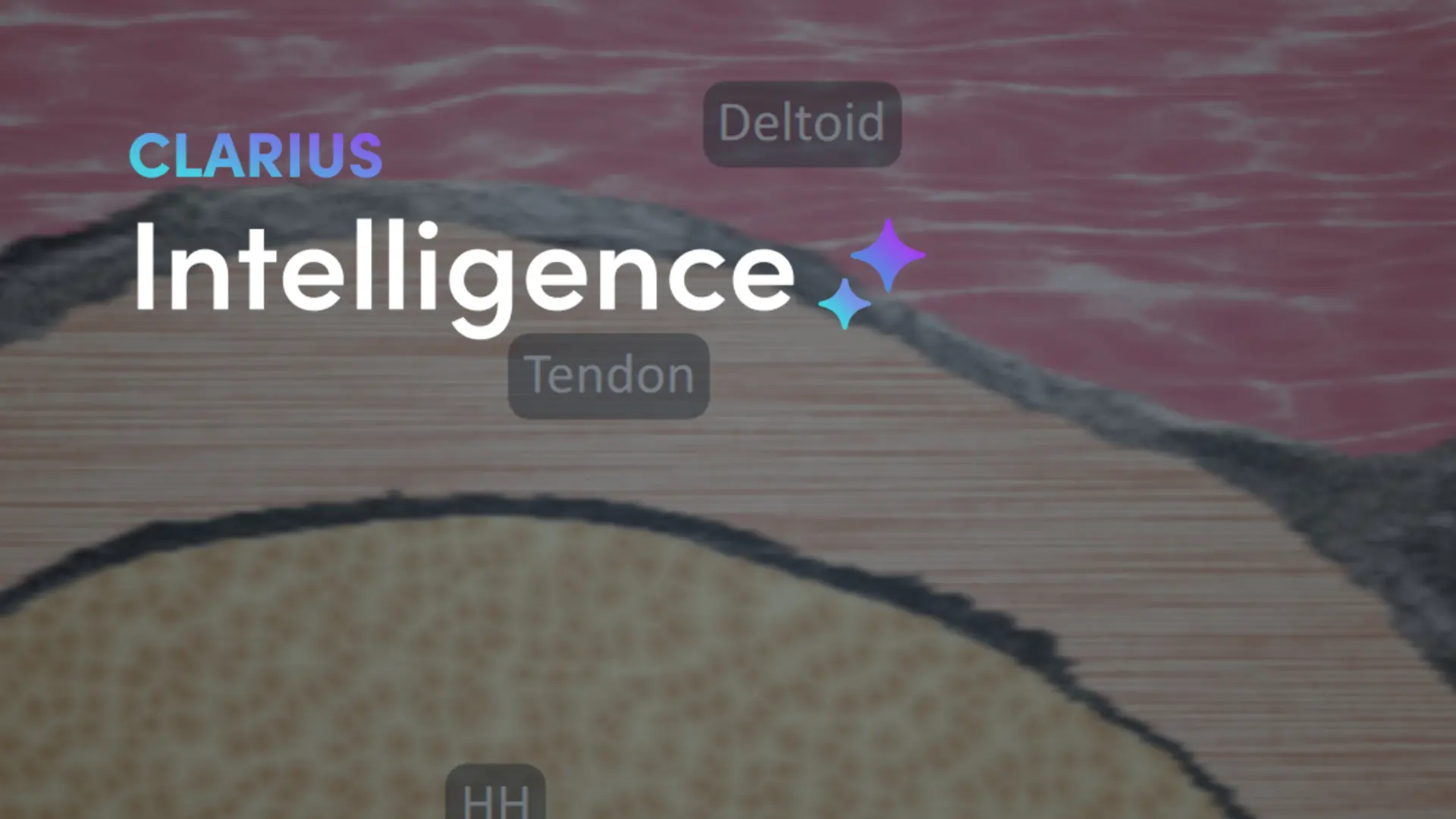
AI-powered high-resolution imaging from Clarius high-definition handheld ultrasound scanners ensures that beginners can clearly see individual striations in tendons and muscles, making anatomical recognition significantly easier.
Our AI features provide immediate feedback as students practice:
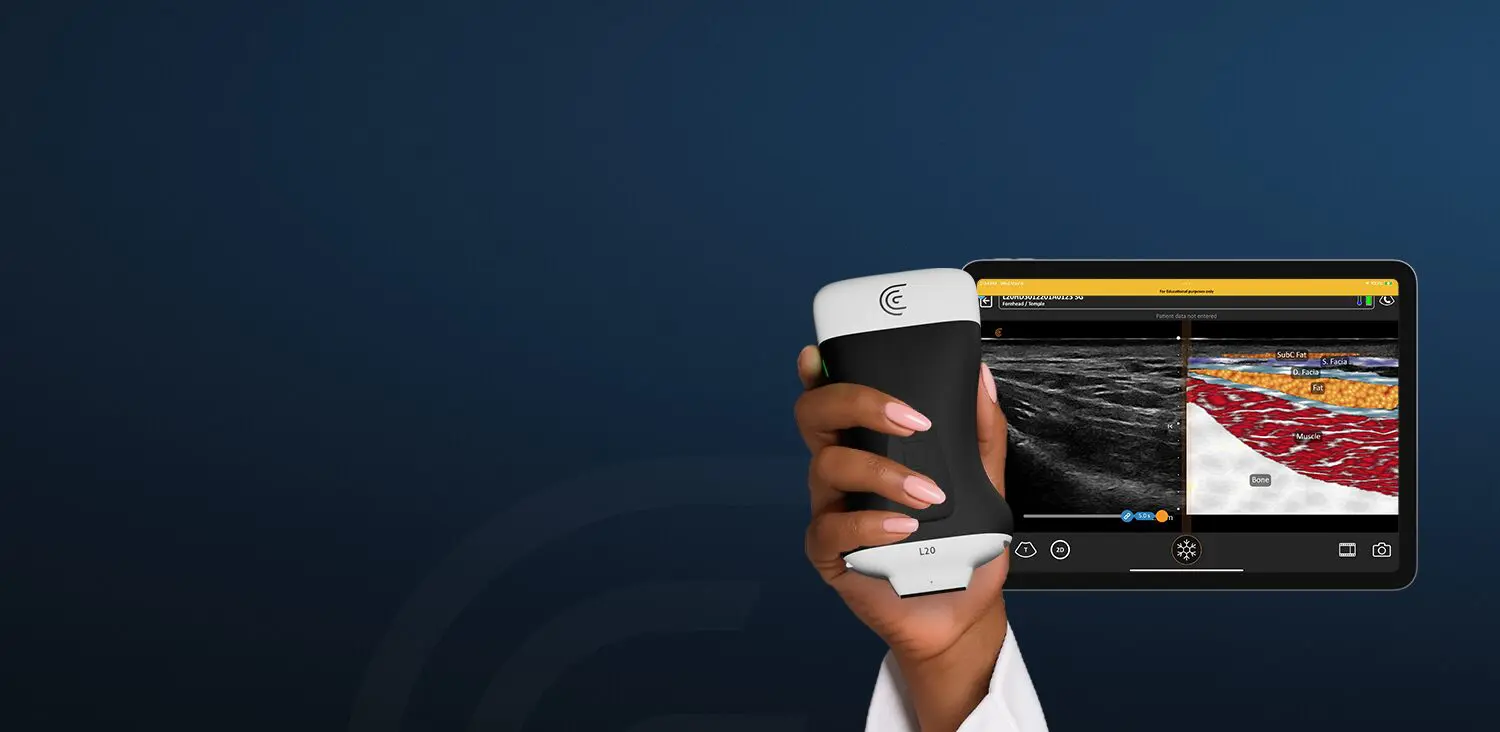
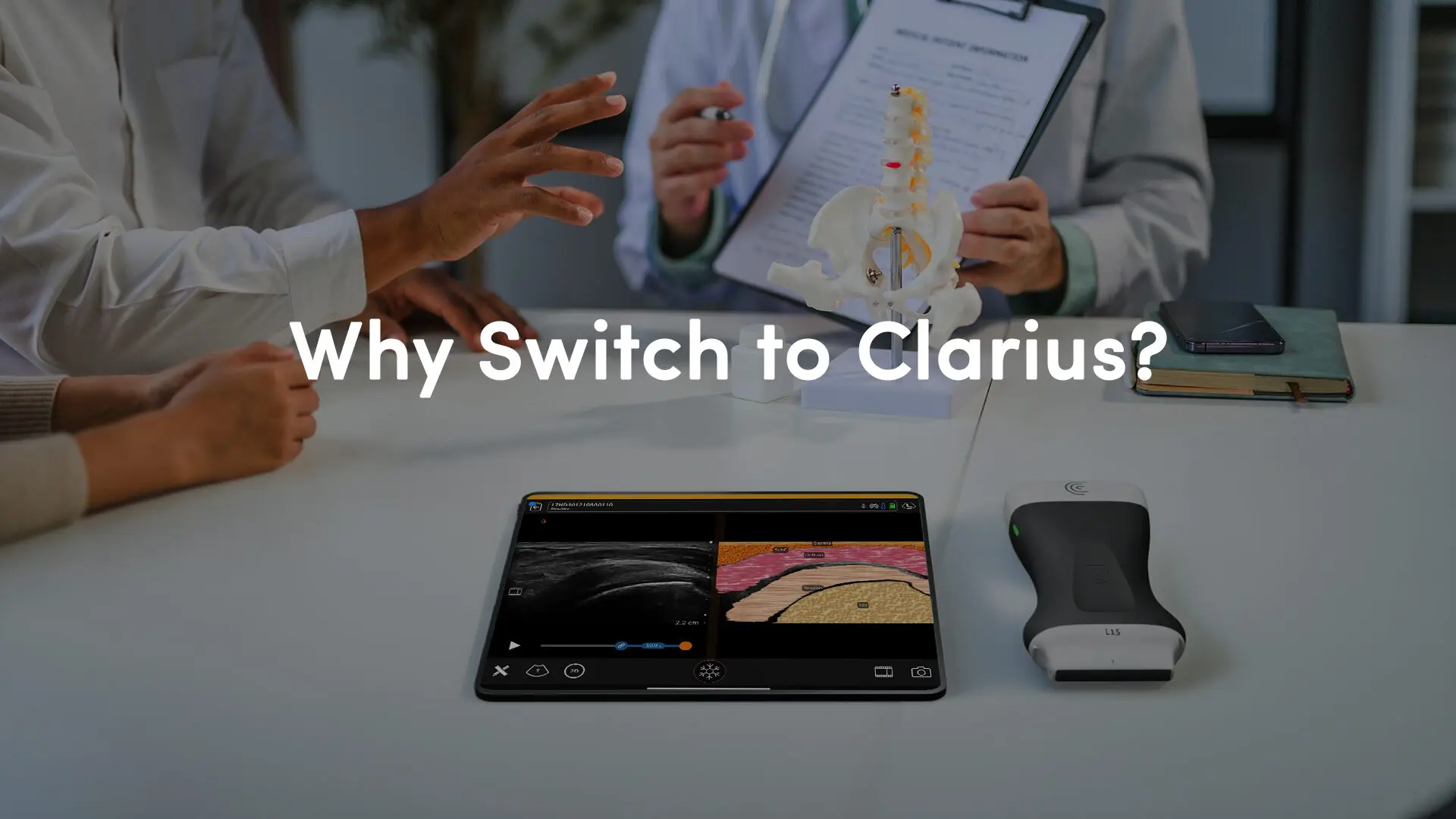
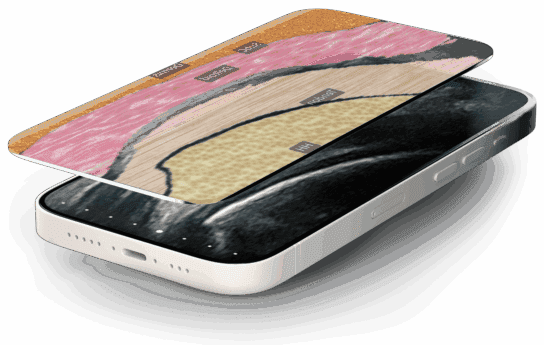
T-Mode™: Overlays anatomical labels directly on the scan in real-time, acting like a textbook that is always open during every exam.
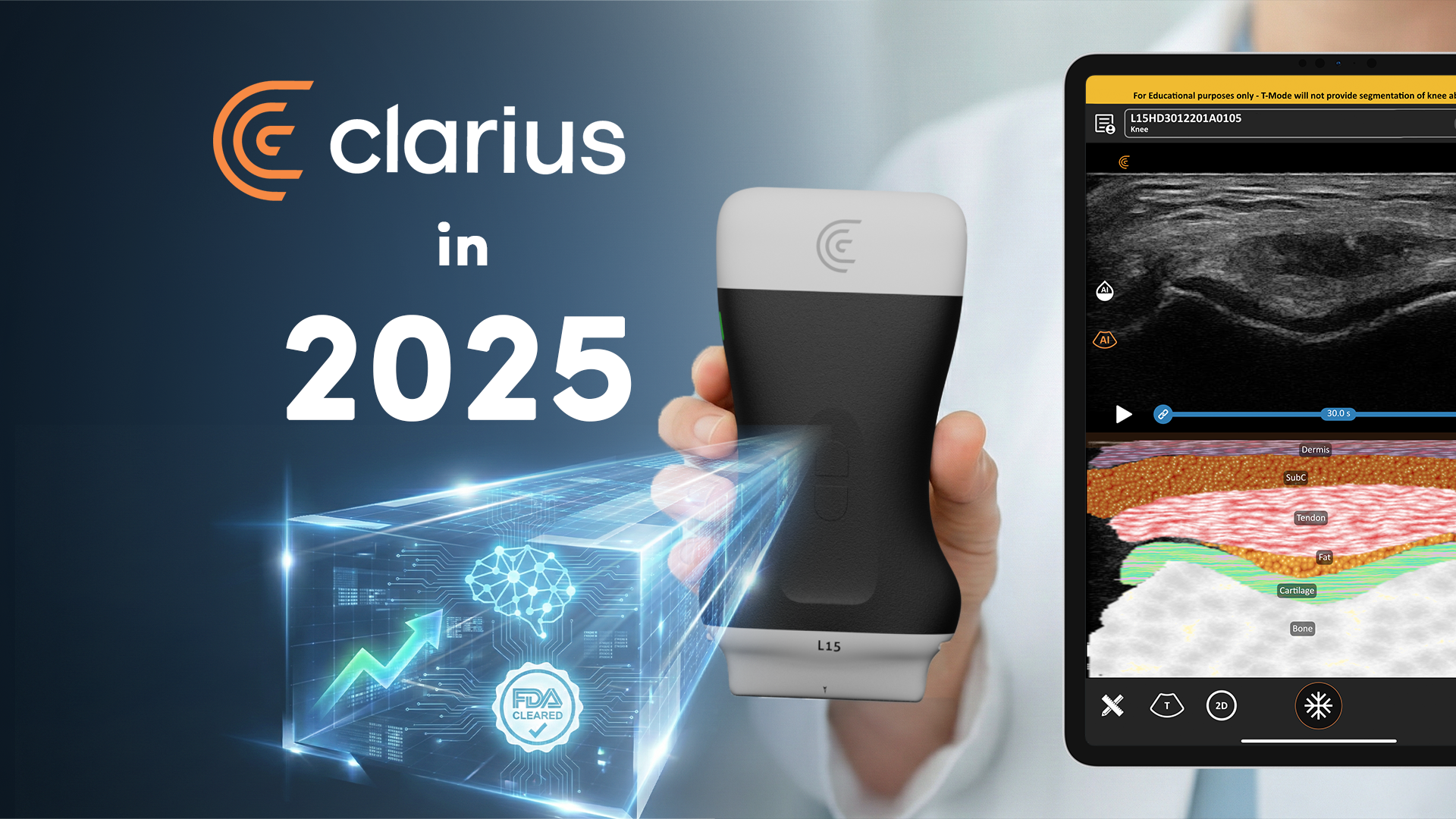
MSK AI: Automatically identifies and measures thickness of the tendon, teaching learners exactly what to measure and where pathology occurs.
Median Nerve AI: Guides carpal tunnel assessment by identifying the nerve and confirming proper technique, eliminating guesswork for beginners.
Bladder AI & OB AI: Calculates volume instantly or highlights fetal structures, building confidence in clinical checks even for those without specialized training.
Wireless Freedom: Scaling the Instructor’s Reach
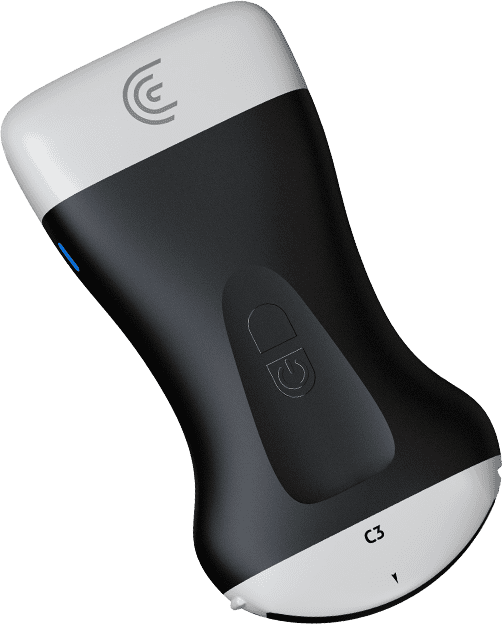
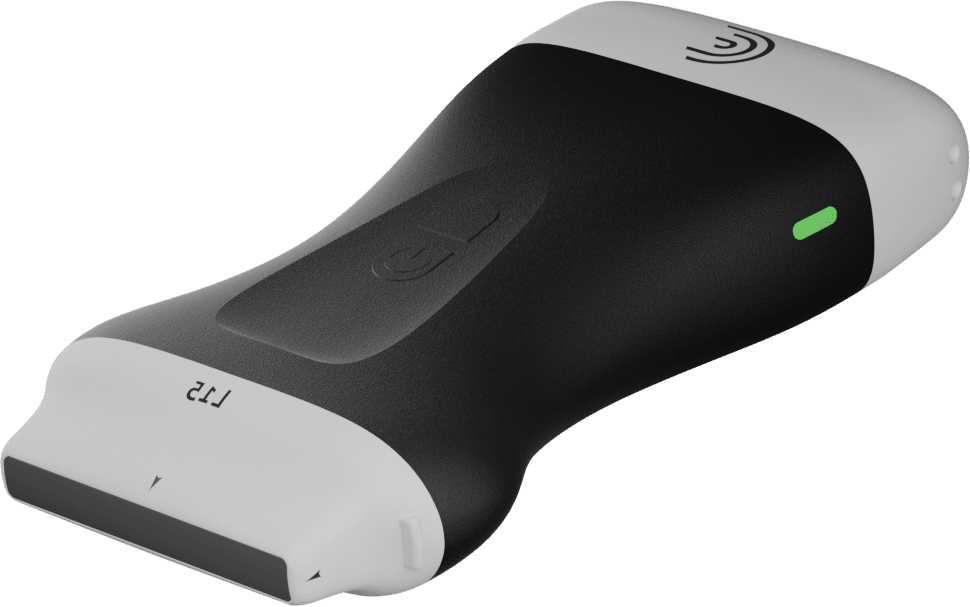
Beyond the software, the hardware design of Clarius plays a critical role in the „AI as a Partner“ model. Traditional ultrasound systems tethered by cables create physical barriers in a busy clinical or classroom setting.
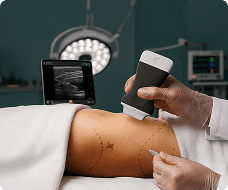
The wireless, portable design of Clarius allows one instructor to move seamlessly between multiple learners without the logistical headache of managing cables. This physical flexibility, combined with AI, transforms the teaching environment.
A 3-Phase Approach for Competency
By integrating AI as a training partner, programs can move from constant supervision to a more scalable, independent model:
Phase 1: POCUS Foundation (Weeks 1-2) Faculty deliver essential training on ultrasound physics and anatomy. AI then takes over for independent practice, using T-Mode™ to provide continuous anatomical reinforcement. The split-screen view lets them compare labeled anatomy with standard grayscale images, creating „aha moments“ that accelerate recognition.
Programs report covering more anatomical structures in less time with this approach.
Phase 2: Supported POCUS Practice (Weeks 3-8) Instead of requiring constant expert availability for 50+ scans, students practice independently with AI feedback. Faculty review images asynchronously via the cloud, focusing their time on complex clinical judgment rather than basic technique correction.
Phase 3: Independent Practice (Week 9+) As students expand into new applications like OB or MSK, AI features help them apply foundational skills to unfamiliar anatomy while routine supervision needs decrease.
What Students Say About Learning POCUS With Clarius
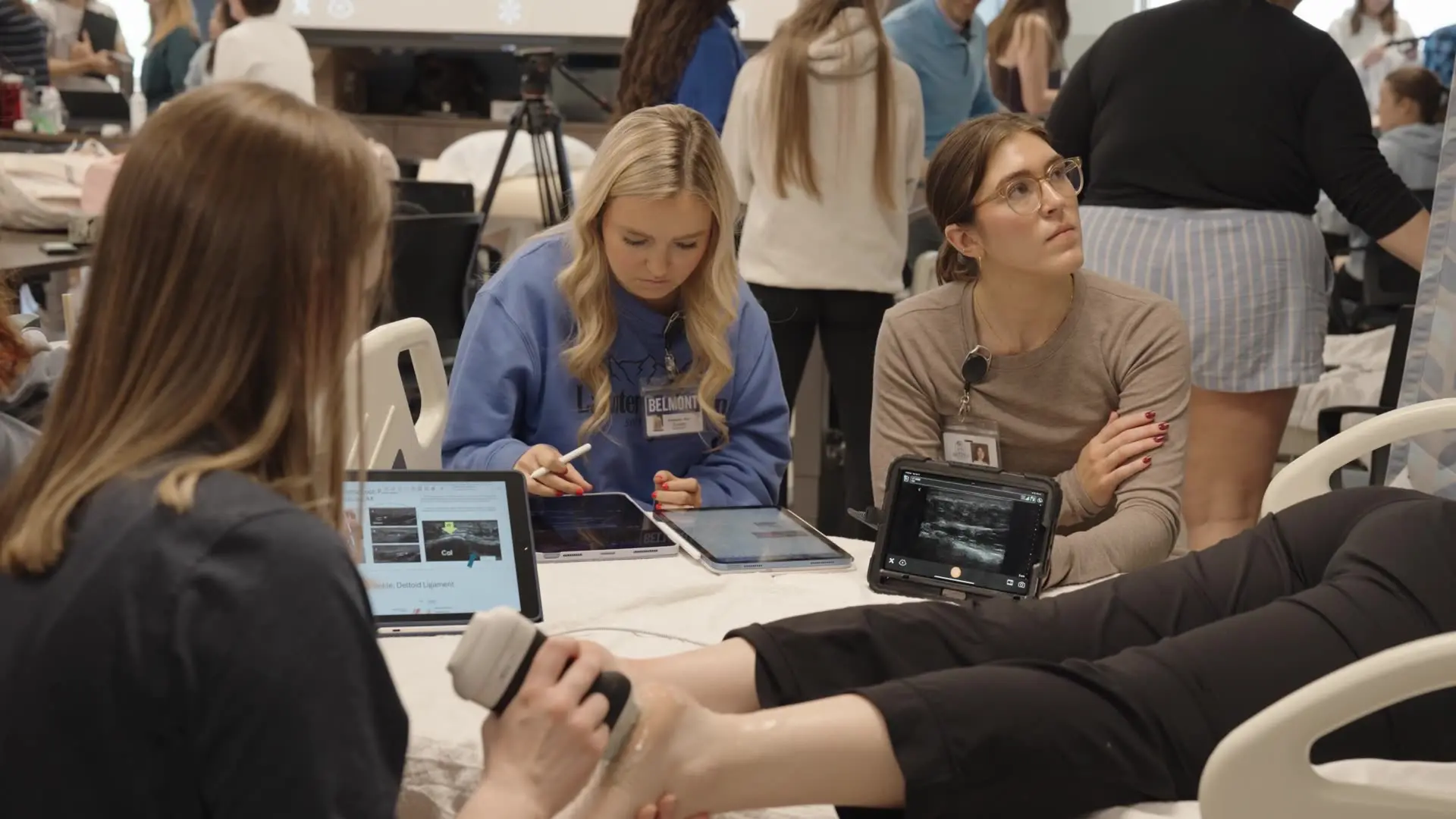
At Belmont University, Dr. Voight and Dr. Wolfe have integrated MSK ultrasound training into their three-year program’s second-year orthopedic curriculum, dedicating approximately 30 hours to hands-on learning. They emphasize that ultrasound training is not taught in isolation but is seamlessly combined with traditional examination and assessment skills.
The curriculum uses a blended learning model that combines didactic lectures with active, hands-on practical sessions. Students work in groups, engaging in peer teaching and learning to differentiate between healthy and pathological tissues. Dr. Voight noted that students are surprisingly quick to grasp the process, which he attributes to its direct application of anatomical knowledge.
Watch this 3-minute video to hear what the students have to say about the hands-on ultrasound training program.
Get Started Without the Extra Costs
Clarius makes AI-powered training straightforward. Every Clarius device includes built-in AI features, cloud connectivity for flexible mentorship, and unlimited cloud storage with no per-seat fees. Schedule a personalized demo to see how Clarius helps you meet ACGME requirements. Schedule a personalized demo to see how AI can help you meet the ACGME requirement without overwhelming your teaching faculty.
- 1,2 Ludden T, Schlatter M, Bose A, et al. Undergraduate Medical Education in Point-of-Care Ultrasound. PRiMER. 2023;7:26.