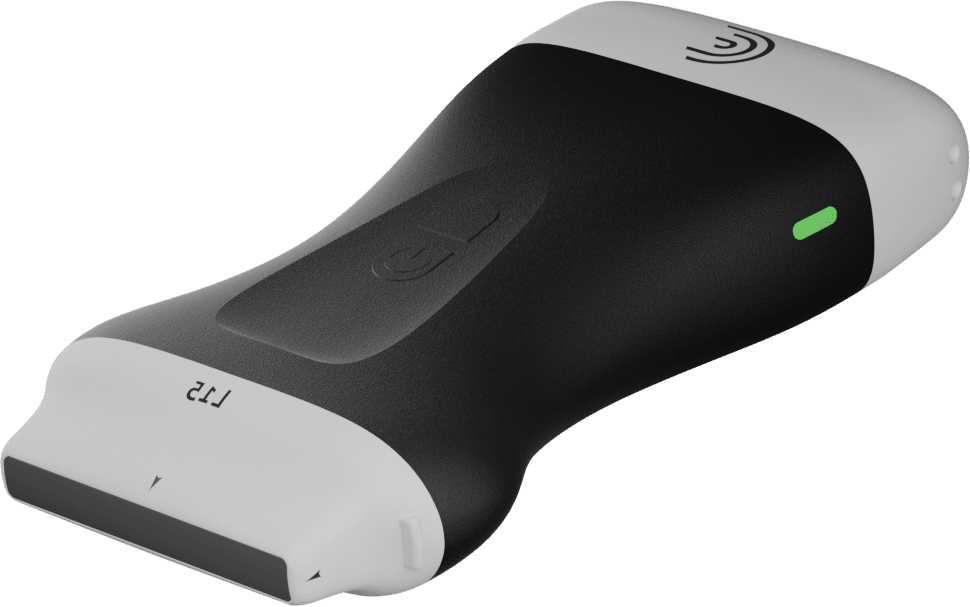
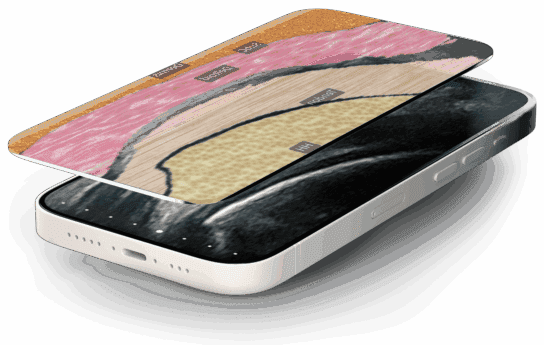
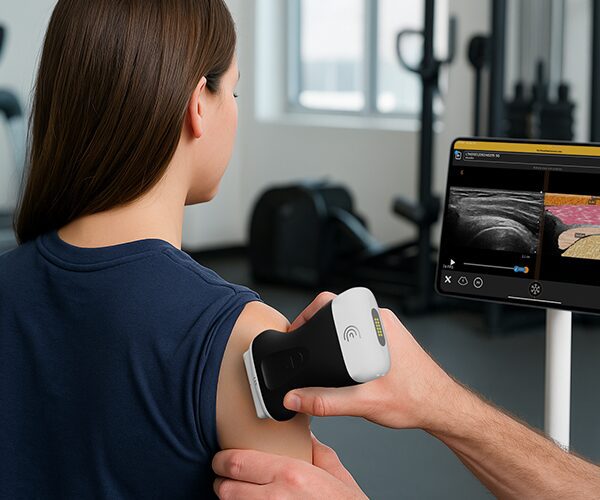
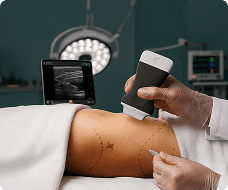
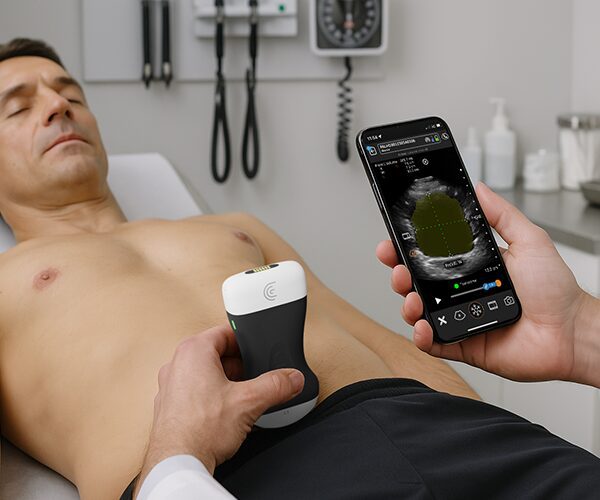
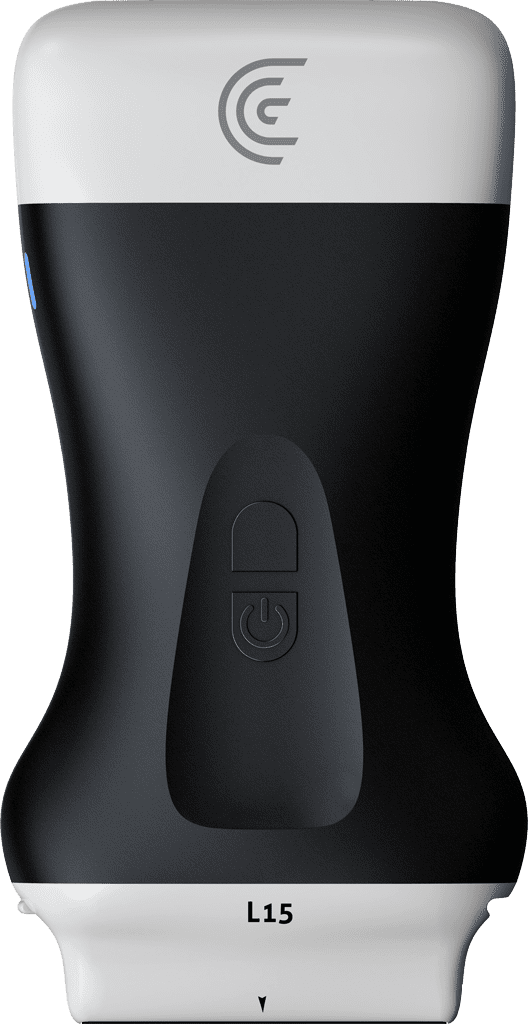
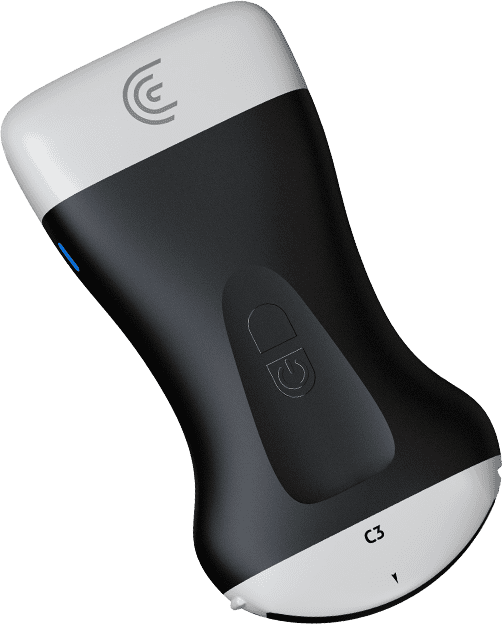
hi i'm ken craig and i've been involved in sports and movement for the past 21 years i have helped many athletes all over the world in multiple sports discipline achieve their dreams goal ambition and recover from injuries now i have been always interested in how clinical acumen and expertise can be enhanced using appropriate technology and i have always been interested in the use of sonographic imaging because it gives me the option and ability to look at real time images of the soft tissue structures that i normally deal with i highly recommend the use of a portable handheld device and the device of choice for me is the l15 clarius msk scanner and here now we have a european masters athlete who has recorded very impressive marathon times in his career and here we are going to see probably some differences in the knee joint again i'm going to focus on the scan of the anterior knee compartment but given his long history intensity and duration of his activity and sport we may see a difference from the younger athletes and this again is good to compare what is uh what we call i'm not going to call it overuse syndrome but a person or an individual who has had a long career in sports all right again using the clarius l15 msk scanner uh again of course point of care because it's preparing to qualify to compete again next june i'm gonna start from the rectus femoris cranial to coded as we come now towards the superior pole we find slight differences in both the tendon pattern as well as its cause in to the pull of the patella and as a clinician um for me professionally it is really good it's like educating myself um appreciating the various changes across the sporting lifespan uh it's not always about the young athletes uh any athletes would like to have as long an athletic career as possible and they always are as intense as they first start started and as a clinician it would be great for me to educate myself to note what is not necessarily pathological um conditions but probably adaptive changes that has occurred in um our athlete here who has been competing for more than 25 years and these although may present as pathology would actually mean adaptive changes over time because he is still running over 100 kilometers in preparation although he does feel some discomfort but there is no interference at all to the physiology although i can see very clearly changes of what is considered normal tissue on normal superior anterior knee joint at the quadriceps insertion of the superior patellar pole again i'm going to now float the probe over the superficial or superior patella bursa again the superficial image is not tissue rather gel we see the hyperecho there is no sign of bursitis we then contact again and we come in to the patellar tendon where we can see a technically healthy tendon we can see the bursa the huffa spared and as we keep going distally we will end up or come towards the incision also already insertion of the patellar tendon at the tibial tuberosity again slight changes but again i would consider this as adaptive changes rather than pathological changes i think um it's important to know that yes recovery of a joint and structures uh may differ from what are considered normative um in in many people across the lifespan and sports uh to allow for the required function all right so just because something may not be conformed to the norm does not necessarily mean that it's a pathology rather an adaptive um occurrence okay so again it's nice to see uh athlete who has competed and who is still wanting to compete uh as competitive as ever and my job as a clinician is to give him the direction on safe training techniques and to help provide optimal performance this is where again a point of care using a scanner like the claris l15 is very important and valuable to me okay as a clinician it just gives me a greater confidence and also it's continuous education i would like to encourage anyone out there not to be afraid of ultrasound in fact when you've gone through physiological school whether it's medicine physiotherapy i think having a very affordable clinical tool such as the l-15 will actually give you two things give you greater satisfaction also satisfaction for your clients as a care provider in sports at the same time it actually gives you a greater confidence all right and help you enjoy your clinical practice