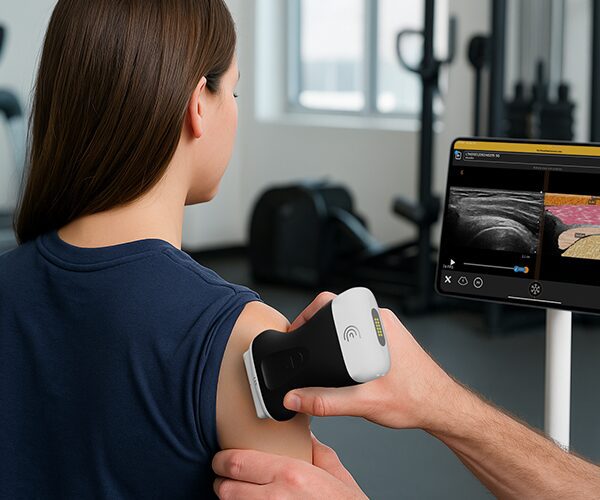
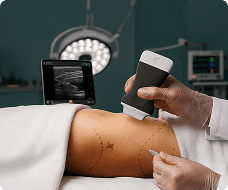
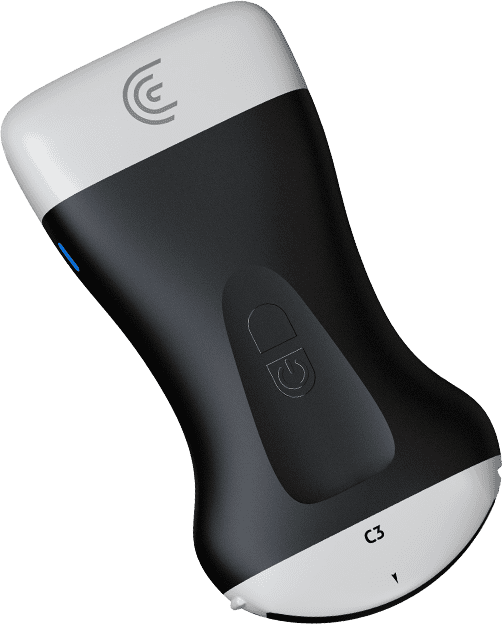
we're going to start off with just doing some basic scanning and i'm going to basically be showing just the biceps tendon because we're going to be working on that here surgically pretty soon so we're just going to identify the biceps in there you can see it pretty clearly right there and we're going to follow down into the groove you can see it nicely and of course you can see that issue of anisotropy right so if i tilt it this way it becomes black which means you can't really see the tendon but then as i tilt it down there's a tendon very nicely there so the issue to start off is just to do a very basic injection right and so one of the basic injections you can do is doing this in short axis and then bringing in your needle just from the side to come in you can see there's a needle there pretty easy to see and the best way to do this is just hit the other side of the tendon let me get a better view here there we go get you a better picture i get myself better organized there we go and there's the needle there and they can either come in from this side right there you can see i'm into the sheath right there see in the sheath below the kind of pusher to the tendon you also can actually move it and come to the other side if you wanted to so that's the other thing you can do is come to the other side of the tent and all you have to do is inject i'm not going to inject right now just because we're going to be using this from a surgical point of view but just you can see that you have different options and you can see that make sure you don't hit the tenon itself but that's very easy to do so you get in the sheath now if you want to eject outside the sheath you can do that too of course let's see let me show you how to do that there's our needle and you can just get to the outside sheath if you want to or just be in the sheath which is more commonly to conject around the tendon itself so that's one of the easiest ways to get to the biceps if you want to do a bicep groove injection for the biceps tendon the other thing you can also do is if we kind of come up you can get to the subscap so if you ever wanted to check the subscap here and let's say you want to do an injection for the subscap so and there's your subscap you can easily just inject the subscap right there you can see i'm just writing that region right there let's see get a better picture of the of the needle there you go see you really well there and so you can see i'm right at that last tuberosity where i want to be there we go there's needle there very nice and you see i'm right there at the outside of the subscap right there there you go boom so that's what's nice about being able to see this really easily and these are really easy quick what's nice about these is easily tolerated by the patient so if you want to come down and hit that subscap area there you go