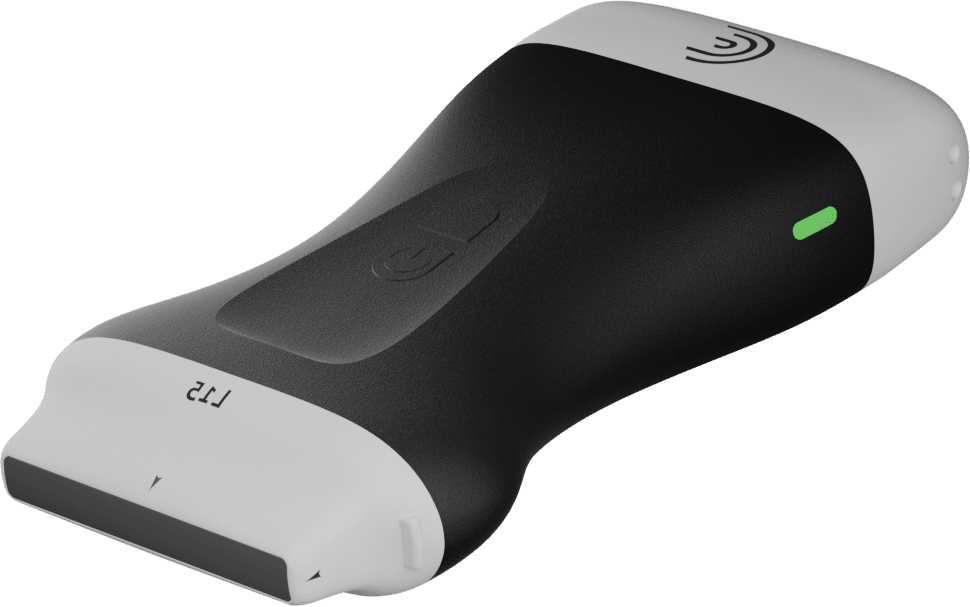
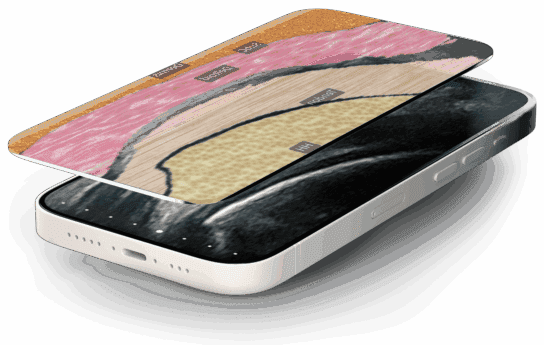
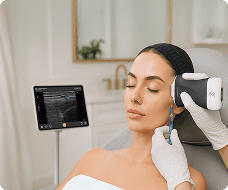
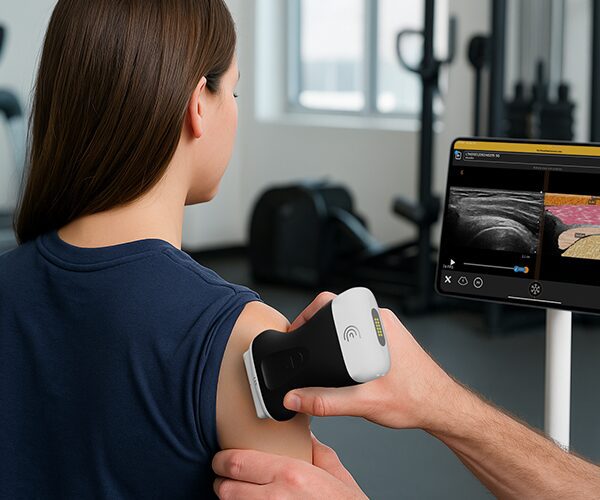
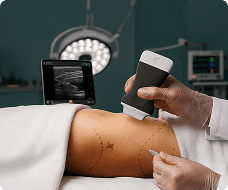
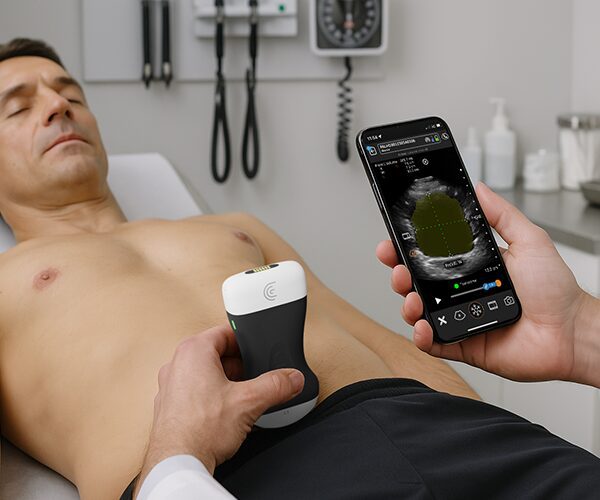
let's take a look at this case you might think she doesn't look too bad but if you look closely you can see the puffiness under the eyes she presented with bilateral infraorbital swellings which had been there since she had tear trough filler 18 months ago they're not painful they don't fluctuate but they're unesthetic she was told by her injector the filler has gone after this time but as we know from recent studies like the 2021 by moben Master filler sticks around for years if not decades before we talk about diagnosis and management of this problem we need to familiarize ourselves with the treatment area and understand what's normal and to do that we're going to use our clarius let's take a look at the layers we expect to see this is the area of the lateral orbit we see the skin and the subcutaneous fat here is thin under the orbicularis oculi muscle there's the lateral sooth and finally bone as we move along to the medial aspect of the tear trough there's just three layers skin epicularis and bone the tissue here is a lot thinner there's a few vessels we need to be aware of in the area around the tear trough we must be mindful of the infraorbital foramen which is around 10 millimeters inferior to the orbital Rim medial to the midpipillary line the infraorbital artery vein and nerve exit here but we also have the angular vein this is four millimeters inferior to the orbital Rim within the orbicularis oculi at the mid pupillary line it's around four millimeters away from the periosteum but can be as close as 1.5 millimeters to the bone in the medial tear trough so the safe space for teartrophila gets less and less lateral to medial there's very little room and there's a risk of injuring the angular vein the angular artery is more medial to the vein so it's a little more protected that's the findings from this paper from 2022. let's talk theater of boundaries the souff is bounded inferiorly by the zygomatic cutaneous ligament and superiorly by the epicularis retaining ligament deep is the bone and superficial is the orbicularis oculi muscle this is where our fella should go in tear trough augmentation placement of Phyllis superficial so over the muscle will result in edema and if the product is placed through the ubicularis retaining ligament the patient will end up with significant bags or even compromise to the inferior palpable arteries in the eyelids to medial and you're into the vessels fill a treatment to the teardrop is tight and it's technically demanding and that's part of the reason why teardrop problems are in the top three types of complications I see in addition to placing it right the right product needs to be chosen one that isn't hygroscopic and draw tons of water then we've got to select the patient correctly a trough can be treated a bag is more difficult due to the pre-existing fat pad herniation a tendency for edema so it can be fraught with difficulty this systematic review by Trin from 2022 showed that the most common delayed complications in the teardrop were swelling at 42.3 percent nodules and lumps at 25 and migration also featured at 7.7 and it's overwhelmingly H.A filler causing these issues so if our patient is presenting with edema even before scanning we can have a good guess as to what we might see with our ultrasound it might be too much filler for the small space under the orbicularis placement of the filler behind the orbital septum wrong case selections such as patients with bags rather than troughs superficial placement of filler wrong filler type or filler irritation of vessels causing so-called hypervascularity and edema and this is something I'll discuss in just a moment let's take a look at our patient with the complication now we expect to see some Rogue filler somewhere here I'm scanning the right infraorbital area with the center of the probe at about the mid pupillary line and we can see hyperechoic skin ice silicon subcutaneous fat hypoechoic muscle isovakoic suf and hyperechoic Bone as I move the probe an anecoke Grand deposit comes into view anechoic means it appears dark on ultrasound because it doesn't reflect sound waves back that means it's either fluid filled like a vessel or a deposit of h a filler we can go ahead and check whether it's a vessel by turning on Doppler mode and moving our color box vessels come up as colored flashes and you can see the black deposit remains dark so this tells me it's h a filler and it appears to be under the orbicularis the flashing vessel at the bottom of the screen is the end for orbital artery which you can see coming out of the infraorbital foramen this is the hyperechoic structure that can be seen at the middle lower part of the screen interestingly there are a lot of flashes of vessels in this area too around where the filler has been placed what often happens when filler is in close proximity to vessels is a phenomenon called hypervascularity filler is noxious it's irritant to vessels it can cause them to proliferate and what we see on ultrasound is lots of vessels in an area around filler this has been described by shelke and others in their 2019 paper they showed a case of hypervascularity in the lip in this paper but it is seen in many areas of the face and especially the teardrop where filler is placed close to vessels they will inevitably be a response by The Vessel this response causes symptoms of Edema like in our patient so filler next to vessels causes hypervascularity and edema and what we see clinically is swelling even though the filler appears to be in the right plane under the muscle this might be exacerbated by the type of filler that has been used filler which is two hygroscopic can cause additional pressure and swelling compounding the problem once the filler has been identified I can dissolve it I use the so-called in-plane technique where my needle is in line with the probe and I can see the needle advancing on the screen to get to the filler this is the easiest way of visualizing the needle and allows you to see its path and correct it with tiny movements once I'm at the filler I go ahead and place hyaluronidase I'm going to treat this deposit again with another dose the filler treated just now has taken on this cotton wool-like appearance this is very typical of filler after hyalurana days and is due to the change in rheology affecting sound wave reflection it's taken two tiny doses no more than between 30 to 45 units per deposit I work with a five mil dilution on 1500 units so this is 30 units for 0.1 ml I found this is the ideal concentration for aesthetic correction here's the treatment area immediately after the intervention with hyaluronidase we can see the blood vessels are quite agitated and that's normal considering they've just been injected near turning off Doppler we can see this cotton wool-like appearance again this tells me my job here is done the filler's on its way out and I can send my patient home and review her in a couple of weeks