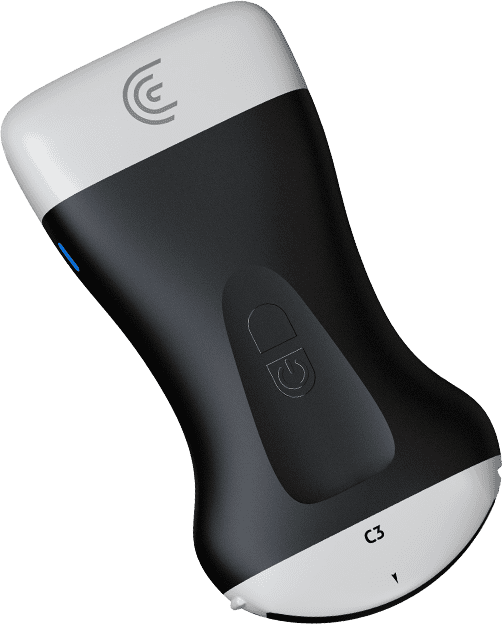
hello everyone I'm Serge and I'm CERN and what are we going to be doing this time so we're going to do an overview of abdominal point of Carol sound in our feline patients so we're going to show you the five sites very quickly that we look at in the abdomen and then we'll actually go through each of those individually to talk about what questions we ask and answer but to start with we're just going to show you a quick overview of the five sites we scan that's right so the first site we want to do is palpate the sub xiphoid which we're going to do right now very important to do that right absolutely and then we'll put the parole about that subset for it and what we want to do is you can see here we want to try and pick up that liver and the region Beyond so you want to get that delivered about a 45 degree and then we're just going to Fan through all planes in the long axis we'll come back and talk about the questions we ask and answer but that's kind of the ideal image we want where we've got the liver the diaphragm and the region Beyond visible once we've done long axis we're going to roll into short axis and again we want that liver and short axis and we're going to Fan all the way cranial and caudal at that site and again we'll talk about the questions we ask and answer so once we finish that site and done a quick evaluation we're going to move back to the umbilical site so we're going to come back essentially to midline on our patient right where the umbilicus is and again we're going to scan that in the long and short axis and this is one where you're going to see lots of Loops of intestine and you want to make sure that you do fan towards the table top and away from the table top and then after long axis you want to go into short axis and you're going to do the same thing then you're going to Fan forward cranial and coddle and then also Rock the probe down to that gravity dependent region while we're in a lateral position for example so that's our umbilical site we're then going to move back to the urinary bladder site and the ideal thing that you want to identify at that you're in your bladder site you want to be able to try and pick up that urinary bladder that's one of our key structures that we're going to look for there so you try and locate and Center that urinary bladder at that urinary bladder site I know and this guy that urinary bladder looks like is going to be very very small because we probably recently urinated let me just change the depth on there and that is a key thing is think about the depth whenever you're trying to find each site to the most ideal and there it is right there there it is right there and you can see that sometimes finding an organ can be difficult and you don't find the organ or the region of Interest two things you can do is sweep and slide like we did right there and that brought the organ in interest and then once we found that by sweeping and sliding we're going to Fan through all planes of the urinary bladder and we'll do that both in Long axis making sure we get the Apex in the trigonal region and then we're going to rotate into short axis and again we are going to fan on and off the unary bladder checking all planes in short axis that's three of our five sites the next site that we want to identify is going to be the paralumbar region non-gravity dependent in this case we're in left lateral recumbency so our right paralumber site's the one we're going to aim for and essentially we locate that last rib and the sub lumbar muscles and we're going to place the probe in that region there now when we do that one of the things we really want to try and identify which Dr schloob is finding here is that kidney so you'll find that kidney and lung axis that's one of the key structures we found all the way through that all planes in Long axis and then we're going to rotate into short axis we're going to rotate 90 degrees again there we are in short axis and we're going to actually fan again all the way off each pole of the kidney in short axis so that is the other thing that we want to try and obtain at that right para lumbar site when we've done that we've found through the right and paralumbar site we want to get that last site that's the gravity dependent paralumber site our patients in right our left lateral recumbency so to get that site especially in this cat here we're going to actually let our cat roll itself up into a standing position or a sternal position and I'm just going to turn our volunteer around here and then service is going to go after that last kidney that left paralumbar site now that we've scanned all the other sites that's right so easiest way to do that for this site is to populate the 13th rib and that left kidney will be usually right back there the kidneys tend to be higher than you think so that's going to be important and there we go all right off the bat so and again then that's the last site we're going to Fan all the way through all planes and long axis and then surge is going to rotate again into the short axis and he's going to Fan all the way off one side all the way off the other side and that is the left paralumber side now the other thing we're going to say when we scan all five sites we just showed you a quick demo that's about how long it would usually take to answer the questions in our clinical patients we'll go through those specific questions at each site individually but you want to scan especially in our cats our cats we want to scan them in the position they're most comfortable that causes the least stress low stress handling is something we should be aiming for so you saw that we scanned our patient in a lateral position but you could do all five of those sites in short and long axis in a standing position you just got to tuck that probe into that subser void and then get those five sites yeah and same thing personal except of course some of the more gravity dependent sites but if a patient wants to stay sternal you can answer most questions in sternal as well and that concludes the quick overview five sites of the abdomen in our feline patient using our abdominal point of care ocean thank you so much until next time foreign