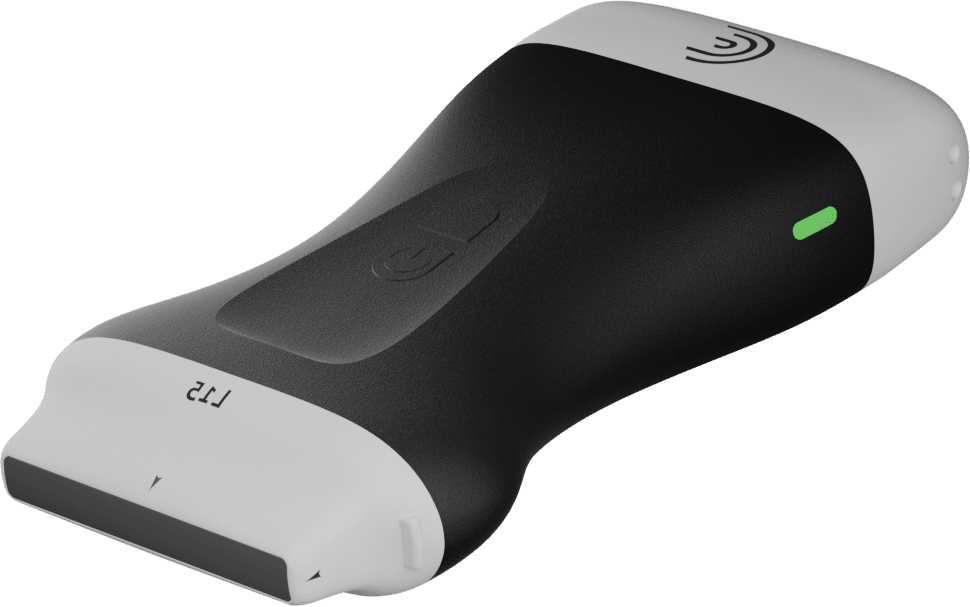
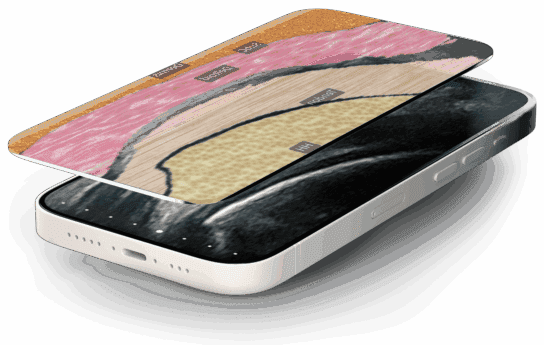
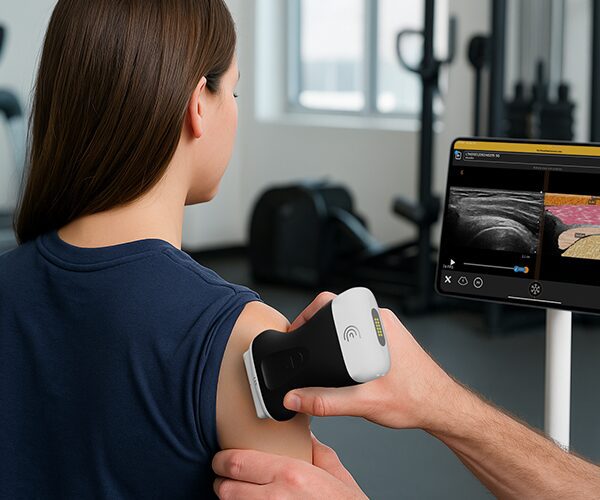
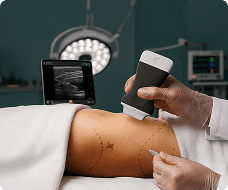
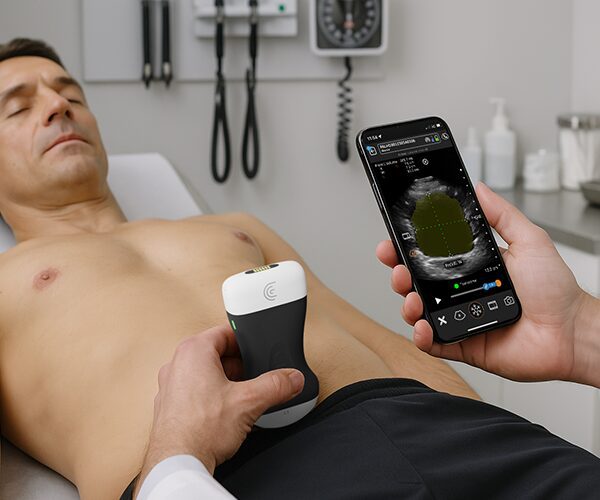
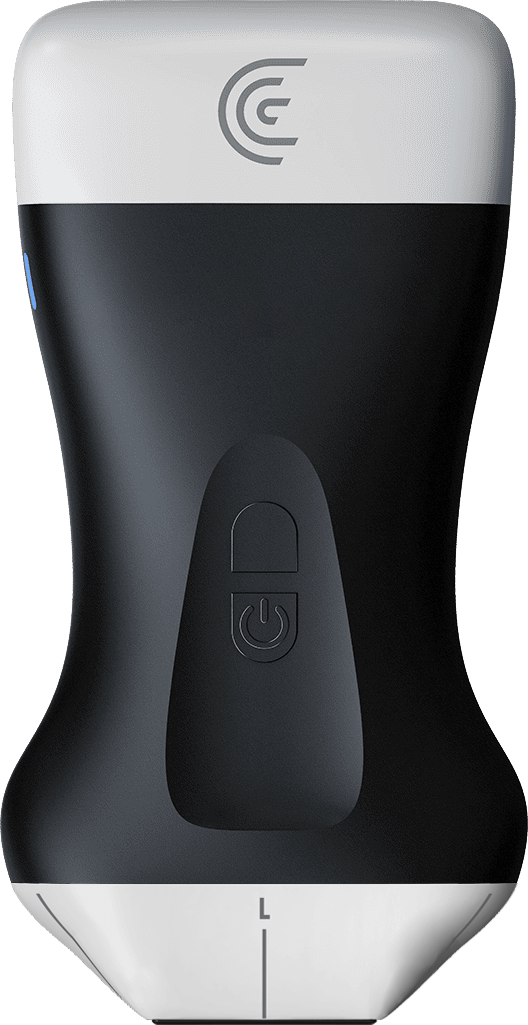
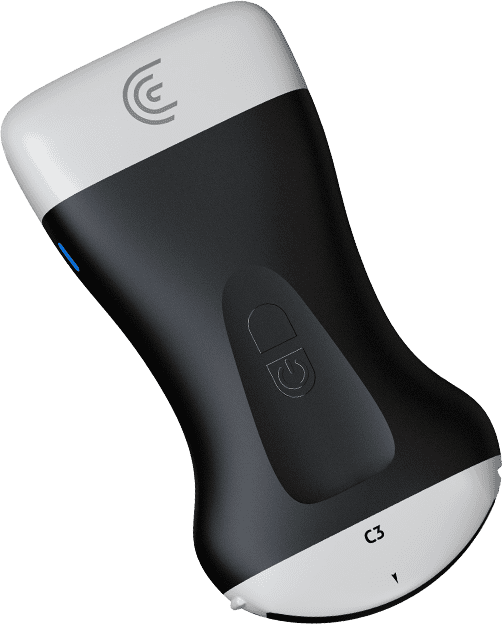
hello I'm Brian Johnson I'm an Emergency Physician today we're going to use the clarus pal ultrasound probe to visualize the femoral vein for a femoral central line we won't be performing a central line today but we're going to visualize the vital structures so typically the patient is lying saine and oftentimes you could put them in Reverse Trendelenburg and typically I do a right femoral central line just because of I'm right hand dominant and so what we'll do is we'll take the filter sound probe and we'll go sort of along the inguinal crease and if the patient can slightly uh Bend out their leg to get better access to the ininal crease so we're going to take the probe kind of go along the femoral crease what we initially identify our three sort of major structures of this ingal crease area and the three structures are the nerve the artery and the vein emergency providers are one wonderful with the inguinal groin region right we do femoral nerve blocks we do femoral Central lines we do femoral art lines we do ultrasound DVT studies so we're very knowledgeable about the inal area and for our purposes today what we're really looking for is the vein the pneumonic I always use is Naval so nerve artery vein empty lymph and that's lateral to medial structures you also can say Venus to the penis meaning the Venus femoral vein is medial to the other structures and so in this ultrasound view here we're using a Venus setting because we're going to do a Venus central line and what you immediately see are two structures the more anterior structure that's somewhat pulsatile is our artery and which it's a little deeper in medial is the femoral vein if there's any question what is what you can always compress down and see that the femoral vein is easily compressible while the femoral artery is still pulsatile and non compressible also if you slide laterally you'll be able to see this nice triangular structure that fits just below the fascia eliaa and that is our femoral nerve so nerve artery and then vein to cannulate you'll be doing on a short axis view you'll do sterile precautions and a normal Sellinger technique for Emeral central line ultrasound affords you better accuracy and minimizes complications thank you