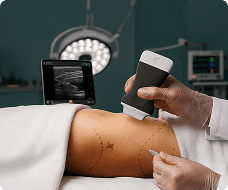
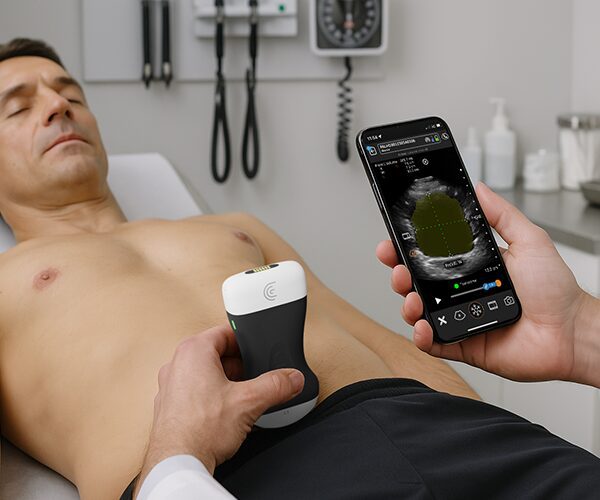
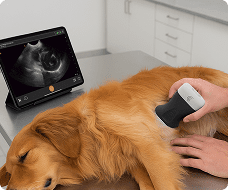
hello everyone welcome back and i'm serge and i'm cern and what are we going to be talking about this time dr boys so now we're going to talk about vascular access and we use this for several different applications when it comes to point of care ultrasound in the emergency setting we use this to assess our vessels to make sure they are patent and not thrombosed and when we get difficult intravascular access or sampling we will use this to find a vein or an artery that we can sample whether it's arterial blood gas or venous blood gas and to be able to make sure that we're actually accessing the correct vessels so we will use this for example when we're doing our jugular vein placements or central lines for things like dialysis so that's why we're going to use the vascular axis and the nice thing about the clarisse again we have a preset for this dr shaloub we're sitting on general abdomen now you can see we're out at 10 centimeters we can quickly go in we can change that to either small organs or musculoskeletal that'll get us down to a lower setting and depending on how deep our vessel is we'll adjust the settings from there so in the case of penny here we've got a very very superficial set of vessels so we're going to start with the jugular we'll start out at 2.4 centimeters and we'll make adjustments as needed but we'll show you how we look for the vessels with our pointy carrot sound and we're going to go ahead and make some adjustments once we see those yeah that's really cool about these presets because it automatically will increase that frequency for you which is what you need for superficial structures that is pretty fantastique dr boyson fantastic indeed dr shalou so we'll put some alcohol on again we're going to part the fur i like to do my vascular access in short axis so i tend to prefer the short axis over the long axis orientation when i'm doing my vascular access so we'll actually come in at the jugular referral we'll part the fur and we'll see if we can pick up the vessels okay and so we'll just turn the gain up a little bit make some adjustments to our depth setting so here you can see i've got two vessels in short access duct loop and i can't necessarily always tell which one's an arti which one's a vein so if i push down on the probe i can see that i can collapse the vein so here you go i collapse that vein almost completely gone whereas the carotid artery that you see that circular structure that's pulsing that tends to stay visible so we can quickly assess this we can look for that jugular we can look for that carotid artery and if we're doing vascular access or sampling i can in short access slide along those structures and i can actually feed a catheter into that jugular vein for example so i can see the jugular vein there coming back again take a little bit of pressure off the probe there's that jugular vein i can feed a catheter to that yep the other thing we can do if we've got a really edematous limb or we've got for example those sharpays those animals that have very thick skin that's hard for us to see that vessel when we're trying to do a cephalic or even a saphenous we can also use ultrasound guidance to help us with that penny's got a very very fit dog so her vessel is going to be very very superficial so this is going to be a little bit more challenging for us to identify and to show you but we can use especially when we've got patients that have edema or very very uh thick uh skin then we can often find that vessel so here you see we've got a vessel that we now have in our screen so we're sitting a little to the side there but that's our cephalic and if i push down and make that collapse i relax i can see that uh cephalic vein so again in penny it's a very very superficial structure so this isn't one that we would have to use ultrasound guidance to help us with but you can see how we can find that vein and we can actually put pressure on confirm it's a vein it collapses we can look at it in both short or long axis and if you're really good at doing long axis there we go we can often put a catheter in long axis my preference though is definitely to go short axis when it comes to looking for that vessel so yeah and we have to remember dr bois in the scanning surface area here is quite thin that's why we see all the artifacts on either side there because that is truly all we have to scan there because she's such a thin dog yeah so fit dog that vessel's at the peak so i can only get the contact right over the vessel on either side because the vessel's standing up i lose it but when you've got edema or you've got a very thick skin then you can actually get better contact you can see this is only at a centimeter thick and we're probably sitting at about 0.25 centimeters uh depth that we're actually located with the center of this vessel so it's uh that's our vascular axis though we can slide along that make sure that that's patent that we don't have any thrombosis there and when we have edema or a thick skin then we can use ultrasound guidance to actually walk a needle through that the more edematous it is the thicker the skin is the easier it is to actually use ultrasound guidance to find that vessel and hit it or chubby dog that's also very hard sometimes to feel that vessel absolutely and we've done that again for central line placement in our patients that are very difficult to get access to our technicians are also trained to put arterial catheters in the dorsal pedal artery as well yeah so that is vascular access using point of care ultrasound something really cool really neat and very helpful