



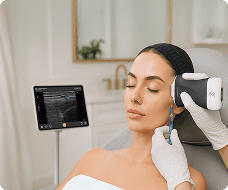
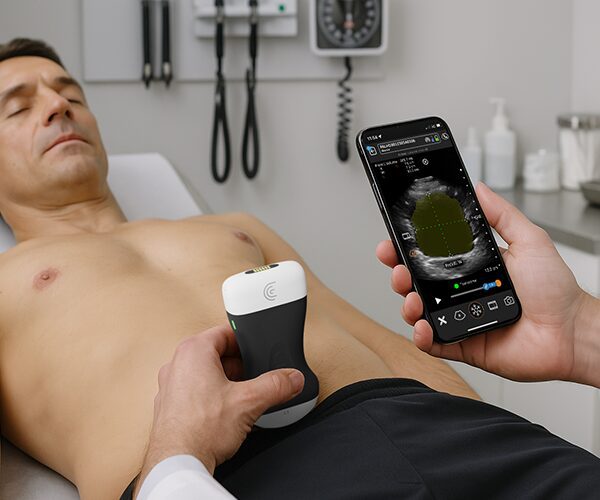


In any patent with dyspnea, tachypnea, or hypoxemia, lung ultrasound can rapidly and effectively diagnose the presence of interstitial fluid, larger consolidation, and pleural fluid. Using either 12 or 16 zone protocol of anterior, lateral, and sometimes posterior thorax, differentiating “dry” from “wet” lung tissue has never been easier. The degree of findings often correlate with severity.
for long ultrasound scanning the idea is to try to interrogate as much of the chest as possible therefore divide each hemithorax or each chest into six zones the landmarks that we're going to use are our anterior axillary line in our posterior axillary line essentially that's going to delineate our anterior chest our axillary chest and our posterior chest each area is going to be divided into an upper and a lower zone so that basically provides us with six different scanning areas we're going to want to place the ultrasound probe with the marker pointed upwards in a vertical position in the midclavicular line so our landmarks here are going to be our ribs our ribs are going to be hyperechoic with black shadowing behind so they're going to be bright and white with black shadowing behind we're interested in the bright hyperechoic plural line in between it's going to have a shimmering movement as we visualize it you want to ensure that the scanning of the lung is performed to a perpendicular angle to the pleural line to best visualize it effectively want to visualize normal sliding at that line at multiple interspaces normal aerated lung will have horizontally oriented reverberation lines called a lines that go deeper into the screen and that's essentially normal so we'll start here up in the upper lung zone on this anterior aspect of the chest and we'll start scanning downwards so we'll visualize another interest space we'll visualize another interspace and we will slowly move down towards the lower field of the anterior lung until we get down to the liver for visualizing the axillary area of the lung we'll start at the liver kidney interface and the idea here is to visualize the diaphragm which is the hyperechoic right curved line above the liver here you can angle the probe upwards or slide the probe upwards to identify if there's a pleural effusion or not in this case there's not a pleural effusion if there's no pleural effusion slide the probe upwards until you get visualization of your typical landmarks of the ribs and the pleural line again we see normal sliding and to be more comprehensive continue scanning up towards the upper axillary aspect of the lung until you get right into the axilla and can't visualize any further so we can see again normal lung sliding with normal a-lines at this point to visualize the posterior chest you would have the patient sit up here it's helpful to have the patient internally rotate both arms or both shoulders to move the scapula off to the side laterally to expose more of the upper lung it's helpful to start low down and identify your liver that way you know that you are at the inferior lung edge and again we are going to slide upwards and look for our typical landmarks of our ribs with our plural line in between so again we can see normal sliding with a lines and you want to interrogate as much of the lung as possible as you slide up towards the upper lung fields and again we see more normal lung and we're going to try to maintain our scanning approach to be perpendicular to the pleural line so that's a reasonably comprehensive approach of looking at each hemi thorax it's a typical six zone approach that's described in the literature