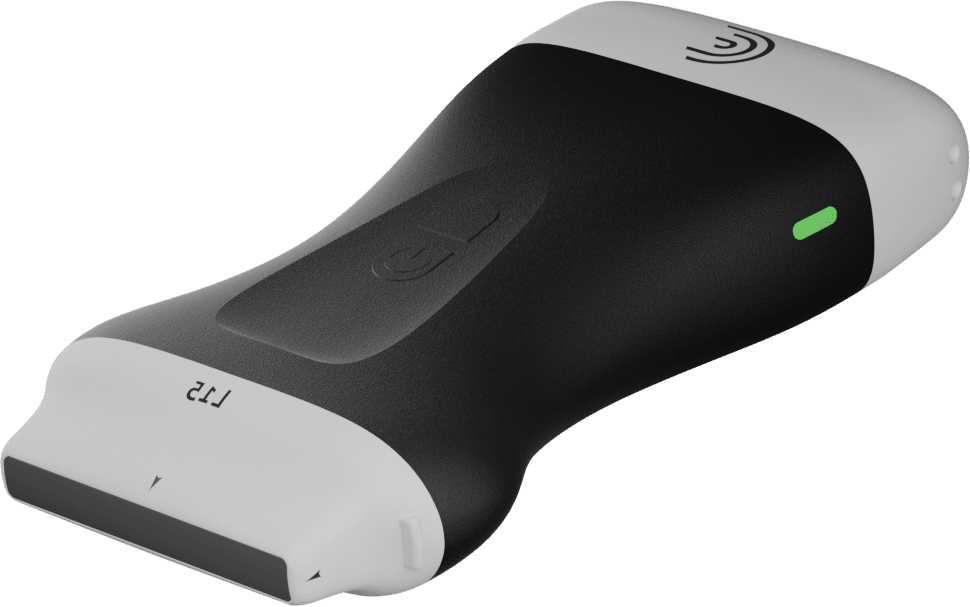
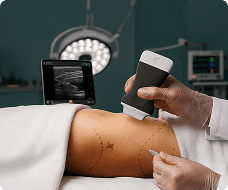
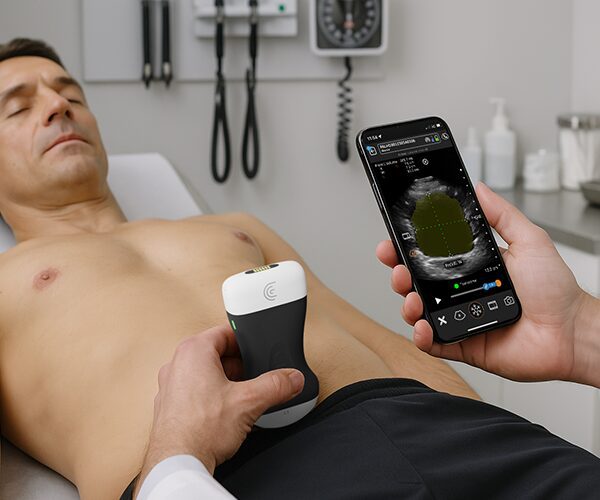
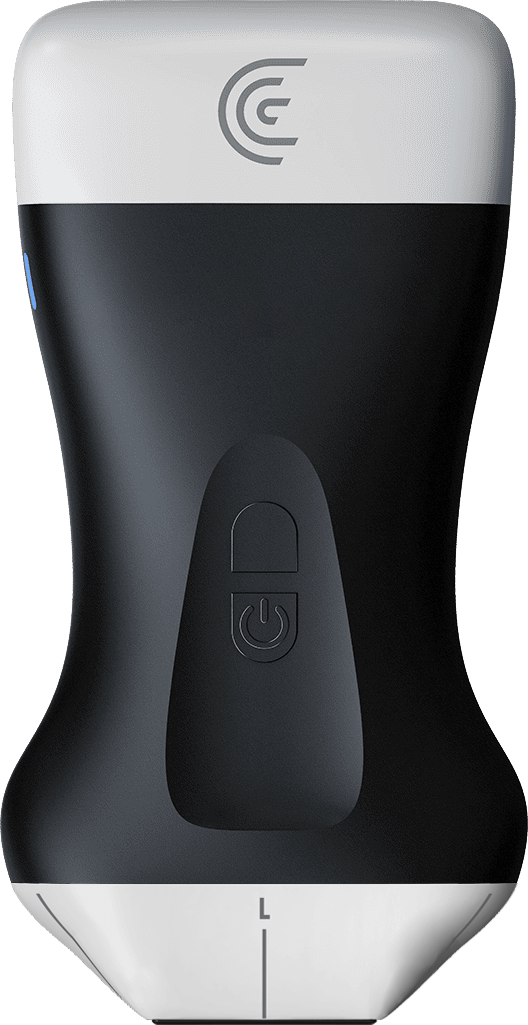
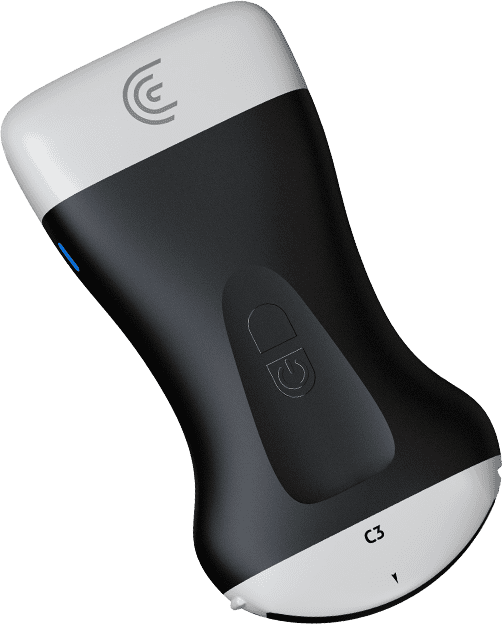
hello I'm Brian Johnson today we're going to use the clarus pal to do an ultrason guided pereral IV so first you have your patient you want to place the tourniquet as high up in the axle as possible because as I'll show you're really going to be scanning up and down the arm to find the optimal place for Venus canulation so you're going to take your pal you're going to do Venus setting and I actually have it fairly deep initially what I do is I start in the anticubital fausa and it's really deep but what I do is I see typically the vein that sits in the anular faucet way up top and I'm actually going to decrease that depth a little bit and we can follow that vein it's kind of going lateral that Van's going lateral and it's actually sitting nice and round and linear that's a potential vein I would like to culate we'll get back to that one soon the other place you can look is you go medial so you kind of Follow That vein or other veins into the medial structures and we're seeing some vessels we're seeing some vessels there's a lot of vessels right there to be honest none of these vessels I really want to culate because they're small they're sitting by nerves which are these honeycomb structures that are sitting adjacent to the veins they have what's called anisotropy when you rock the prob back and forth they change in brightness and that's characteristic of a nerve the other thing too is often times there's arteries that run inside here too so I can show you an artery right here it might be hard to see because sometimes they're hiding but you see some pulsatility when I compress if I were to take the color you would see a vein and then you would see an artery in the center of that color flow so this is some place I would not want to perform pereral IV back to 2D now the other place is a deep brachial the Deep braal kind of runs medial and in the upper arm this is also a place you can cannulate but once again it's sort of in the upper arm it runs with nerves and typically the deep breake heel is harder to culate just based upon body positioning and how you can culate that vein so the last place I look is the vein as well that runs in the forearm but the one I really like and what I identified first and foremost was this vein and the upper lateral aspect of the arm I have the patient rotate their arm if they can so I can get better visualization and we can really zoom in on this vein and it's very very superficial we track it proximal and distal following where that vein goes where's the best place we can put a peripheral IV and look at that it goes pretty pretty linear it does curve a little bit I'm not going to lie but it's nice and linear most of the time so what I want to do is I want to choose right here to culate I know it's a vein right because I push down and it easily compresses it is a thin wall so this is my vein so next what I do is I'm going to optimize my depth go as shallow as possible to make that Lumen as big as possible I'm going to center it okay so I see how it goes nice and linear there okay next what I'm do is I'm going to remember where that is because now I'm going to get set up steril so first and foremost I'm going to wipe off the gel that I previously had on there we're always going to put a Tegaderm on our probe some people use a ultrasound cover but I found that t works just as effective so we've done that let's set the probe here using chloro prep we're going to clean the affected area okay then we're going to administer sterile gel okay now for the pereral IV typically you're going to use a 20 or an 18 gauge and you want to use the longest needle you can often times they're stocked Emergen departments for this perfect scenario the reason you need to use a longer angio cath is the veins are slightly deeper so you'll need to go slightly more into the skin and you need to canate into the vein more with a longer angio cap what I do before we start is to put on the center line which actually runs in the middle of the pal this can be done by clicking here and then here so the middle of the screen is now the middle of my probe okay back to finding that vein and so this is the vein we're going to choose right there once again it's runs fairly linear it's compressible and is not adjacent to any arteries okay so we have a long angath we stabilize our non-dominant hand on the patient's body and we alert them that there will be a small prick to insert the catheter all right there's two hand motions you can do one is a dart method or one as much like nurses do kind of pinching the angath like so I typically like to do Dart method unless it's extremely superficial this vein is sort of middling so I'll start with the dart and see how we do okay so we have our vein in the middle of the screen with our Center Line we have our long boore angath and we tell the patient we're going to make a small prick and you see see the tenting of the skin right over which what you want to see and slowly advance and you see the needle tip going right on top of that vein okay and slowly Advance slowly Advance the angath and the needle see the tip right on top of that vein that's what you want to see and slowly advance until you feel release pressure or you can visually see the IV in the vein advance and advance and you see the tip just on top just on top top see the tip right there see that right in the Lumen boom I should beting flash anytime drop my hand a little bit see that's the Lumen and the tip right there see that and I'm getting flash now which tells me I'm in the vein what we want to do is we want to slowly March want to slowly March that angath that makes sense slowly up in to the vein to make sure it stays in Lumen and then we have enough of the needle in in the vein to make sure it stays typically what I do is I drop my hand a bit drop my hand and slowly Advance slowly advance and slowly March slowly advance and slowly Marge until you canate the vein we have excellent flash I drop my hand now and then I thread the angath and we're all done we secure the line like we do any other peripheral IV with normal tubing and we put a tadm and then we're all done ultrasound can help establish a pereral IV when no one else can the veins are too deep to get superficially and it can really help a person out and save a central line or a pick line or frequent attempts thank you