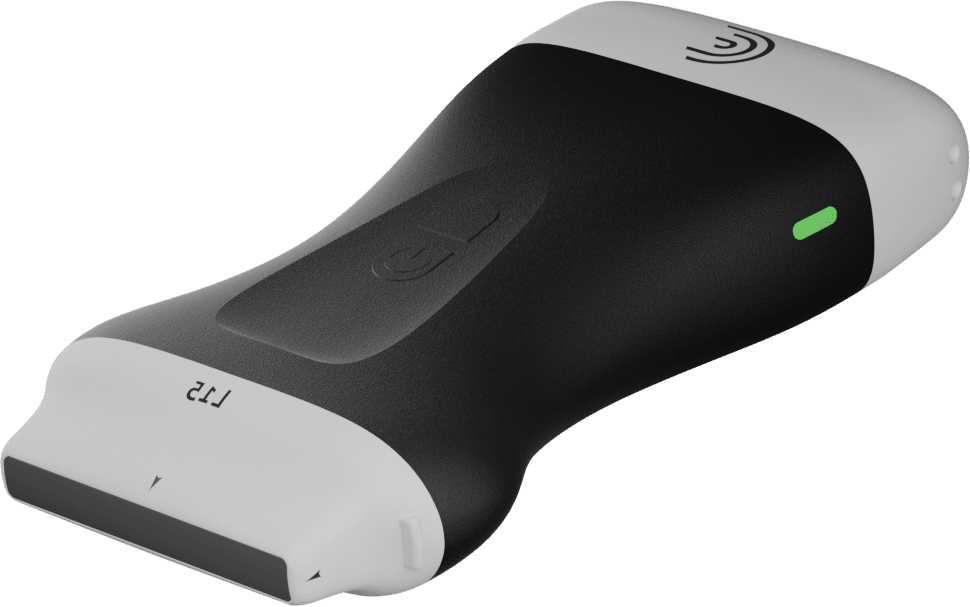
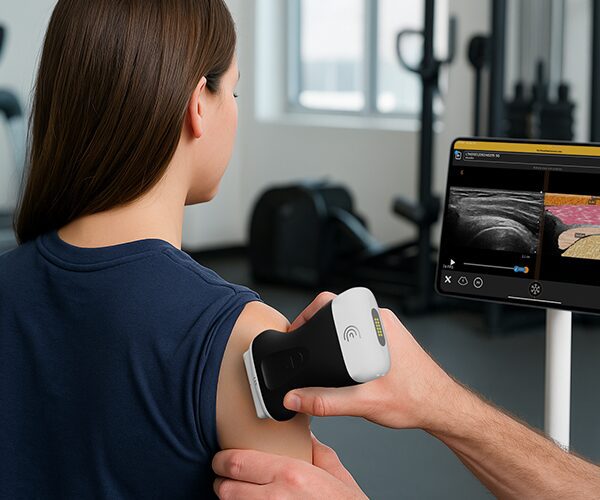
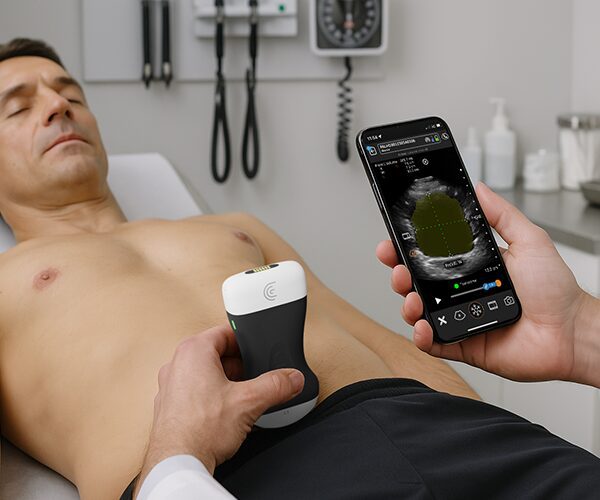
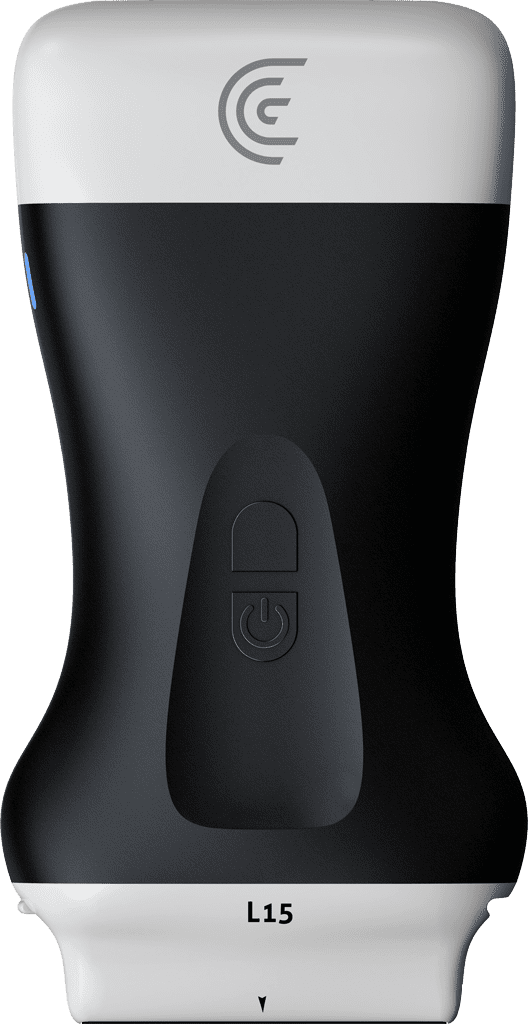
hi everyone I'm Dr Muhammad bardy I'm a practicing rumatologist in Vancouver British Columbia uh I'll be showing you assessment of the planter fascia specifically for enthesitis scanning for inflammatory arthritis um I'll be using the l-15 clarus probe today as you can see my patients laying down comfortably heel exposed I've put gel on the area initially just to get the skin quite moist and soft so you can get better acoustic penetration it's important when you start scanning here sometimes you do have to apply quite a bit of pressure to make good contact to really visualize the structures and when we start here you can see the calanus here so that's the bright echogenic signal from the bone okay and the fibers of the planter fascia are more medially oriented so as I rotate my probe you can actually see the calanus here and as I go medially you'll see the fibers of the plat fascia come into view and you can kind of follow these fibers uh here as well they can be other pathology here like planter fibromas that you could see but specifically at the in thesis what we're most interested in is we want to see the origin of the plantra fascia so we can see that here okay view if there's fusiform swelling we can actually assess the degree of the thickness there's different cut offs that have been published but around 4.5 mm or less would be considered normal you want to look for the fibr pattern so as I sweep side to side you want to see if you can identify the fibr ations to the planter fascia as well and as you're looking through here I'm also looking at the bone cortex because I want to see is there any erosive changes in the calcinus is there any enthesophytes or bony growth when I actually look through the fibers of the planter fascia is there any sort of fusiform swelling loss of echogenicity you can assess for that as well in this view if I freeze my image here and you take a measurement from the top of the fibers along the level of the bone that that would be your region to measure um and again like I said up to 4.5 mm would be considered normal also important to look at this transversely so if I start in the calcus here I'm starting distally and as I move anteriorly we can see the fibers here of the calcinus and you want to tilt your probe as You Follow that I can show you here you can see the planter fascia fibers here in the center you can tilt your probe to use anosy tropy to identify where the fibers are and this is also important to assess if there's any erosion so as I go forward I'm also tilting back to look on the calanus here Doppler assessment here is possible as well um now there is a tradeoff if you put on your Doppler settings uh you need to ensure that your um your Doppler box is low enough you will have to ease off the pressure a bit because if you have too much pressure you can compress those capillaries and lose the signal so you want to see this in longitudinal you want to sweep medial to lateral looking through the structures and then you would also want to rotate your probe 90° look at this in your transverse fuse as well and again being gentle with the pressure finding that balance where you don't lose contact and you still have good views but you're not overly compressing with structures and looking through that as you sweep anterior to posterior as well that would conclude assessment of the planter fascia