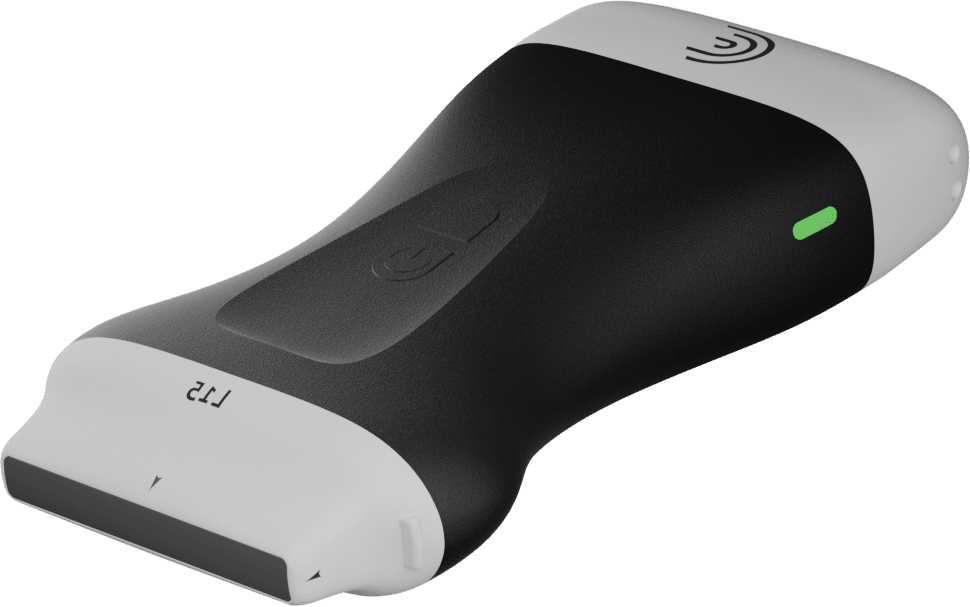
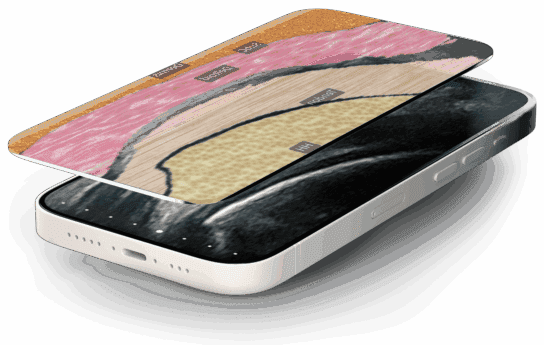
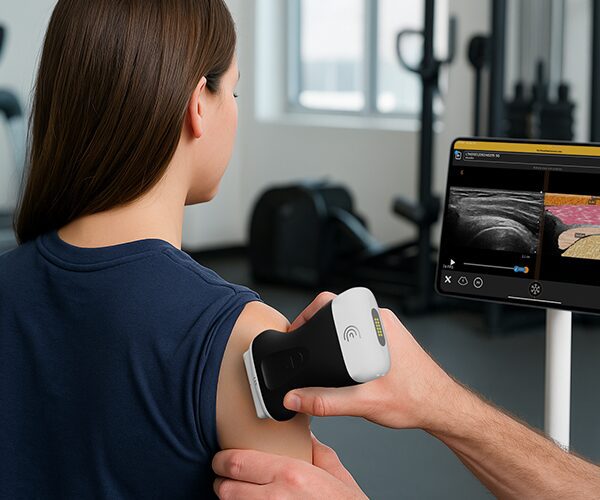
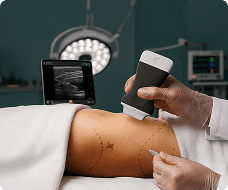
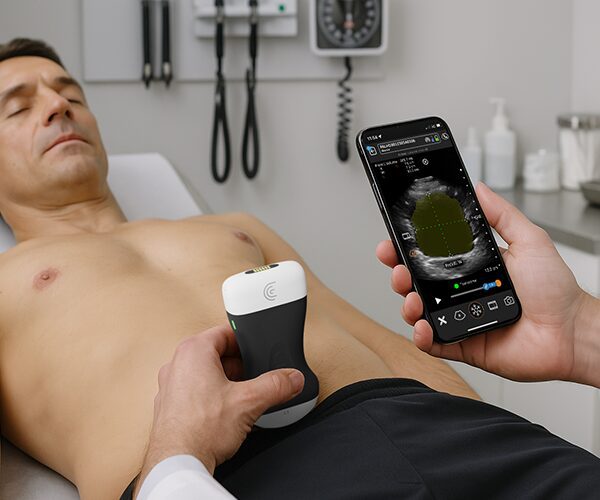
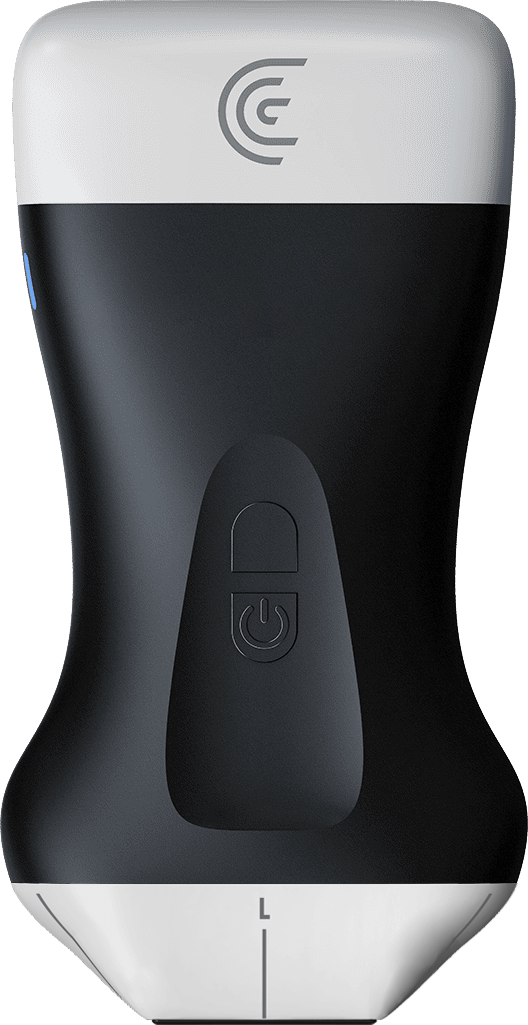
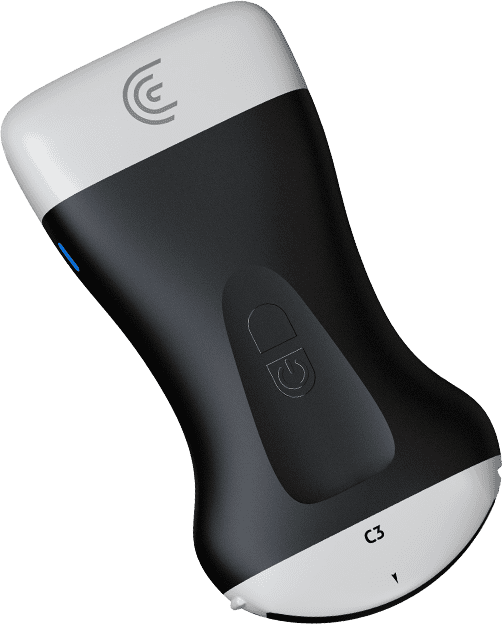
hello I'm Brian Johnson a University Physician and today we'll be using the Claris pal to assess the need in the emergency department someone comes with a cute knee pain specifically swollen knee or increased warmth you really want to assess for a joint diffusion and so this can be done with the Claris pal um your setting will be msk which you've already set and what I typically do is I take the probe in longitudinal orientation I put it right on the kneecap to be honest and I oftentimes use both hands and what I'd see is this very bright hyper Coke structure and that's the patella and oftentimes what I do is you move either inferior or Superior to see if there is an effusion you'll see the quadriceps insertion more Superior and you will see the patellar insertion more inferior you can also assess lateral and medial for a fusion or other derangement of the knee but primarily you're looking for an effusion typically I would find an effusion in this pre-pratellar space what you'd see is hypoechoic fluid in this space now if you see hypoic fluid you can do a knee arthrocentesis with the clarius pal what you typically do is rotate the probe 90 degrees and you would insert your needle in a long Journal plane into the pre-patellar space for arthrocentesis you can do knee orthosynthesis blind but ultrasound helps with your accuracy and minimize your complications foreign