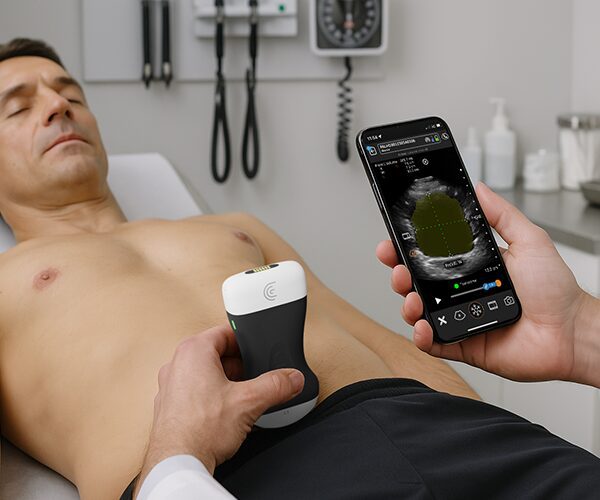
hi my name's tom cook i'm an emergency physician i practice in south carolina with prisma health and the university of south carolina and this is a short video on ultrasound of the inferior vena cava the importance of this examination relates to understanding the volume status of your patient and particularly emergency medicine as well as other specialties this is critical information for appropriate management to perform this examination you are going to use either a curvilinear or a phased array transducer you'll place this in the sagittal plane just in the area under the xiphoid process and what you're trying to do is pick up the longitudinal structure that comes across the bottom of the screen it's important when you do this that if you drift too far to the left you'll pick up the aorta and sometimes that'll confuse people but obviously the aorta is a pulsatile structure and has relative uniform width as it goes across the screen but by just moving a little bit to the right you'll pick up the inferior vena cava which has a highly variable appearance based on the respiratory and cardiac cycles the importance again of this exam relates to volume status and so as one might predict if a patient has a low volume status from bleeding or sepsis or dehydration the inferior vena cava will be flat and will not have a very dynamic appearance when you're scanning by contrast if you have a situation where you have an elevated centrifuge pressure from a number of different pathologies such as right heart failure or an obstructive pathology such as pulmonary embolism pericardial effusion or tension pneumothorax the central venous pressure would be very high and the ivc would appear stiff and dilated so in summary ultrasound examination of the inferior vena cava provides a surrogate indicator for the relative volume status of the patient and can help you in making very important management decisions both in the emergency department and other types of bedside clinical scenarios you