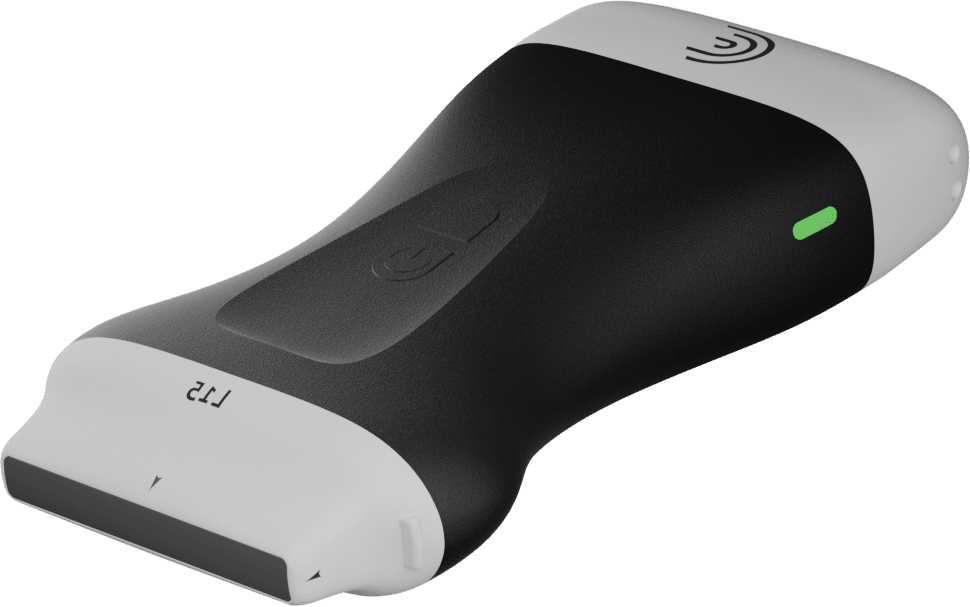
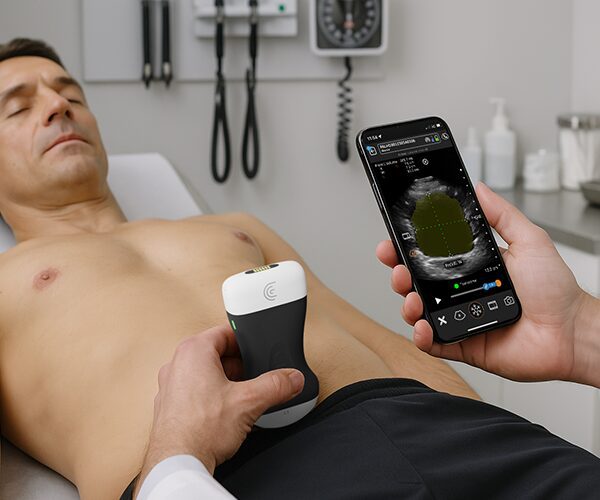
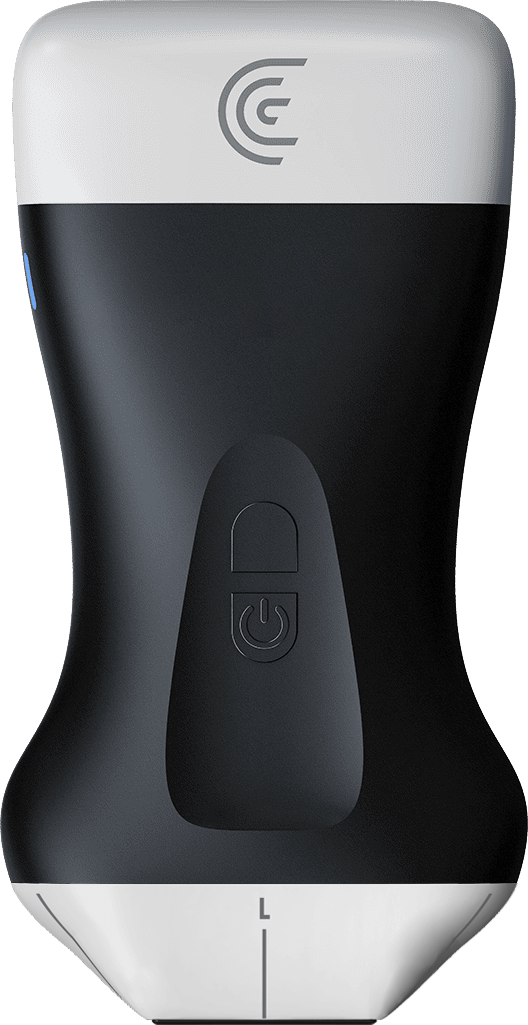
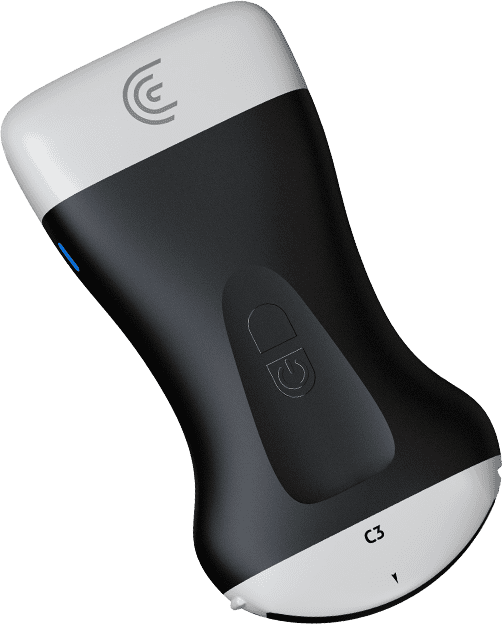
hello my name is Tom Cook I'm an Emergency Physician and I practice in Columbia South Carolina and I'm going to demonstrate for you how to perform a muscular skeletal examination specifically we're going to look at the Patell tendon to see if there's been an injury or a rupture this is a pretty common thing that shows up in emergency departments and Urgent Care Centers somebody is walking typically down stairs they have a big pop in their knee and suddenly they have a lot of swelling and have difficulty extending their lower leg to do the exam you would use a linear Ray transducer uh for this exam I'm going to be using Claus's new transducer it's called the pal HD3 and pal is an acronym for phased array and linear this is a transducer that has both phased array and linear capability and it's a wonderful tool to have you can probably do 90 to 99% of your ultrasound examinations with just one transducer I've put the transducer into a muscular skeletal preset and I'll go ahead and apply some gel to the patient's infr patellar area I'll have the orientation marker pointed towards the patient's head and when you do this you can see the patella with the shadowing artifact on the left side of the screen you can also clearly see the patellar tendon insertion into the patella as it comes off of that and it starts to make its way down the leg it's very easy to see it it has sort of a feathery appearance as you go down and you can follow that all the way down you can see here in this situation it's completely intact until you get down to the tibial tuberosity and you can see that the tendon inserts distantly on the tibial tuberosity that's it that's all that's to this examination it's extremely helpful it's very very sensitive you've got a patient who comes in and has that story that I just gave to you you can go in and examine this patient within 30 seconds to a minute you'll have the diagnosis