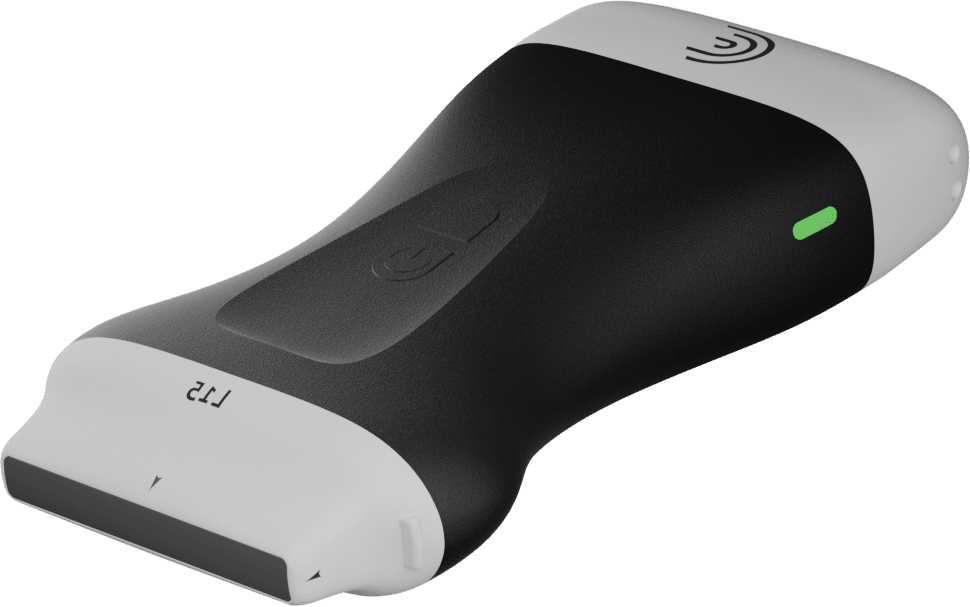
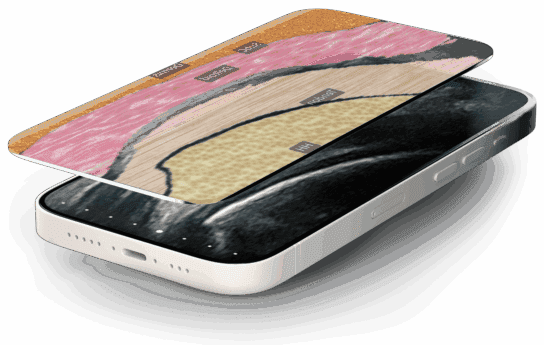
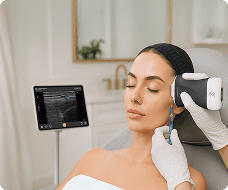
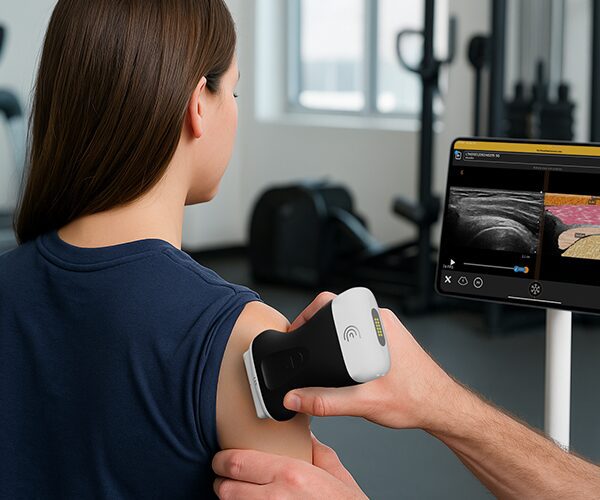
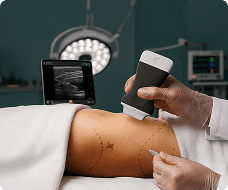
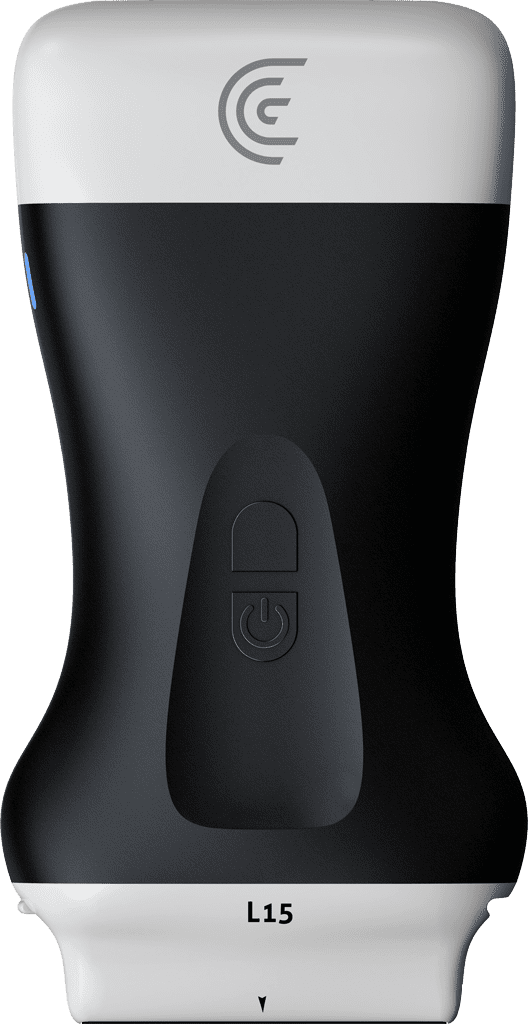
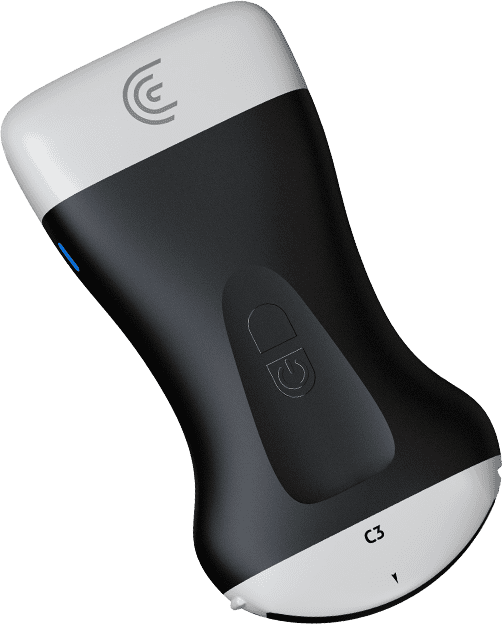
hi Dr Frank Johnson from Sports Medicine ultrasound I'm going to demonstrate an injection of PRP into two different ankle ligaments one ankle joint and then I think we've got an elbow to take care of as well the way I find the atfl the anterior talofibular ligament which is the most frequently sprained ankle ligament as I place the distal fibula in the middle of the screen here with the probe parallel to the bottom of the foot I then Rock the front end of the distal end of the transducer onto the talus and then with some slight movements we see the atfl pop out it's a bit hypo a coaxial nice and dark deep to that we can see a little bit of the articular cartilage of the talus and we can almost see a little triangle that if you wanted to get into the ankle joint proper you could simply drop your needle into that little triangle today we're actually trying to inject into the ligament now just sitting on top of the ligament or some arteries just over here on the left of the screen and to line this up for an injection I simply move the transducer out of the way so I've got a really short distance to travel can activate my voice activation increase depth increase gain increase gain increase gain I'll now take a small bit of anesthetic little poke I don't know why I say little poke but I just seem to do that every time I'm super confident that that traveled exactly to where I want it next thing I'm going to do is grab my needle for injection of the PRP having already anesthetized the skin we go through the same pathway and there you can see the needle tip inside the atfl so just a small little Puff we're only going to inject about a milliliter here by passing through you can see the atfl is actually holding together reasonably well some people will have it it kind of flap open showing a really really high grade tear and you know I can sense some opening indicating a prior tear and if I pass through a little bit goes into the ankle joint proper okay that's the first bit now to go up to the the high ankle sprain or the a i t f l the way we get to the a i tfl is we leave the distal fibula in View and we simply rotate the distal end of the probe about 90 degrees to the north and all of a sudden here we get a three bone view we get fibula on the right tibia on the left Talus happens to be seen below and what we can see here is we can actually see a thickened AI tfl this is an old sprain for this one I'm going to activate my Center Line turn on my voice recognition Center guide decrease depth using the center line indicator on the probe because some probes don't actually have the Centerline indicator again just a small amount of static in the skin down to about 45 degrees sorry about that but that's the sore spot you can see the needle getting into that ligament there Okay small amount of anesthetic okay and this is an out of plane technique so again the needle will be showing up as a white dot you won't see the whole length of the needle but this is a super super helpful needle approach called an out of plane technique that can allow you to get into lots of different tight spots and we're almost done having kind of the way I think about this is it's an injured ligament and I'm trying to fill up the sponge of the injured ligament and it's holding on really tight like although it's sprained it's a it's structurally sound the final spot we're going to is the posterior aspect of the tibial tailor joint this one's a little trickier to see with ultrasound it's actually best seen with fluoroscopy increase depth and this one's best approach from posterior to anterior so I've already cleaned the skin here I've got that disinfectant on there and again although I can't see my needle perfectly because the surrounding tissues are also nice and white I can see the needle path by just making some gentle small oscillations and I can see it's in the right spot and there we go there's my injection into that joint excellent so there we are that's the ankle joint injections and ligament injections now we're going to move on to the Elbow