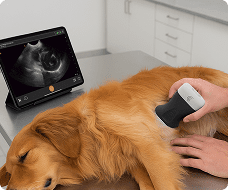
and welcome back and i'm serge and i'm cern dr boyzen we're continuing our plus scanning here and we're going to look at rolling in or out plural effusion yeah so that's one of the big questions we'll have when we're looking at the plural space in the plural and lung off sound do we have pleural effusion yes or no and there are lots of tricks again to finding smaller volume pleural effusion if our patient has a large amount of pleural effusion again we've got to think about patient position and how we're going to identify that pennies and lateral we have a moderate amount of fluid all we have to do is slide the probe underneath the patient here essentially find the pericardial site and my widest point of the chest on the gravity dependent side and that will give us that pleural effusion if our patient is sternal or standing again the position that our patient is most comfortable when they have significant respiratory stress that changes rather than being at the widest gravity dependent point of the chest underneath the patient we're going to actually find that that fluid accumulates along the sternal border that pleural border ventrally so we're going to show you how we look for moderate or small amounts of pleural effusion with our patient in a stern or standing position the position they're most often scanned when they have respiratory distress i love it dr boyzen let's go ahead and do this so we're going to start at our cranial plus border there because we're sure we're going to be over lung so dr boise i'm going to part the fur move that skin forward there so we can limit how much alcohol we're going to put we're first going to look to see if we have that there we go we can find our plural line bat sign do we have a glide sign here yes or no we can see that shimmer there i'm at the cranial border and i'm gonna go ahead and move backwards until i find that cauda border which we've identified as the curtain sign and i think it is coming in here might need a little more alcohol she's a big chested dog wait for it wait for it come in there but maybe jump one more rib caught there we go there we go there's a lovely curtain sign that's our vertical edge artifact so i know exactly where you are on the chest now dr loop didn't have to guess and try to hope that i could find that because what we're going to do now we found that vertical edge artifact that curtain sign we're going to follow that ventrally until the diaphragm and the heart come into the same window so i'll go ahead and give you a little more alcohol we'll separate the fur and we're just going to follow that curtain sign there down eventually there you go see it moving cranially jump a rib we're coming ventral it moves cranials become ventral see a little bit of curving of the diaphragm away from the chest wall there a little bit of a heartbeat there so i know i'm getting close all right dr poisons we're coming eventually eventually until boom we see the heart and the diaphragm in the same window exactly so this is our pericardial diaphragmatic window it's a great spot for us to look for and rule out plural effusion but also differentiate pleural effusion from pericardial fusion so we have pleural effusion it tracks along the diaphragm and fills that costophrenic recess if it's pericardial it curves away from the diaphragm and around the heart so we see this uh pericardio diaphragmatic window here and at this lecture location you see a small fat pad a little mediastinal triangle fat between the heart and the diaphragm and then you got the lung just starting to peek in uh over that right here so that is our pericardial diaphragmatic window if we have a large or moderate amount of pleural effusion we will pick it up at this location for sure with the probe perpendicular to the ribs with that heart in the diaphragm in the same window if however it's a small quantity of fluid that might not be causing respiratory stress but that we do think can give us some answers with regards to diagnosis if we see that fluid we tap it we analyze it maybe it'll come back as septic maybe it'll come back as a carcinoma so we can actually look for small amounts of fluid at this location by turning the probe parallel to the ribs with the marker directed dorsally and that gives us that classic ski jump sign and here you can see that serge has the probe parallel to the ribs and he's just a little bit over the abdomen again so he jumps one rib cranial to the abdomen and that puts us on the lung where it curves down so again we're looking for that ski jump sign where the lung comes along the chest wall and then curves along the sternal muscles that you can see here and if we jump cranial to this place now we're gonna look for pleural effusion all the way along the ventral border so we're going to jump another rib cranial and you also want to go up and down between the ribs dr boison absolutely so we want to explore more area of the ventral lungs so we're looking for pleural effusion along that sternal border between the lung and the sternal muscles and we're looking for lung pathology if we slide a little more dorsal with the probe parallel we're looking for actual pathology in the lung itself so the area our dorsal will slide more ventral again there we go we've got our ventral border and now we'll jump a rib cranial now we'll do the same thing we scan up along the lung no pathology present we come back down ventral excellent no pleural effusion so we'll jump another rib cranial and now we got a little bit of the heart that we can see there uh against the sternal muscle so we've got a little bit of uh the pericardial window here but again no pleural effusion that we're seeing no lung pathology that we're seeing lots of zed lines z lines dr boyce absolutely and those are an artifact that we often see when we're scanning the lung they are arising from the thoracic side those are not b lines so don't confuse those from b lines those are zed lines that we're seeing here they are not sliding with breathing and what we'll do then is once we've looked for our pleural fusion and we've assessed the lung and the ventral pleural border for fluid and for lung pathology respectively we'll just move all the way cranial to the thoracic inlet looking cranial and we'll again go dorsal on the lung no pathology and then we'll come down ventrally to that ventral pleural board again onto the sternal muscles and look for either pleural effusion or lung pathology and that is how we rule in or out pleural effusion you