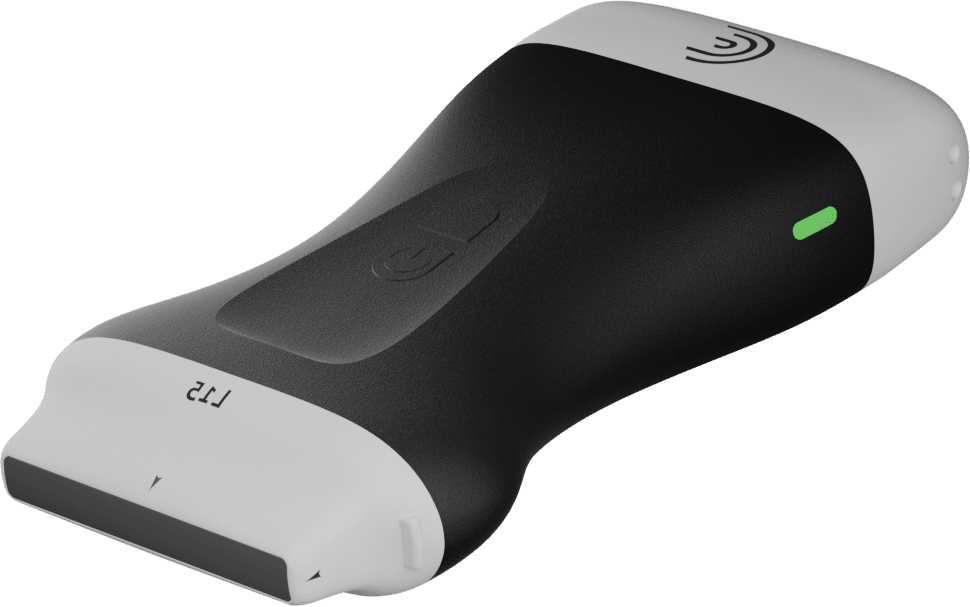
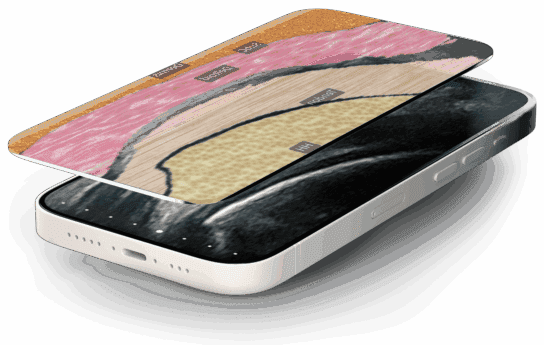
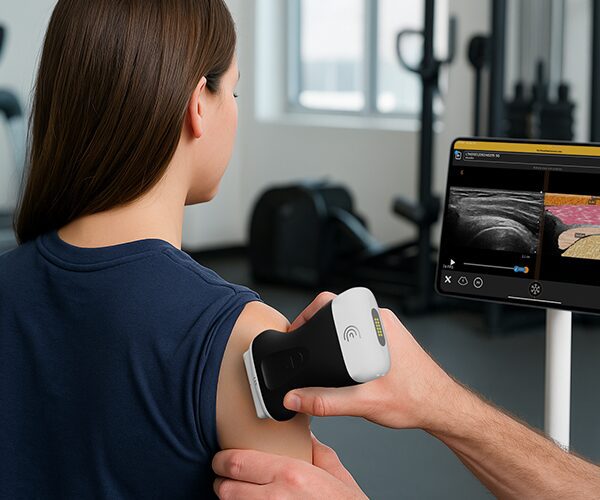
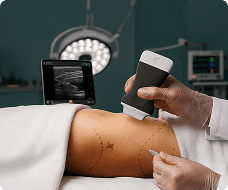
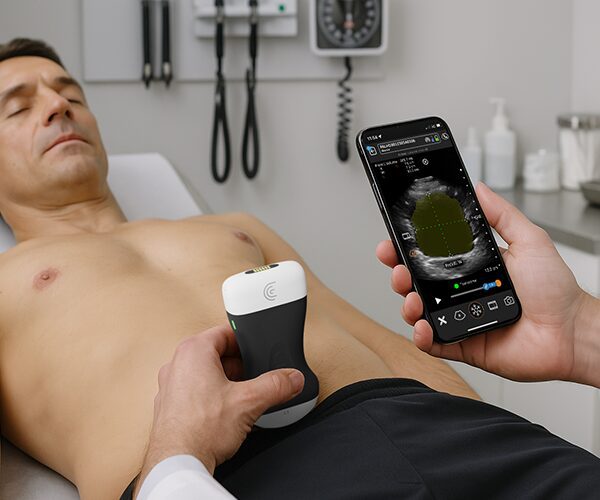
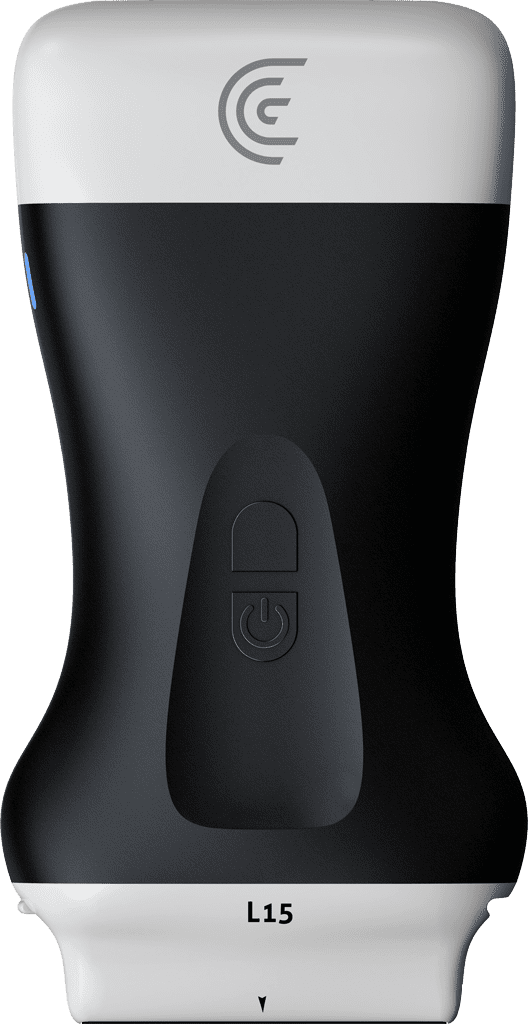
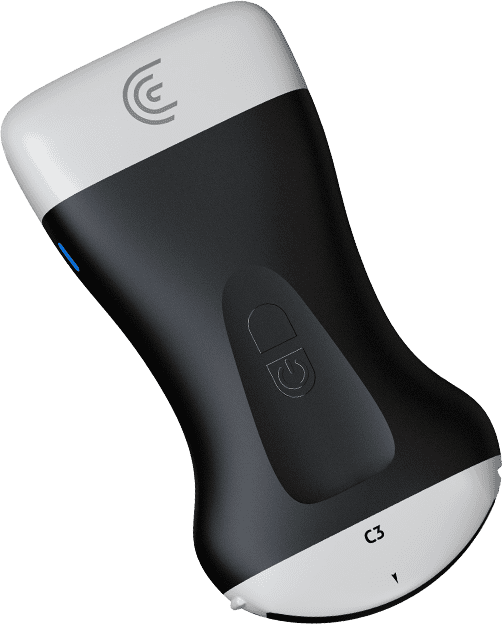
Ultrasound of the abdominal wall is valuable in several clinical contexts since it provides quick, safe, and non-invasive ways to evaluate abdominal wall muscles. For clinicians learning to use ultrasound, um it can be a little bit overwhelming, especially trying to distinguish the subtle nuances between the different muscle layers and the soft tissues. So, I'd like to introduce you to Clarius T- mode for the abdominal wall to empower clinicians like yourselves to learn ultrasound with more confidence. So, Clarius T- mode is available on the Clarius linear scanners, the L7, the L15, or the linear array on the PAL scanner. Once I've connected my scanner, I'm going to select the abdominal wall preset, and we'll begin to scan. If I'm looking at the lateral abdomen, I'm going to place my scanner between the costal margin and the iliac crest. And from here, you'll see the T- mode icon at the bottom of the screen. So, we'll tap the T- mode icon. And right away, you'll see nice graphical representation of different tissue layers and muscle layers side by side with the grayscale image. And you'll notice that as I move the scanner, it updates in real time. Now when I freeze the image, we get even more information in the in the form of anatomical labels. So this is really helpful and I can store those images with the labels as well. Now I'm going to unfreeze my image, go back to the 2D screen and let's move to the midline abdomen. So here I'm going to activate my T- mode once more and again we'll see nice real time representation of the midline abdomen and in this case the rectus muscles and the linear alba. Now to confirm what I'm seeing again if I press the freeze button I get labels to confirm what I'm seeing. So we can store that image by pressing the camera icon and these images will be stored with their labels to the Clarius cloud. So whether you're a plastic surgeon learning ultrasound to do tap blocks or a physical therapist wanting to do better ultrasound assessments of your patients with diastasis rectus, using T- mode will be a great place to start to learn to recognize the abdominal wall muscles.