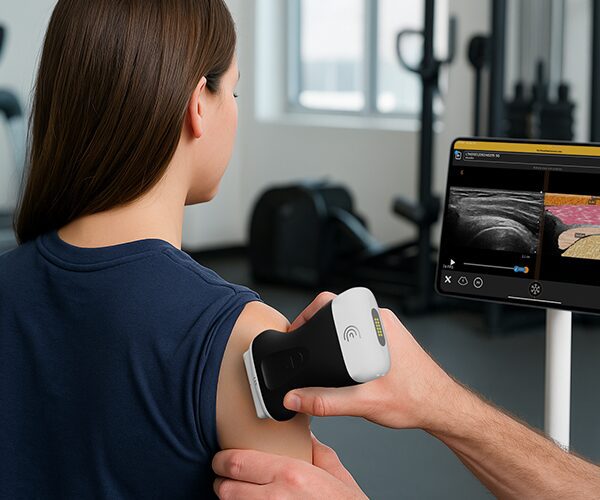
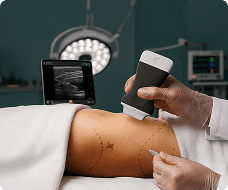
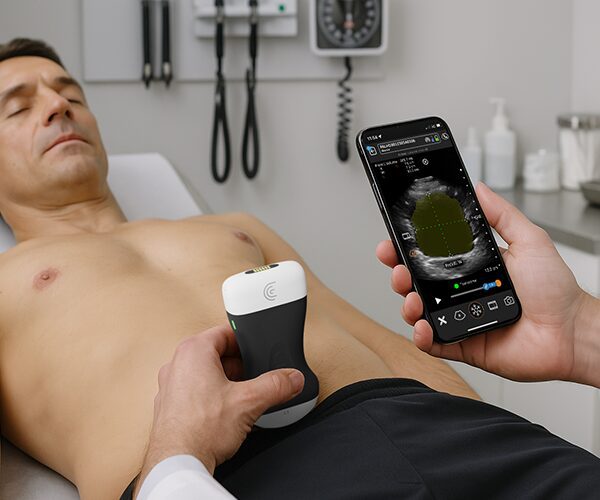
to scan for proximal and distal intersection syndrome. The patient is seated on the other side of the table, hand placed on the table and then first uh point to find is Lisa's tubicle as a landmark. So um we can see Lesa's tubicle right here with on the uh ulna side we can see compartment number three the accensus longus and on the radial side we can find compartment number two the extensor copiialis bravis and the extensor copiialis longus both tendons are within a tendon sheath so the tendon sheath you can see uh right there and we're going to observe the uh thickness of the tendon sheet teeth. We're going to observe the cross-sectional area of both tendons. Of course, also the echogenicity of both tendons and whether there is a fluid around each tendon. The intersection is a little bit more to proximal. So, let's slide to proximal and see what happens. And then if you look closely, you can see that uh the content of uh the first accensor compartment. So the APL and the EPB that they are crossing the content of the accens 2 compartment. So there you can see the muscle belly of compartment number one going over the tendons of compartment number two. This is compartment number two and that's the content of compartment number one. And there might be a friction right here that could lead to a fluid surrounding these tendons or in between the the muscle belly and the tendons even also frictioning of the tendon which leads to a tendinopathy and a increased thickness and cross-sectional area of the tendon. So that is what we are going to observe and which are also signs for this proximal intersection syndrome. If you would look to the patient you would also in many cases see a swelling right there. Uh so that is also a yeah an indication that there might be an intersection syndrome. This is not the only intersection syndrome we have. So this is proximal proximal to list tubicle. We also have a distal one. So let's first slide back to to distal. Here we can see this Lissa's tubicle again. And we're going to continue focusing on the compartment number two structures. But now a different structure will cross these two. And that's the content of compartment uh number three. So that's the EPL which uh crosses uh the extensor copy radiialis longus and bravis. And similarly as proximal we're going to observe indeed the crosssectional area of all tendons. We're going to search for echogenicity changes fluid and maybe also neovascularization.