



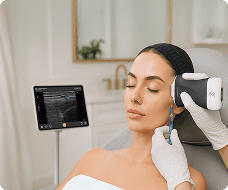
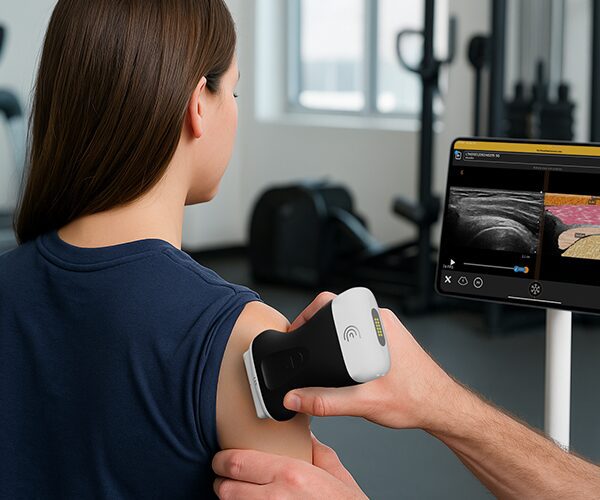
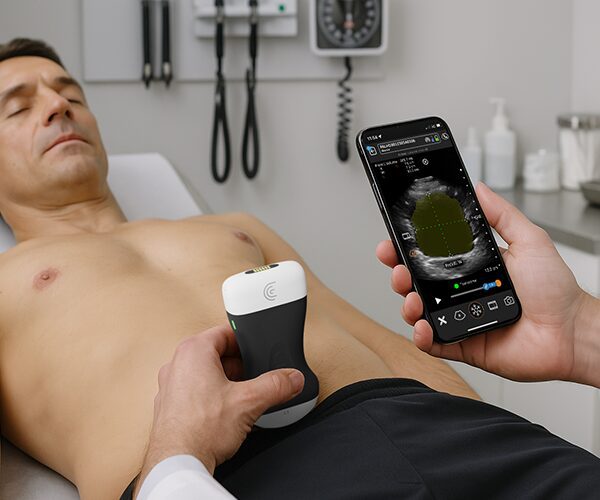


This is a video demonstration of how ultrasound is used to measure the inter recti distance, and assess the function of the linea alba with and without core muscle contractions.
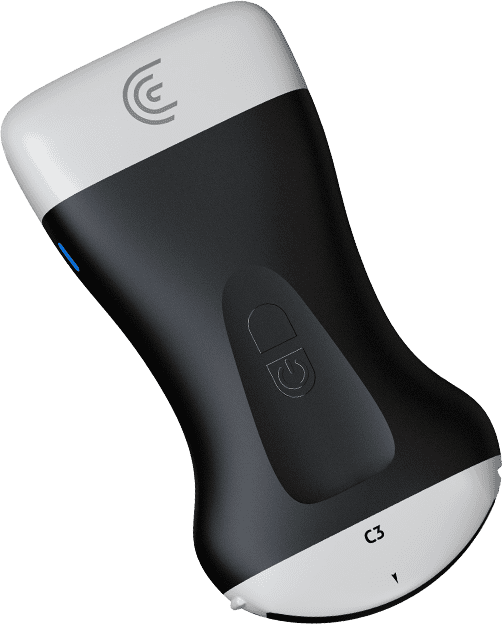
Hi, my name is Adrien Sim and today in this video we're going to be looking at um transabdominal approach to looking at the interrect distance with the C3 scanner. So when we're measuring interrect distance, we can measure at different points through the abdominal wall. So it's best to pick a point or several points that you can reproduce. So you can do that by measuring um with a measuring tape and just marking out those spaces. For the purposes of today, we're just going to go about 3 cm above the umbilicus here. I'm going to unfreeze the image. And then we're basically looking at uh finding the head of the rectus. So, I'm moving the probe over to the right of the patient. And then I'm coming through the middle and I can see the head of the rectus show up here. And then moving through to the left and seeing the left rectus abdominis there. So, I'm going to come back to the midline here so that I can get both of those recti heads in view um and get a clear image of that linear alba here. And then I'm going to freeze the image. I'm going to pull out my calipers here and I'm going to measure from one side to the other. And then we're going to capture image. And we can see that the interrect eye distance is labeled at the top of the of the screen on the left hand side. To further look at the function of the linear alba, we can unfreeze. And in this case, I'm going to get the client to do a curl up test. So, just to see how um the linear alba reacts and what the interrect eye distance does. So, I'm going to get my client to without any cues just do a curl up of the head and shoulders. And then I'm going to freeze the image. And I'm going to get them to relax back down. And at this point, we can reme-measure that interrect eye distance. So, pulling out the calipers again and measuring from one side to the other and again capturing the image. And then we can also compare that to another activity where we pre-contract or uh cue the client to do a specific contraction. So again, placing the probe at that same spot relatively, we're going to unfreeze the image, we're going to get the client to connect to their pelvic floor before they curl up. And then we're going to get them to curl up. Good. And then we're going to freeze and get them to relax back down. So then we can again pull out our calipers and reme-measure from one end to the other and get that third measurement there. So that wraps up um measuring interrect eye distance.