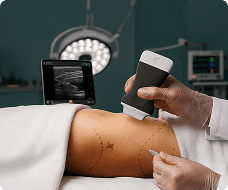
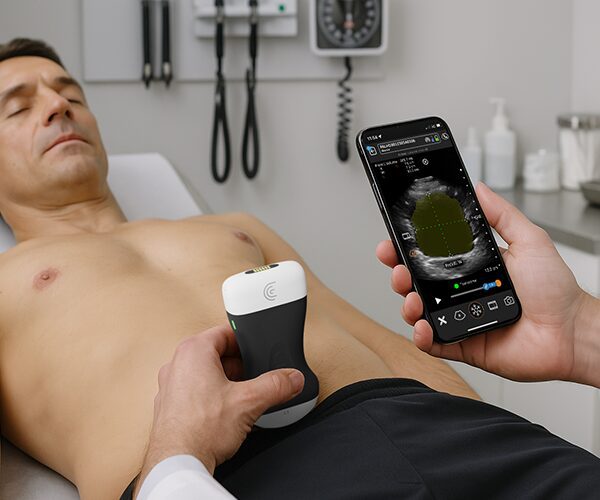
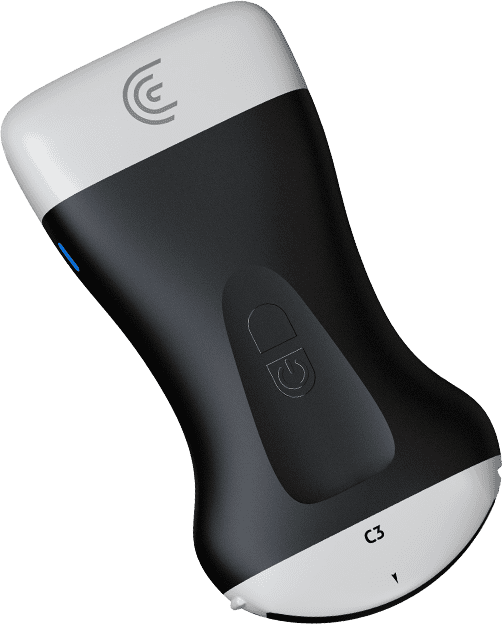
let's start scanning in B mode to orientate myself with the anatomy of the lip I start with the modiolus because it's an easy structure to find the modiolus is a dense mass of fibromuscular tissue formed by the junction of a number of muscles lateral to the angle of the mouth on ultrasound we see it as a hypo eoic oval structure the muscles that make up the modiolus include orbicularis Oris Lev angul Oris zy maticus major binor rorius depressor angul orus depressor lii inferioris and platisa the facial artery is usually found lateral to the modolas so this reference point is helpful for later when we switch to color Doppler here's the upper lip with the transducer horizontal we can see the teeth and the labial artery in the submucosal plane as a long tube likee structure running beneath the orbicularis or there appear to be some hypo aoic deposits in the subcutaneous plane that have posterior enhancement which may be historic ha filler she's had previous lip augmentations here's a great cross-section where we can see all of the layers including skin subcutaneous fat pars marginalis par peripheral sub mucos or fat and teeth looking at the lower lip with the transducer horizontal in Beam mode here we see hyper aoic skin ISO aoic subcutaneous layer the obicularis orus muscle and beneath it the iso eoic submucosal layer in which you can see hypo eoic lobulated structures these are labial mucus glands in the wet mucosa of the lip don't confuse them with filler in this sub mucosal layer because these are just normal anatomical structures and then there's the teeth we can also see an an aoic tube like structure in the submucosal plane by its snaking appearance I suspect this is the inferior labial artery let's look at the lip with a transducer vertical in B mode here's the upper lip and the lower the orbicularis orus is the middle hypo aoic layer in the lip it is sandwiched between the subcutaneous and submucosal compartments we also see hyper aoic teeth in cross-section the orbicularis orus is shaped like a j because it is made of two parts par peripheral and the pars marginalis the peripheral is the extrinsic portion which is in the cutaneous lip marginalis is the intrinsic portion which forms the Vilan border on this hystological slide you can see both parts for reference marked P and M respectively as I move the transducer we can clearly see this round structure move side to side in the submucosal plane this continuous well-defined anaco structure is a vessel and judging by the size and placement this will be the superior labial artery we can see so much even on B mode check out this anaco well-defined structure in the subcutaneous plane it's not a vessel it's too big for that but judging by its location discrete presentation and posterior acoustic enhancement this may be a remnant of previously placed ha filler with the Doppler on let's trace the vessels into the lip here is the modiolus and immediately we see a vessel the superior labial artery is expected to Branch off the facial arteries to supply the lip how it does this is variable but generally type three is the most common according to the findings by kage from 2019 the facial artery lies lateral to the modiolus and this is an easy Landmark to find on ultrasound The Vessel superficial to the modiolus is therefore likely the superior labial artery after branching from the facial we can trace it further into the lip where it takes a snaking path to the submucosal layer under the obicularis orus tilting the transducer we get a view of the vessel passing through the orbicularis which usually happens at about a third of the distance between oral kisher and Cupid's bow according to the findings of cotana from their 2020 ultrasound study labial arteries are found found in the submucosal OR intramuscular plane in 95 to 96% of cases with only 5 to 5.6% of labial arteries passing in the subcutaneous layer here's the labial artery and orbicularis overlying it we also see several oval anaco structures with posterior enhancement in the subcutaneous plane they don't exhibit flow on Doppler so my guess is this is historic ha from a previous lip augmentation this is the central part of the upper lip with a transducer vertical here we can see the col branch of the superior labial artery as it leaves the lip and ascends towards the nose The Vessel lies superficial to the par peripheralisation filtral columns can quickly lead to vascular Adverse Events these vessels can be really close to the skin less than 2 mm according to the scale on the right for completeness sake let's look at the lower lip on color Doppler from the modiolus the inferior labial artery crosses through the obicularis to course in the submucosal plain there's some labial mucus glands which can be prominent in the lower lip especially not to be confused with filler there are a number of small cutaneous branches supplying the surface tissues towards the central lower lip and also interestingly the lavial artery seems to pass between the pars peripheral and Pars marginalis in this central portion this is still technically intramuscular it's just between the two parts of the orbicularis closer to the surface but still not in the subcutaneous plane confirming what we have just seen with another look in the vertical cross-sectional view of the lip the main branch of the labial arteries in the subm coal plane close to the wet dry border there's the cutaneous vessels from earlier and that branch of the inferior labal artery running between the two parts of the orbicularis I have placed a canula into the upper lip where I would normally perform a lip augmentation we can see exactly where the canula is during treatment I'm using an out of plane approach where the needle is perpendicular to the long axis of the transducer you can see it here at the top of the screen Green close to the vilon Border in the subcutaneous plane and above the orbicularis orus it's far enough away from the superior labal artery and the cola branch of the SLA knowing this allows us to place filler product without compromising the vasculature this is also where I would inject with a needle this avoids the artery if treating with linear threads in line with the lip but we must carefully consider the safety implications of using needle tenting techniques and injecting perpendicular to the Vilan border this may cause injury to the vessels of the lip and result in vascular Adverse Events due to the proximity of needle tip to vasculature for this patient I have elected to use a conventional linear threading technique with a needle it's my favorite technique for the lips as it gives me unmatched precision and results you saw earlier that treating with a canula is close to the vilon in the subcutaneous plane I'm aiming for the same area with my needle I know that the superior labal artery is in the submucosal plane at the wet dry Border in the upper lip because I confirmed it earlier here it is at the midpoint of the upper lip under the muscle and at the lateral part of the lip the labial artery can be seen csing intramuscularly before reaching its submucosal placement so I'm pretty comfortable placing my filler superficially in this lip I manage my depth to be able to see the outline but not the color of the needle to maintain a relatively constant depth of injection that's the treatment complete for the upper right it's nicely taking shape and there's an absence of bruising because I've kept away from the vessels moving on now to the lower lip I maintain the same depth towards the edge of the Vermilion and away from the wet dry border as we saw earlier the inferior labal arteries in the sub mucosal plane at the central part of the lip it courses in the sub mucosal plane for much of the length of the lower lip so I can be confident injecting subcutaneously here I accentuate the central cubicle to give more shape and plumpness to the lip each strand I place is a tiny amount no more than 0.03 to 0.05 mil per increment she's already got a nice lip shape and as we know subtle understated lip augmentations are so much more impactful for completeness sake I will finish off the other side in this video I wanted to show you how you can create subtle and safe lip augmentations with a few straightforward pre-operative scans to give you injection confidence and using what many injectors would call Simple needle techniques lip augmentations for me are rarely guided procedures with direct visualization of the canul on injection the key to producing SA safe results is to effectively map and identify the layers and position of the labal arteries pre-operatively this allows you to plan your treatment approach my favorite scan is the vertical transducer angulation it gives me the overview I need to assess the lip in cross-section and determine the vessel location and depth I scan lateral and Central Parts in each quadrant this gives me all the information I need and it doesn't significantly add time to my procedure it's the simplest way you can vastly improve lip augmentation safety for me if the labial artery is in the submucosal plane I generally choose the needle approach if it's snaking in and out of the muscle or in the subcutaneous I might choose a guided canular approach however given the incidence of the labial arteries being in the subcutaneous plane is less than 5% this is the exception rather than the norm once the treatment is complete I can go ahead and check product placement and vessel Integrity with my clarus first in B mode using the vertical angulation because that's my favorite cross-section view here's some anic oval deposits in the subcutaneous plane these look like ha to me and that's exactly where I wanted them to go switching to Doppler there's the labial artery in the lower lip and in the upper the anic deposits in the subcutaneous flame don't exhibit flow so they're definitely ha you'll notice an increase in vascularity which is normaliz after treatment it is trauma after all and will increase blood flow so you can see how we can use post-operative Imaging to check everything has gone to plan and the filler is where we want it to be it's nice to be able to tell patients everything's all right and send them home reassured