




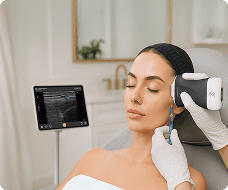
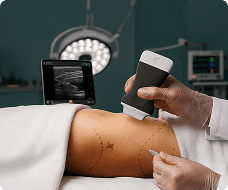
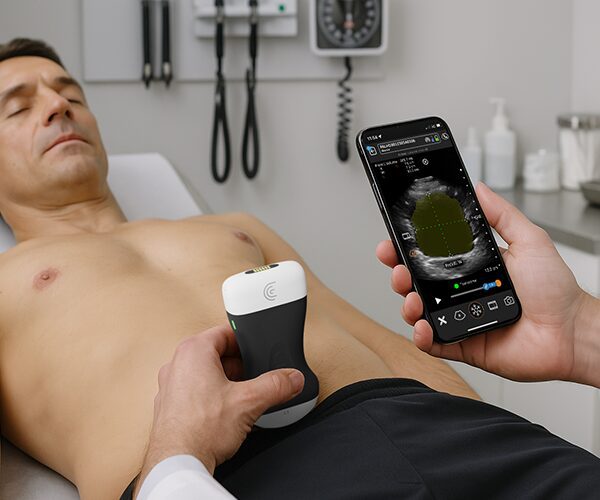


Ultrasound is great in preventing complications by looking for the vascular anatomy, by looking at where the filler has been placed in the patient, previous to your injection. There are certain times when you don’t actually want to inject these patients, particularly if they’ve had silicone. And silicone shows up very well on ultrasound.“
Testimonials
Rüdiger Eichholz
Anesthesiologist
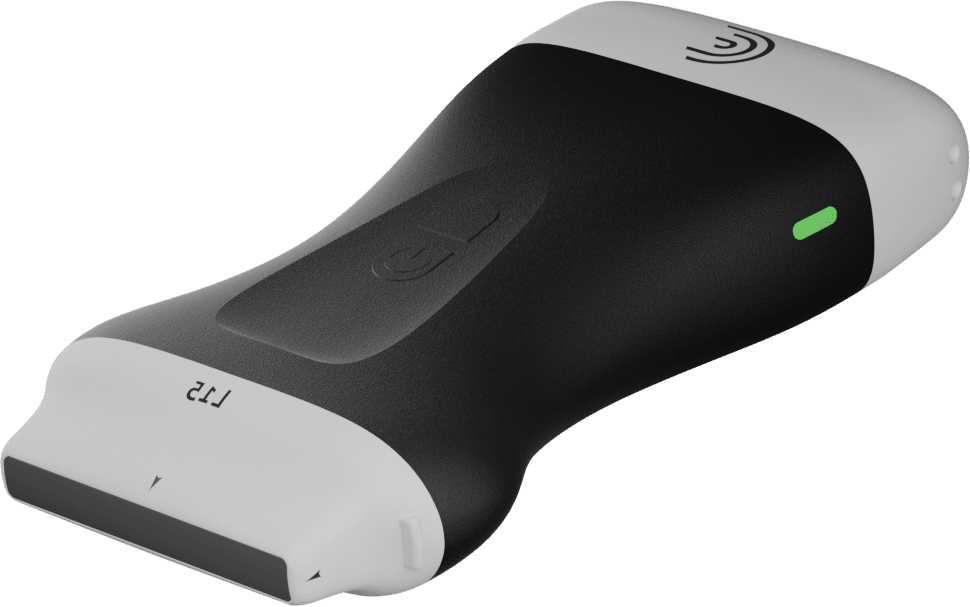
Clarius is a very, very small device that fits in my pocket and it has very good image quality, especially for nerve blocks. I have a personal one that I like to have with me everywhere I go. It is so valuable to have a full, big machine squeezed into a small handheld device that is not much bigger than a phone.”
Marc Salzman
MD, FACS
I always recommend Clarius Ultrasound to people who ask me. I’ve tried all the other ones and it just shines above the others. I like the wireless component to it. I like the choices of the three different models. I like the form factor. I like the fact that it is updated constantly. I haven’t […] seen one break yet or not be usable. So, I have nothing but positives to say.”

Steven Weiner
MD
The Aesthetic Clinique
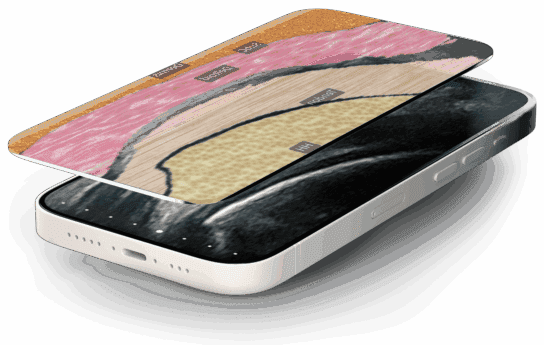
The new T-Mode is […] particularly good in the temple anatomy because there’s 10 layers of the temple and it’s very difficult for people to understand that. But with the T-Mode, you throw it on the temple and you automatically see the layers, it even labels them for you. It’s also great for lips and cheeks. So, it’s a great learning tool.“
Pat Pazmiño
MD, FACS
Miami Aesthetics
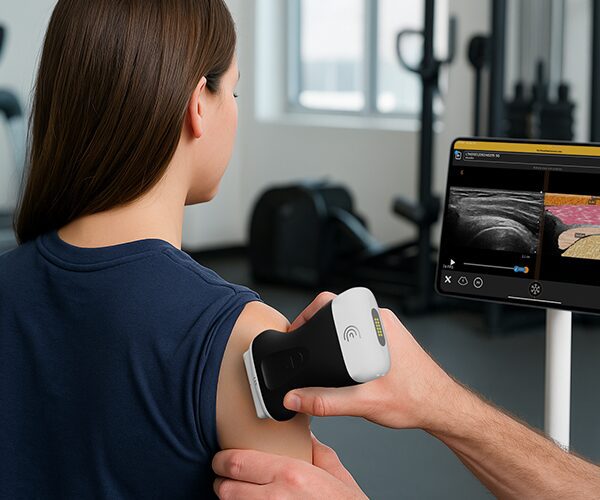
Clarius has done an incredible job with the T-mode, which helps with education because for the first time in real time, you can actually see a color-coded image of what you’re looking at on the screen. I have used the T-mode in training, and it really is eye-opening for the doctors because when they see it, it clicks. They finally understand what is on the other image, which can look like a TV full of static. But the T-mode really helps identify the anatomy and it really puts surgeons at ease.”

Zainab Al-Mukhtar
BDS, MJDF, RCSEng, MFDS
The introduction of the portable ultrasounds completely changed that. It means that now within an affordable price, medical aesthetic practitioners can purchase a portable device and now are in a fortunate position where there is more training available. And I think that it has elevated aesthetic practice a lot. There is an increase in use as a precautionary measure prior to injections. There is an increased use of ultrasound guided injections where necessary or where it is deemed helpful. There is an increased predictability in the way that we manage complications as an industry and there is also a greater understanding of dynamic anatomy as a result of being able to see the anatomy in real-time.”
Zainab Al-Mukhtar
BDS, MJDF, RCSEng, MFDS
I now make a point of pre-scanning the temple, the nose, and the piriform fossa and indeed, the center of the chin if I’m using a bio stimulator that is not easy to dissolve. But always, the nose, the piriform fossa, and the temple. So, I pre-scan. In some situations, I use it for ultrasound-guided injections of filler and unique circumstances where I see that it’s necessary. So, for example, in the nose when I’m treating the lateral aspect of the nose, when I am treating the whole nasal labial fold subcutaneously and when I’m treating the temple in the subcutaneous or interfacial plane.”

John Arlette (T-Mode)
MD , FRCPC, FAAD, FACMS
The T-Mode AI color assist for facial ultrasound imaging in aesthetics is a significant advancement in training for those early in their scanning career. The demonstration of fascial planes, fat compartments and muscle rapidly leads to confident interpretation of the important structures below the skin.”

Dani Sher
PA-C
Sparkle Aesthetics
Voice Controls is a whole new groundbreaking achievement and I really love the resolution you can get with Clarius. You can see filler very well and I’ve been able to diagnose some really interesting complications with it.”
John Arlette
Instead of actually having to reach up to the touch screen to make a change with what you’re seeing on the screen, by having a voice control, you can use it to capture an image, capture a video clip. You can automatically have the color display come up so that it’s already covering the image, and it’s already tilted. You don’t have to touch it. The voice-activated mechanism really adds an advantage to the practitioner who’s working on their own. They don’t need to be fumbling, taking their hands off of the patient, and it happens smoothly. ”