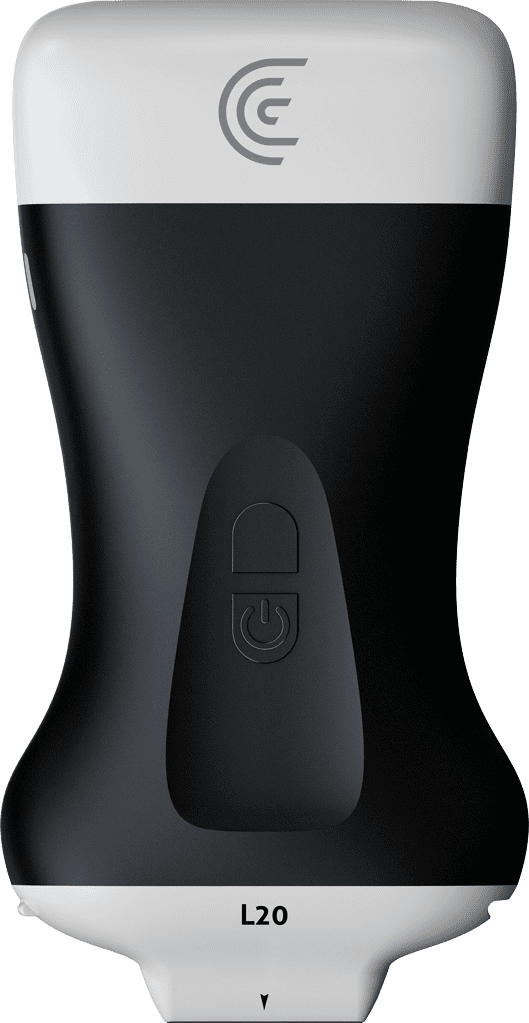
hi there my name is Dr MJ Roland Varma in this clarius classroom we're going to be looking at how we can use our l20 to distinguish between different types of filler on ultrasound let's get started this is h a it is anechoic and homogeneous with a well-defined border h a is usually round or oval in shape the diameter varies according to the size of the deposit placed but generally per deposit we expect less than 0.5 mil given the size of syringes available on the market there are no internal Reflections and this tells us the product is liquid or gel like there is a strong posterior acoustic enhancement due to the liquid contents and this amplifies sound waves passing through the filler to the tissues underneath making them appear whiter that's the white shadow under the filler there so this is the classic presentation of ha in tissues hyaluronic acid filler is undoubtedly the most commonly used type of filler due to its safety and efficacy accounting for over 80 percent of filler used worldwide it's what you will see in your patients faces most of the time this is polycaprolactone often marketed under the trade name elancee this is a synthetic hydrophobic filler that is hypoechoic on ultrasound it appears homogeneous has a poorly defined border and band-like shape PCL creates a significant posterior acoustic shadow blocking out the tissues beneath it this image is of the jawline and the tissues including bone beneath the filler product have been completely shallowed elancee is a very popular collagen stimulating long duration product in South America and in Europe you will likely see this in your patient population this is polyalactic acid we know it by its common trade names of Sculptra or nufil it's a synthetic hydrophobic filler product which is a biostimulator it causes fibrosis and on ultrasound it is characterized by widespread hyperechoic patches with slight posterior shadowing giving rise to this diffuse dappled appearance plla is not retained within the tissues as a deposit of filler but instead causes a fibrotic tissue response and these hyperechoic patches are often only evident When comparing it to normal isoechoic fat tissue this is not so common this is pmma or polymethyl methacrylate which is a synthetic filler in this patient the filler had been placed into the cheek around 10 years prior and over time has displaced in for orbitaly here you can see it in close association with the orbicularis oculi as an ill-defined hyperechoic mass-like deposit with many cometail artifacts pmma has largely fallen out of favor as it is permanent and hardens with time it is still used in South America and this is where the patient had it placed make sure you take a good history if you suspect pmma this is polyalkilomid filler a synthetic hydrophilic filler it appears as homogeneous hypoechoic mass-like deposits with a hyperechoic pseudocapsule of varying thickness internal Reflections are hyperechoic and indicate semi-liquid contents polyalkalamide exhibits slight posterior acoustic enhancement all the deposits of polyalkalamide become slightly more hyperechoic as the filler dehydrates and hardens foreign