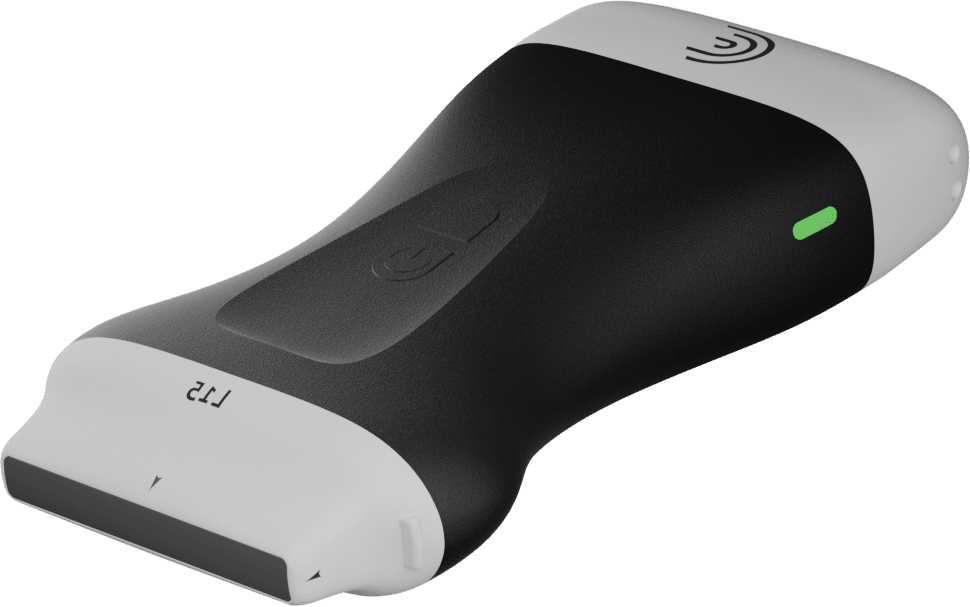
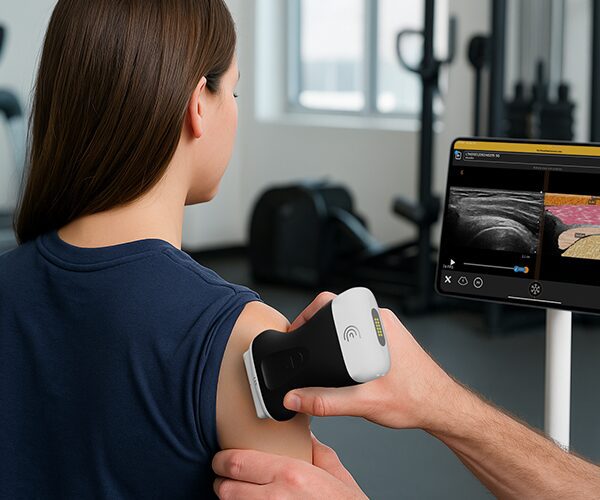
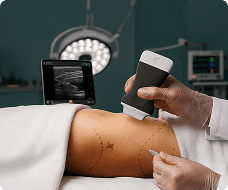
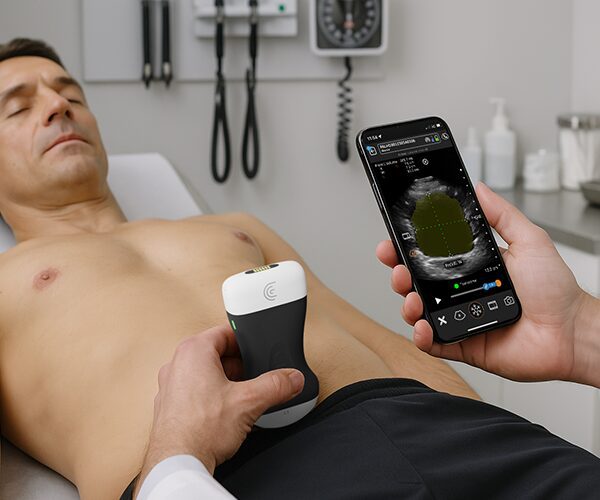
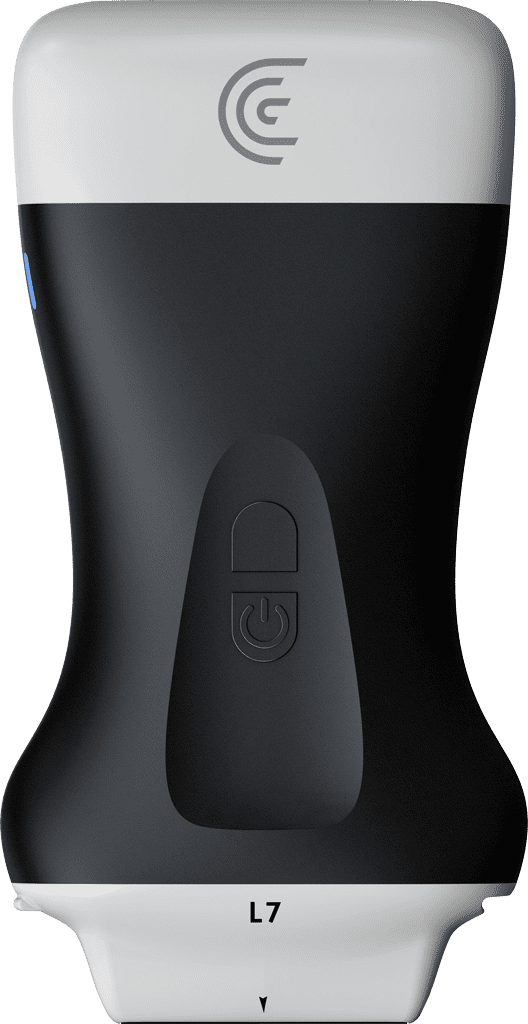
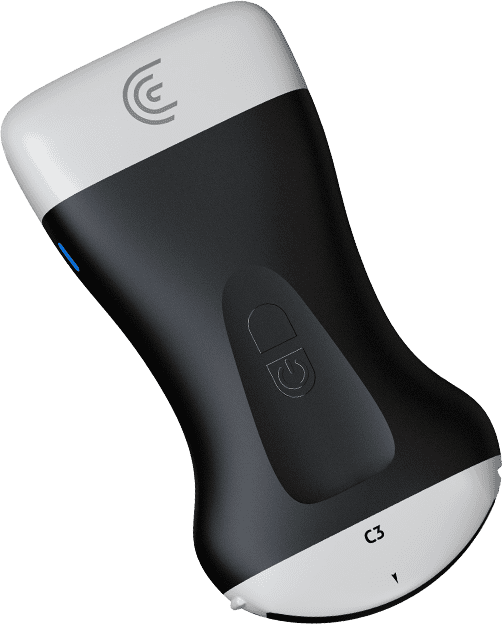
hi I'm Dr Alex dilduca naturopathic physician on Vancouver Island British Columbia Canada today I have my patient Jaden here we're going to be doing a rotator cuff exam on Jaden and we're going to be assessing some of the structures in and around the shoulder as well so we'll start with position one with the hand neutral and we'll take a look at the biceps tendon in short access to start so here today I'll be using the L7 Wireless clarius scanner so first we find and locate the biceps tendon in short access here we can take a look and see the biceps underneath the sheath there can be a fusion in this location when we're looking at the biceps tendon at times this effusion can come from the glenohumeral joints and cause a halo effect that is hypoechoic around this structure it does not necessarily mean there is pathology of the biceps tendon or tendinosus going to Long access in this plane we can see the fibers of the biceps tendon these are long striated linear fibers and we're looking for any coracle pathology along the anterior aspect of the humeral head and any disruption in the biceps tendon I see no pathology here next we'll move on to the subscapularis which is just medial to the biceps tendon sliding our probe medial we appreciate the coracoid on the medial aspect of the screen here I'll often tell my patients to externally rotate I'll give them a hand in this case and we can appreciate the subscapularis tendon moving through its interval adjacent to the coracoid process this demonstrates the tendon footprint on this side and as we move out and externally rotate the app neurotic tissue of the subscapularis which sometimes can be a pain generator if there's disruption or thickness of this structure in order to examine the subscapularis we have the patient slightly externally rotate and we look at the tendon footprint here I do see some minor coracle irregularities the patient is without pain on the anterior aspect of the shoulder so I'm not overly concerned about this area so now we're going to go ahead and ask Jaden to just go to position two and we're going to look at the supraspinatus here so when we're appreciating the tendons of the rotator cuff we're thinking about four major things tendon thickness calcification neovascularization and fibular disruption in Jaden's case I see no problems with the supraspinatus as the tapering of the tendon on the lateral aspect of the humerus conforms quite nicely