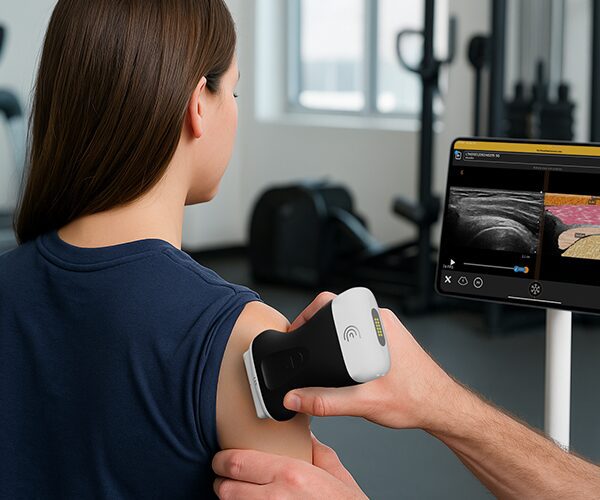
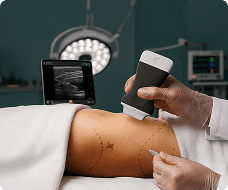
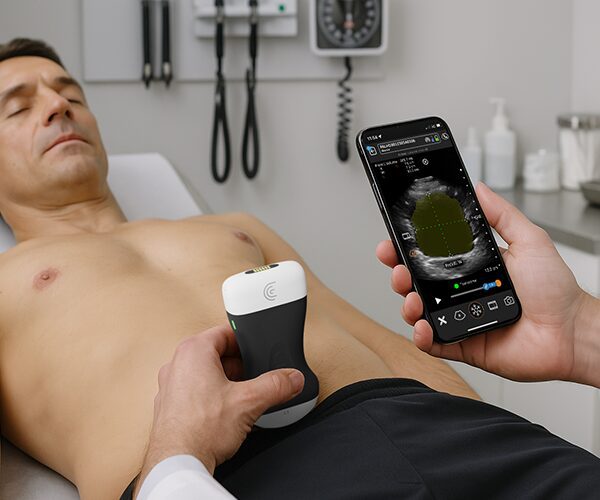
this capoid bone uh to scan this then you could al use also ultrasound to detect for example fractures which can can be missed with uh X-ray imaging. So to scan we can have a dorsal approach or maybe also a palmer approach. So I'm going to show you both and for both approaches is really important that the patient makes a nar deviation because only then you can see the full scaffoid bone. uh but before we do this ill non deviation I will first start in neutral position so that you can see the difference. So going to place the uh transducer over the scaffoid. So we can see the radial bone right here and here we can see the scaffoid. Um so to see more of uh the scaffoid the patient will um er deviate uh the uh the wrist and now they can see much more of the bone which usually would be uh hidden um and this allows us a perspective on the bone quality and whether there are fractures in the scaffoid bone. So we know that most uh fractures occur at the the waist of the scaffoid because the trabicular system there is the weakest uh and that trouble with the union might arise if fracture is in the middle in in the waist or in the proximal side of the scaffoid. So it's especially important to screen this region right there for any cortical irregularities and any step of deformities. So we're going to scan of course not only in one spot but ultrasound is dynamic. So uh the synographer slides with the transducer from medial to lateral in his dorsal aspect. But then after having done so we will uh turn the patient's hand uh and then assessing the um palmer or the aspect of the scaffoid bone. So now the scaffoid bone can be seen uh right here. Um so it has a little bit of a peanut shape. So that is how they call it in the in the literature. And uh also now if the patient makes a er deviation suddenly we can see much more of this uh this peanut this scaffoid bone. So we're going to observe every part of the scaffoid right here going down this convexity concavity right there. This convexity right here and searching for step off deformities and any cortical irregularities. Always make sure to slide with the transducer from media to lateral to see more of the cortical surface.