1
00:00:00,070 --> 00:00:06,070
Hello community. Clarius. How is everyone? Today we are going to learn how to use the ultrasound to
2
00:00:06,070 --> 00:00:11,590
be able to plan a facial procedure. If you have patients in your office who are
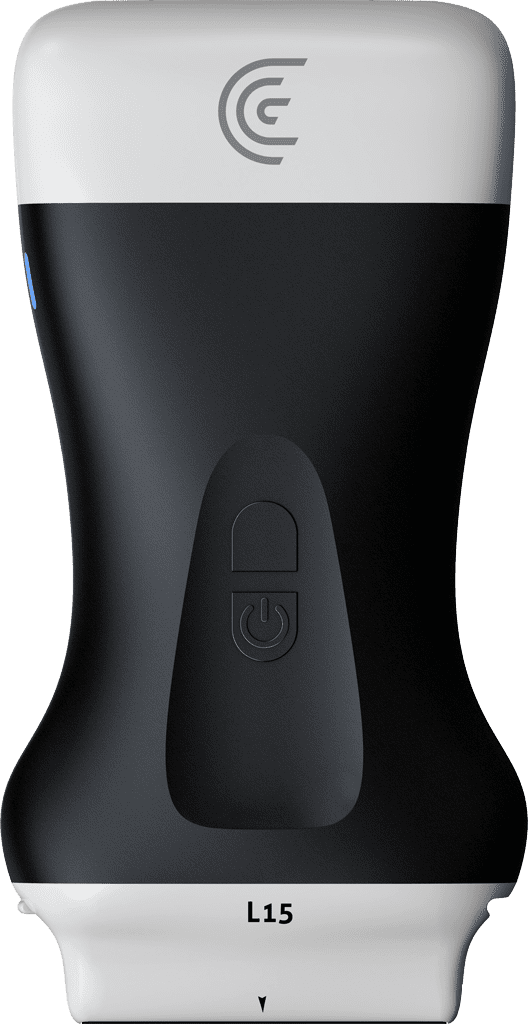
3
00:00:11,590 --> 00:00:16,989
going to undergo facial procedures, it is important to learn the protocols to be able to evaluate the
4
00:00:16,990 --> 00:00:23,670
facial anatomy. In this case we are going to evaluate the superficial extension of biopolymers. The
5
00:00:23,670 --> 00:00:30,430
biopolymers we will be able to identify with patterns and with important ultrasounds and that are
6
00:00:30,470 --> 00:00:37,390
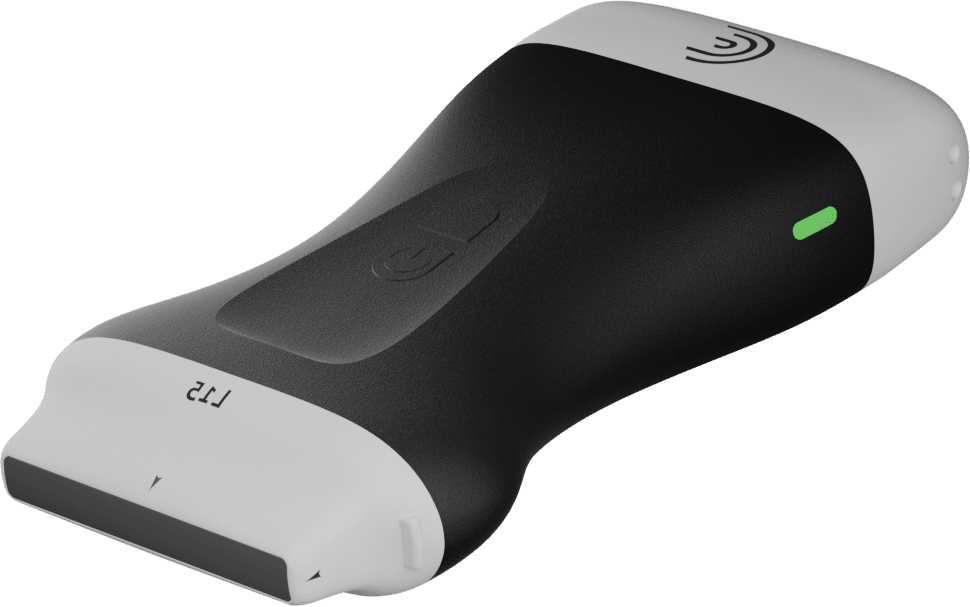
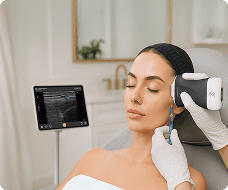
images that we cannot forget. Next we are going to use an L15 to be able to observe the
7
00:00:37,390 --> 00:00:43,430
superficial extension of biopolymers. And in this topic today on lips, what does it work for? So that
8
00:00:43,430 --> 00:00:50,429
we can then evaluate how much topography is invaded by this product and that facial surgeons
9
00:00:50,430 --> 00:00:56,790
can analyze whether or not they can perform a procedure in that topography. Next,
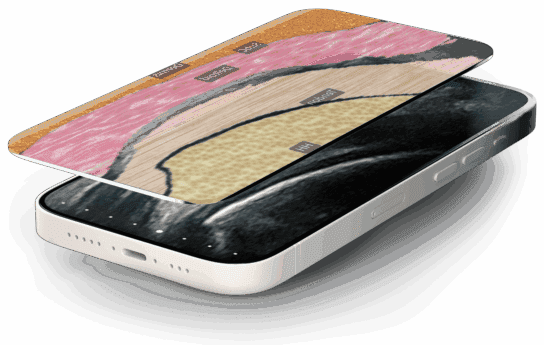
10
00:00:56,790 --> 00:01:03,320
it is always important to know where our notch is, yes, to connect our equipment safely
11
00:01:03,320 --> 00:01:10,240
and never forget an ultrasound tip that you will find on our networks. The notch from
12
00:01:10,240 --> 00:01:17,080
now on is the reference for what is the Clarius logo. So the Clarius logo
13
00:01:17,080 --> 00:01:23,280
is equal to the screen's notch. Next, what we are going to do then is
14
00:01:23,320 --> 00:01:28,239
identify that we are in the right place. Look at the right side and the right side on the
15
00:01:28,240 --> 00:01:34,000
screen. The screen looks at you. So it's the right side of the screen, the right side,
16
00:01:34,000 --> 00:01:40,800
the transducer towards the right side of the patient. How are we going to evaluate the lips?
17
00:01:40,839 --> 00:01:47,360
We are going to project our transducer cephalad and we are going to place ourselves on the lower lip.
18
00:01:47,360 --> 00:01:53,760
Why do I like to do it this way? Because this way I can also know the
19
00:01:53,760 --> 00:02:00,280
superficial extension of the lip or the product that is there. Ok. In this
20
00:02:00,280 --> 00:02:06,940
way we hold our lip. We squeeze and we are going to place our transducer with a
21
00:02:06,940 --> 00:02:13,899
sufficient amount of gel. And there what we are going to see is the layers of the skin and we are going to see an
22
00:02:14,100 --> 00:02:21,019
extension and a thickness of the soft tissues of the lip. That is very important because
23
00:02:21,020 --> 00:02:27,339
there we are going to be able to know how far and what topography of the lip this
24
00:02:27,339 --> 00:02:33,619
non-absorbable product is taking up as you see it on the screen. We are seeing all this
25
00:02:33,619 --> 00:02:39,339
snowstorm pattern that does not let us identify and now what we do is look for an anatomical reference image
26
00:02:39,339 --> 00:02:46,139
and in this case it is the teeth and the muscle. Remember that with Clarius
27
00:02:46,179 --> 00:02:53,059
L15 we are also going to be able to analyze the anatomy using T mode. T mode
28
00:02:53,100 --> 00:02:58,499
will give us an anatomical guide with artificial intelligence so that we can understand a
29
00:02:58,499 --> 00:03:04,259
little where we are located there. So, what we see is if I see all the
30
00:03:04,259 --> 00:03:10,600
anatomical structures from top to bottom and even the teeth. That
31
00:03:10,600 --> 00:03:17,079
muscular line that looks very good. And the soft tissue? What we do is a scan
32
00:03:17,560 --> 00:03:23,880
towards the inner face. We are scanning and we see the transition point and this transition point
33
00:03:23,880 --> 00:03:30,720
We are going to place them in the midline of our screen in the middle of the screen.
34
00:03:30,760 --> 00:03:37,240
And this for what? So that we can see in the midline of the transducer a location where
35
00:03:37,240 --> 00:03:43,320
the transition point of our biopolymers is precisely found.
36
00:03:43,320 --> 00:03:50,119
So we already see where our natural or adequate or normal anatomy is and the
37
00:03:50,119 --> 00:03:57,040
transition point with the largest volume of lesion there. So being able to mark and
38
00:03:57,040 --> 00:04:03,880
evaluate we are going to evaluate the transition. Look how it changes and begins to
39
00:04:03,880 --> 00:04:10,839
analyze the Snowstorm pattern. What does this indicate? It indicates that in
40
00:04:10,839 --> 00:04:17,640
deep planes in the lip we do not have this product and in the superficial planes
41
00:04:17,640 --> 00:04:24,559
we do have the material, because when we make the transition with the sweep from
42
00:04:25,320 --> 00:04:31,039
the lower part of the lip towards the superficial face of the lip and the depth changes,
43
00:04:31,079 --> 00:04:37,480
we see how all the snowstorm pattern appears intensely and precisely
44
00:04:39,320 --> 00:04:45,039
In this way we can identify and tell our
45
00:04:45,040 --> 00:04:51,440
surgeons or our colleagues or yourself if you are going to do an injection, to be able to evaluate how far
46
00:04:51,440 --> 00:04:57,959
you will be able to perform the procedure. Another important tip that we are going to do on the lip is
47
00:04:58,000 --> 00:05:04,319
go towards the labial commissure and in the labial commissure we are going to place Color Doppler
48
00:05:04,359 --> 00:05:11,209
Remember that Color Doppler does not mean arteries and veins. Color Doppler means
49
00:05:11,209 --> 00:05:18,009
flow direction. Here we are going to see how the vascular bifurcation is. And we also put
50
00:05:18,010 --> 00:05:25,009
Power Doppler. With Power Doppler we identify the vascular flow
51
00:05:25,010 --> 00:05:31,889
and we can see then in both longitudinal and transverse sections the bifurcation and how
52
00:05:31,890 --> 00:05:38,889
the facial artery becomes the superior pathway and the inferior pathway. This gives us the
53
00:05:38,890 --> 00:05:45,489
peace of mind that these deposits of non-reabsorbed products are not generating an increase in
54
00:05:45,489 --> 00:05:50,009
intra-luminal pressure. And the only way to know this is to identify the resistance index of the
55
00:05:50,010 --> 00:05:55,849
arteries. Remember that with the ultrasound we are going to do real-time anatomical dissection
56
00:05:55,850 --> 00:06:01,369
and we are going to pinpoint the planes to be able to plan a safe procedure.